
To the uninitiated, a DTF printer might look like a standard large-format inkjet machine. Imidlertid, the Direct-to-Film process is a sophisticated four-stage chemical and mechanical sequence that transforms digital data into a physical, wearable heat transfer. Understanding the specific functions a high-performance DTF printer performs is essential for any business owner looking to optimize their production floor and maximize their return on investment.
På Xinflyvning Group, we engineer our printers to perform these complex tasks with industrial precision, ensuring that the “handshake” between the ink, filmen, and the adhesive powder is perfect every time. Here is a detailed look at the core functions of a modern DTF system.
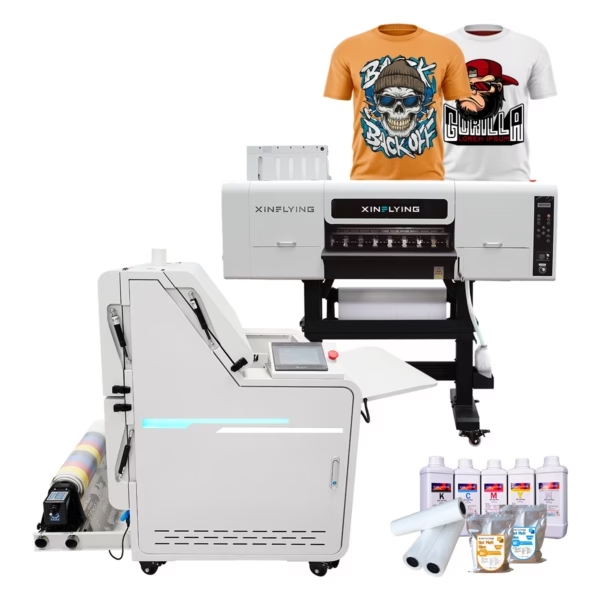
1. High-Precision Digital Ink Deposition
The primary function of a DTF printer is the deposition of specialized pigment inks onto a PET (Polyethylene Terephthalate) film. I modsætning til traditionelle printere, a DTF machine must lay down two distinct layers of ink in a single pass.
Color Layer (CMYK): The printer first applies the colored pigments to create the visual design.
White Underbase (W): Immediately after the color is laid down, the printer applies a high-opacity white ink layer. This white layer acts as the “carrier” for the design and ensures that colors remain vibrant even when applied to pitch-black fabrics.
Xinflying units utilize Epson i3200-A1 printheads to perform this function. These heads use piezo-electric pulses to fire variable-sized droplets, ensuring that fine gradients and sharp text are captured with 3200 DPI -opløsning.
2. Dynamic White Ink Management
One of the most critical functions performed by a professional-grade machine is the management of the white ink chemistry. Because white DTF ink contains titanium dioxide (a heavy mineral), it has a natural tendency to settle and clog the lines.
A high-quality DTF printer from a leading DTF -printerleverandør like Xinflying performs an automated “circulation and stirring” fungere. This system keeps the white ink in a constant state of motion—from the bulk tank to the printhead and back. By performing this function 24/7, the machine prevents sedimentation, ensuring that the nozzles remain clear and the white underbase is always bright and solid.
3. Automated Powder Application and Recycling
Once the ink is printed onto the film, it is still “wet.” The next function, typically performed by an integrated shaker unit, is the application of TPU (Thermoplastic Polyurethane) adhesive powder.
The machine performing this function must do three things:
Dusting: Evenly coat the wet ink with adhesive powder.
Shaking: Use high-frequency vibration to knock off excess powder from the unprinted areas of the film, ensuring a clean transfer.
Recycling: Top-tier machines from a reputable DTF printer supplier include a recycling function that collects the excess powder and returns it to the reservoir for reuse, significantly lowering the “cost-per-print.”
4. Controlled Thermal Curing
The final function performed within the DTF production line is the “hærdning” of the transfer. The film passes through an infrared (IR) or convection oven where the powder and ink are fused together.
The machine must maintain a precise temperature (typically between 110°C and 130°C) to melt the TPU powder into a smooth, “orange-peel” struktur. Hvis temperaturen er for lav, the design will not stick to the shirt; if it is too high, the PET film may warp or the ink may “boil.” Xinflying’s integrated dryers perform this function using intelligent PID temperature controllers to ensure 100% consistency across long print runs.
Summary of Component Functions:
Hoson Mainboards: These act as the “brain,” performing the function of processing complex image data and synchronizing the movements of the carriage and the film feed.
Vacuum Suction Platform: Performs the function of holding the PET film perfectly flat, preventing the printheads from striking the media.
THK Linear Guides: Ensure the carriage performs its side-to-side movement with zero friction and micron-level accuracy.
The Role of the RIP Software Function
While not a mechanical part of the printer, the RIP (Raster billedprocessor) software performs the vital function of “Halftoning” og “Under-Choking.” The software tells the DTF printer exactly how much white ink to use and how to “tuck” the white layer slightly inside the color layer so that no white edges peek out from the final design. When you source from a professional DTF printer supplier, they provide pre-calibrated ICC profiles that automate these functions for you.
Konklusion: A Symphony of Precision
EN DTF printer is far more than a simple output device; it is a multi-functional industrial system that manages fluid dynamics, thermodynamics, and high-speed motion. From the moment the digital file is processed to the final cured roll of film, the machine must perform each function with absolute synchronization.
By choosing Xinflying Group as your DTF printer supplier, you ensure that your production floor is equipped with hardware designed to master these functions. Our integration of Epson precision, Hoson stability, and automated powder management turns the complex science of DTF into a simple, profitable reality for your business. Whether you are scaling an existing shop or starting a new venture, understanding these functions allows you to maintain your equipment better and produce a higher-quality product for your clients.
