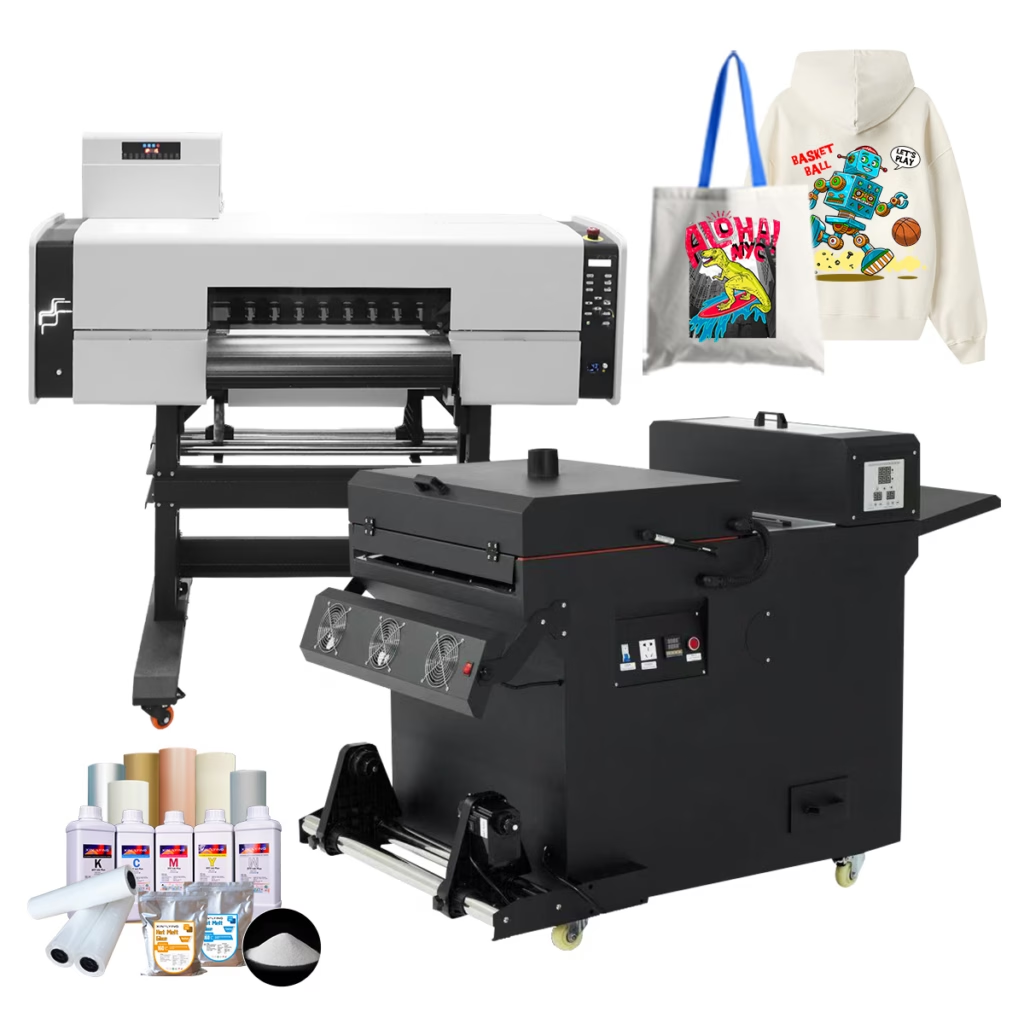
Digital printing is revolutionizing trade show display production in 2026, with sublimation and UV printing enabling high-quality, durable graphics for banners, backdrops, table covers, and pop-up displays. The trade show industry’s shift toward custom, short-run production aligns perfectly with digital printing capabilities.
Traditional trade show display production relied on screen printing for fabric graphics and solvent printing for vinyl banners. Both methods have limitations for modern exhibitors who need fast turnaround, design flexibility, and sustainable options. Screen printing requires expensive screens and long setup times, making short runs cost-prohibitive. Solvent printing on vinyl produces non-recyclable waste and can have odor issues in enclosed exhibit halls.
Друк сублімацыі has become the dominant technology for fabric displays. The process prints dye-sublimation inks onto transfer paper, then heat presses the design onto polyester fabric. The result is vibrant, washable, wrinkle-resistant graphics that can be folded for shipping without damage. Fabric displays are lightweight, reducing shipping costs, and pack into small cases for airline travel.
Key advantages of sublimation for trade shows include unlimited colors and gradients without setup costs, short runs economically viable (even single units), fast turnaround (24–48 hours for small orders), durable and washable graphics for reuse, і экалагічна чысты (water-based inks, recyclable fabrics).
UV printing also plays a role for rigid displays. UV-cured inks adhere directly to foam board, ПВХ, акрыл, алюміній, and other substrates used for signage and stand-alone displays. The instant curing enables immediate handling and finishing, accelerating production.
УФ DTF offers an alternative for curved or irregular display components. The transfer process applies durable graphics to rounded columns, custom-shaped standees, and promotional products distributed at trade shows.
The trade show industry’s recovery from pandemic disruptions has accelerated digital adoption. Exhibitors are attending more shows but with smaller, more targeted displays. Customization for each show—incorporating show-specific messaging, regional references, or timely offers—is increasingly common. Digital printing makes this feasible where screen printing would be cost-prohibitive.
For print service providers, the trade show display market represents significant opportunity. According to industry data, the global trade show display market exceeds $10 billion annually, with fabric displays the fastest-growing segment. Printers with sublimation and UV capabilities can capture share from traditional display houses.
Success factors include offering design services (many exhibitors lack in-house design capabilities), providing installation and dismantling (full-service providers command premium pricing), maintaining inventory of standard components (pop-up frames, hardware, cases), and offering rush production (exhibitors frequently need last-minute updates).