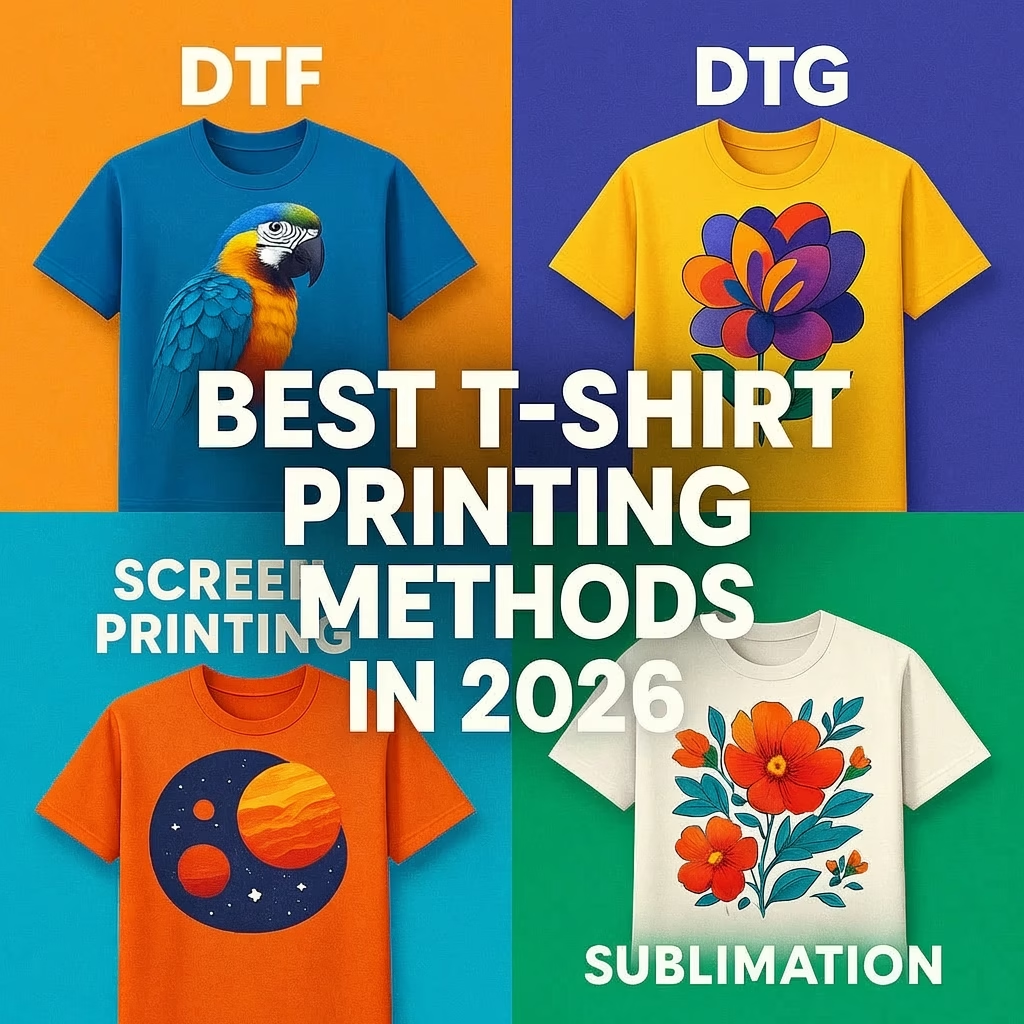
If you’re launching a small print shop or adding apparel and merch, the first big question is which method to start with. Here’s the deal: there’s no single global winner. Your best choice depends on fabrics, dark‑garment needs, order sizes (often 1–20), desired hand feel, और बजट. This guide compares DTF vs DTG vs Sublimation with clear scenarios so you can make a confident year‑one decision.
TL;DR: Who wins for which use case
- Mixed apparel, frequent dark shirts, 1–20 unit orders with 24–48h turnaround → Choose DTF for breadth of fabrics, strong dark‑garment color, and a straightforward workflow without pretreatment. Directional evidence from educator summaries supports this versatility in 2025–2026, such as the overview by Transfer Kingdom (2025).
- Premium cotton tees where soft hand and photographic detail are non‑negotiable → Choose DTG, which excels on cotton with pretreat + white underbase for darks; official DTG primers emphasize this, उदा।, Kornit’s beginner’s guide (2024).
- Polyester sportswear and coated hard goods (मग, गिलास), vibrant color, “no‑hand” feel → Choose Sublimation; it requires polyester or polymer coatings and performs best on light substrates per Shopify’s sublimation guide (2025).
डीटीएफ बनाम डीटीजी बनाम उर्ध्वपातन: Side‑by‑Side Comparison
Below is a concise matrix across the most decisive dimensions for newcomers. We alphabetize method names for fairness and keep one line per cell for quick scanning.
| आयाम | डीटीएफ | डीटीजी | उच्च बनाने की क्रिया |
|---|---|---|---|
| कपड़े की अनुकूलता | कपास, पॉलिएस्टर, मिश्रणों, select nylon/leather; light and dark | Best on cotton/high‑cotton blends; synthetics are harder | Polyester fabrics and polymer‑coated blanks (मग, गिलास); light colors only |
| Dark‑garment capability | मज़बूत: white underbase prints vibrant on darks | Strong on cotton with pretreat + सफ़ेद; process‑sensitive | Limited: no white ink; dark fabrics not viable without special substrates |
| हांथों से महसूस करना & breathability | Noticeable film/transfer layer; medium hand | Softer hand on cotton; ink integrates with fibers | “No‑hand” on polyester (dye in fiber) |
| रंग & whites | High vibrancy; CMYK+White; ICC profiles recommended | Excellent detail on cotton; white underbase for darks | Brilliant color on poly; no white channel |
| Workflow complexity | Print → powder → cure → press; no garment pretreat | Pretreat (darks) → print → cure; tighter process control | Print → press; simple but substrate‑limited |
| Speed notes (1–20 units) | Fast for mixed SKUs via gang sheets; steady press flow | Quick for single tees but slowed by pretreat/curing on darks | Often fast per compatible item; bottleneck is press capacity |
| Order size economics | Strong for micro‑batches and mixed SKUs | Improves with repeat cotton jobs; less flexible across fabrics | Strong where blanks are repetitive (मग, poly jerseys) |
| Total cost of ownership (12–24 mo) | Favorable for mixed apparel catalogs | Higher unless focused on premium cotton niche | Low‑to‑mid; depends on press sizes and blanks |
| सहनशीलता (directional) | Competitive on apparel; process materials matter | Good on cotton with correct pretreat/cure | Excellent on polyester/coatings (dye in fiber) |
| Scalability paths | Wider formats + shakers/dryers; more presses | Add units for cotton depth; industrial DTG exists | Larger presses; vast catalog of coated blanks |
| पर्यावरण & safety | Adhesive powder handling requires LEV/PPE | Pretreat chemicals call for ventilation/handling care | Heat/ventilation for presses; inks generally low‑odor |
| सीखने की अवस्था | Beginner‑friendly with practice on powder/cure | Steeper due to pretreat and white‑ink care | Beginner‑friendly; limited by substrate rules |
Two quick notes on speed and economics: Gang sheets can materially improve DTF throughput and per‑unit handling on micro‑batches; many vendors discuss this, शामिलRoland’s gang‑sheet ROI explainer (2024). Entry‑level DTF FAQs also highlight software‑side cost calculators and typical cycle stages, e.g.,Heat Press Nation’s DTF Station FAQ (2024).
Decision tree: choose your first method
Start
 ├─ Do you need coated hard goods (mugs/tumblers) or mostly polyester sportswear in year one?
 │    └─ Yes → Sublimation
 │         └─ Also printing apparel? Keep Sublimation + plan DTF add-on later.
 │    └─ No → Continue
 ├─ Will ≥40% of orders be dark garments with 24–48h turnaround in batches of 1–20?
 │    └─ Yes → DTF
 │    └─ No → Continue
 ├─ Is premium cotton hand feel and photographic detail your #1 criterion for hero tees?
 │    └─ Yes → DTG (ensure pretreat/curing mastery)
 │    └─ No → Continue
 ├─ Is the lowest upfront cost for a limited, light‑poly/hard‑goods catalog your priority?
 │    └─ Yes → Sublimation
 │    └─ No → DTF (broad apparel versatility) or mix DTG for select cotton SKUs
How this maps to your quiz answers
- Core products: कपास + पॉलिएस्टर + Hard goods + Mixed catalog (you selected A, बी, सी, डी). That breadth points toward DTF for apparel versatility and Sublimation for mugs/tumblers and polyester sportswear. A split approach works: start with DTF to cover most apparel, add Sublimation for hard goods and poly jerseys.
- Order size: On‑demand micro‑batches (1–20 units, 24–48h). DTF’s no‑pretreat workflow and gang‑sheeting help hit tight SLAs.
- Decision criteria: Vivid color on darks (बी) and soft hand (सी) with budget simplicity (डी). DTF covers darks widely and is beginner‑friendly; for a premium cotton capsule where the softest hand matters, sprinkle in DTG for those hero SKUs.
If you lean DTF and want consistent color from day one, see Xinflying’s practical guide on ICC profiles and calibration inDTF प्रिंटिंग की गुणवत्ता में सुधार कैसे करें. For uptime and reliability habits, bookmarkDTF प्रिंटर के लिए दैनिक रखरखाव गाइड. And when you’re ready to size capacity to demand, A1 vs A2 vs A3 DTF Printers—Which Size Is Best? breaks down speed, footprint, and order profiles.
Pricing and version scope
Equipment prices and bundles change frequently by region and reseller. Treat the following as dated examples and always verify current quotes:
- DTF entry example: Roland VersaSTUDIO BY‑20 DTF printer listed at $9,345 (printer‑only) on the official page updated 2026‑02‑21: Roland DGA BY‑20.
- Sublimation bundles: Sawgrass SG1000 packages historically ranged from ≈$1,750 to $3,250+ depending on press kits per 2025–2026 reseller pages like Heat Press Nation’s SG1000 collection (availability varies).
- DTG pricing varies widely by class; obtain official quotes for current desktop/prosumer models. Remember that dark‑garment DTG typically requires a pretreatment system and chemistry.
Scope note: These comparisons focus on process methods (डीटीएफ, डीटीजी, उच्च बनाने की क्रिया) across entry‑to‑mid classes common to new shops in 2026. Exact speeds, costs, and maintenance differ by model and vendor.
Safety and maintenance you can’t skip
- Always review and follow the Safety Data Sheets (SDS) for your inks, पाउडर, and pretreat solutions; implement local exhaust ventilation (LEV) where powdering or pretreatment occurs and use appropriate PPE.
- सफेद स्याही (DTF/DTG) benefits from routine agitation/recirculation; missed maintenance increases clog risk and rejects.
- A consistent habit stack reduces downtime: daily nozzle checks, approved head wipes, clean rails/encoders, controlled temperature/humidity. For a clear routine that protects printhead health, see DTF प्रिंटर के लिए दैनिक रखरखाव गाइड.
Sample job recipes (अपेक्षाएं, not absolutes)
- Single dark cotton tee via DTF (1 unit)
- Print mirrored CMYK+White to PET film; 2) Apply hot‑melt powder; 3) इलाज; 4) Press to shirt; 5) Peel and post‑press if required. Expect a medium hand with strong color pop on black.
- Mixed 10‑unit gang sheet run (3 डिजाइन) via DTF
- Lay out gang sheet(एस) to minimize film waste; 2) Print/powder/cure continuous; 3) Trim and stage; 4) Press in sequence. फ़ायदा: fewer printer changeovers and predictable pressing cadence that shortens total turnaround.
- 50 polyester jerseys via Sublimation
- Print mirrored designs on sublimation paper; 2) Stage blanks; 3) Press with accurate time/temp/pressure; 4) Cool and quality‑check. Expect “no‑hand” feel and excellent durability on polyester.
Tip: Use ICC profiles for consistent color across batches—especially helpful when you repeat designs weeks apart. The calibration advice inDTF प्रिंटिंग की गुणवत्ता में सुधार कैसे करें is a practical place to start.
सामान्य प्रश्न: fast answers to common questions
Can sublimation print on cotton shirts?
नहीं. Traditional dye‑sublimation requires polyester fibers or polymer‑coated items and performs best on light substrates, as explained inShopify’s sublimation guide (2025). Hybrid systems exist but are distinct workflows.
Which method is best for dark cotton shirts?
For the broadest dark‑garment coverage across fabrics, DTF is especially practical; for premium cotton tees where the softest hand and fine gradients matter, DTG with correct pretreat/curing is excellent. DTG process control is outlined inKornit’s beginner’s guide (2024), while DTF’s versatility is summarized byTransfer Kingdom’s 2025 comparison.
How many washes will each method last?
Sublimation on polyester is widely regarded as highly durable because the dye bonds within the fiber. For DTF and DTG, durability depends on materials and process (pretreatment, curing, film/powder quality). Because public, standardized AATCC/ISO side‑by‑side tests are scarce, avoid assuming universal wash counts; run sample tests on your actual blanks.
What’s the per‑shirt cost for DTF vs DTG vs Sublimation on 1–20 unit orders?
It varies by ink coverage, film/paper cost, press time, and machine amortization. DTF often shines for mixed micro‑batches due to gang sheets and no pretreat steps; DTG costs rise with pretreat and white ink on darks; Sublimation ink is inexpensive but blank cost and press time dominate. Use a simple cost model and validate with small pilot runs.
Is DTF or DTG faster for one‑off tees?
In pure print motion, both can be “a few minutes,” but DTG adds pretreat/curing on dark garments. DTF can stage multiple transfers and maintain a steady pressing rhythm. For practical cycle considerations and calculators, see the vendor FAQs such asHeat Press Nation’s DTF Station FAQ (2024).
Final guidance: pick a path, then add strategically
Start with the method that fits 60–70% of your first‑year orders. For a mixed catalog with dark apparel and rush micro‑batches, DTF is a strong first step. Add Sublimation for hard goods and poly sportswear, and consider DTG for a premium cotton capsule when soft hand becomes your signature. If you do choose DTF, size your setup withA1 vs A2 vs A3 DTF Printers—Which Size Is Best? so your press cell and ganging workflow scale smoothly.
Note on keyword intent: This guide compared DTF vs DTG vs Sublimation across real‑world trade‑offs rather than naming a single winner. If you still can’t decide, revisit the decision tree above and plug your own order mix into a simple cost worksheet.