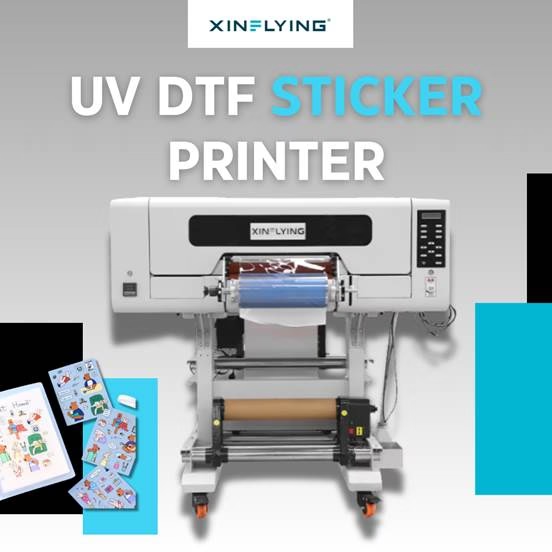
Choosing between an A1, A2, and A3 DTF printer is a decision about production floor layout, batch size, and the garment formats your shop actually ships. The A-series label describes print width, not print quality, so the right machine is the one that matches your daily volume and the largest design you run on a normal shift. This guide breaks down what the three formats mean, how they compare on a commercial line, and which one fits a print shop, garment factory, or distribution operation. For the full machine lineup and current specifications, start with our DTF printer range.
What A1, A2, e A3 effettivamente medio
The letters A1, A2, and A3 come from the ISO 216 paper size standard, where A3 measures 297 X 420 mm, A2 measures 420 X 594 mm, and A1 measures 594 X 841 mm. DTF manufacturers borrow these labels as shorthand for the maximum media width a machine can load and print. In practice, the designation tells you the working print width of the film path, not the sheet dimensions of a paper document.
As a rough guide, an A3 DTF printer runs a print width around 33 cm, an A2 printer around 42 cm, and an A1 printer around 60 cm in wide-format configuration. The exact media width varies by model and roll setup, so confirm the specification sheet before you buy. What matters for production is what that width lets you do: how large a single design you can output, and how many smaller designs you can nest on one length of film.
Wider film changes your throughput economics. On a 60 cm path you can lay out four or five left-chest logos across one pass, where a 33 cm path fits two or three. That nesting density, not raw print speed, is often what separates an A1 line from an A3 line when you are running mixed orders. If you are still mapping out how DTF fits your shop, our complete guide to DTF printing covers the workflow end to end.
A1 vs A2 vs A3 at a Glance
The table below is a working summary for a commercial buyer. Treat the widths and volumes as planning figures, and confirm exact machine specs and power requirements with the manufacturer before you commit to a floor layout.
| Format | Approx. print width | Meglio per | Typical production volume | Considerations |
|---|---|---|---|---|
| A3 | ≈ 33 cm | Left-chest logos, sleeve prints, small graphics, sample and proof runs | Light to moderate daily volume | Compact footprint, narrower film rolls, lower nesting capacity per sheet |
| A2 | ≈ 42 cm | Standard adult garments, mid-size graphics, most commercial print shops | Moderate to high daily volume | Balanced footprint and throughput, a common workhorse format |
| A1 | ≈ 60 cm | Oversized and all-over designs, jackets and hoodies, dense gang sheets | Alto, multi-shift volume | More floor space, higher power draw, wider film rolls |
Which Format Fits Which Business
The right format follows from the orders you already take, not the ones you hope to take. Match the machine to the largest repeatable job in your queue.
An A3 machine suits a shop that runs small placements in high mix. Left-chest logos, sleeve hits, berretti, and proof prints dominate this work, and the designs rarely exceed 30 cm in any dimension. Because the film path is narrow, you burn less film per sheet and swap designs quickly. The tradeoff is nesting density: large back prints or full-front graphics do not fit, so those orders either get split across multiple sheets or get turned away. Contract decorators running short runs and sample approvals often keep an A3 unit as a dedicated proofing line.
An A2 machine is the middle of the range and, for many commercial shops, the default. UN 42 cm path covers standard adult tees up to large back prints and most front graphics, while still fitting into a standard production room without a dedicated power upgrade. If your average order is a hundred pieces with a 30 cm back print and a left-chest logo, A2 handles it in one nesting pass and keeps film waste low. This is the format to start with when you are not sure, because it rarely becomes obsolete even if you later add a wider machine.
An A1 machine is a wide-format workhorse for garment factories and high-volume decorators. IL 60 cm path lets you nest a full order of mixed designs across one sheet, run oversized back prints on jackets and hoodies, and produce all-over or near all-over graphics that smaller formats cannot. The cost is real but comes from floor space, larghezza della pellicola, and power draw rather than any difference in print resolution. A factory running two shifts on A1 film will move more sellable units per operator hour than the same crew on a narrower line, which is the metric that decides the purchase.
Spazio, Energia, and Production Volume
Print width is only half the layout decision. Before you choose a format, measure the physical and electrical room you can give the machine.
Space is the first constraint. An A1 unit needs a longer film path, space for wider rolls, and clearance to load and unload film between runs. An A3 unit sits in a fraction of that footprint, which is why it shows up in shops that are already tight. An A2 unit splits the difference and is the easiest to place in a shared production room. Do not size the machine to the empty corner of the floor today; size it to the layout you plan for the next two years of volume.
Power matters more on the wider formats. Larger machines draw more current for the print head, the film feed, and the curing or shaker module that runs inline. Confirm the voltage, fase, and circuit capacity with the manufacturer before ordering, and check whether your current electrical panel can absorb another machine without tripping breakers mid-shift. A machine that browns out at peak demand costs more in downtime than the difference in list specification.
Volume ties it together. A narrow machine running constantly can outproduce a wide machine running twice a day, but only if your orders stay inside the narrow width. Estimate your daily film meterage: how many sheets, how many designs per sheet, and how many garment changes per hour. If the math says you will run an A3 line at capacity most days, you have already outgrown it and should look at A2 or A1. If the wide machine would sit idle half the shift, the extra width is not buying you anything.
DTF Printer Size FAQ
For standard adult t-shirts with a typical back print and a left-chest logo, an A2 printer is the most practical default. The roughly 42 cm print width covers full-back graphics on most sizes while still nesting a left-chest logo alongside. An A3 unit works if you only run small placements, and an A1 unit is the choice when you produce oversized or all-over designs at high volume.
It depends on the design size, not just the quantity. An A3 printer can sustain steady daily output for small placements such as logos and sleeve prints, but its narrow width limits how many designs you can nest per sheet. If your volume includes large back prints or oversized graphics, the A3 path forces more sheet changes and more film waste, and an A2 or A1 machine becomes the better production choice.
NO. A1 printers are built for wide-format designs, but the same width is useful for dense gang sheets that pack many smaller designs onto one pass. A high-volume shop running mixed orders often uses an A1 line to nest logos, back prints, and sleeve graphics together, which reduces film changes and raises throughput per operator hour.
SÌ. A1 machines take more floor space for the film path and wider rolls, and they draw more current for the print head and inline curing or shaker module. A3 units have the smallest footprint and power draw, while A2 sits between them. Confirm voltage, fase, and circuit capacity with the manufacturer before you commit to a machine or a floor layout.
Conclusione
The A-series label is a width decision, and width follows from your order mix, your floor space, and your daily volume. Shops running small placements lean A3, most commercial decorators land on A2, and garment factories or high-volume mixed-order lines move to A1. Match the machine to the largest repeatable job, confirm the space and power you can actually provide, and the rest of the decision falls into place. Xinflying supplies factory-direct DTF printers across the full width range, with specifications and after-sales support sized to commercial production. See our DTF printer range or contact our team to discuss which format fits your output.