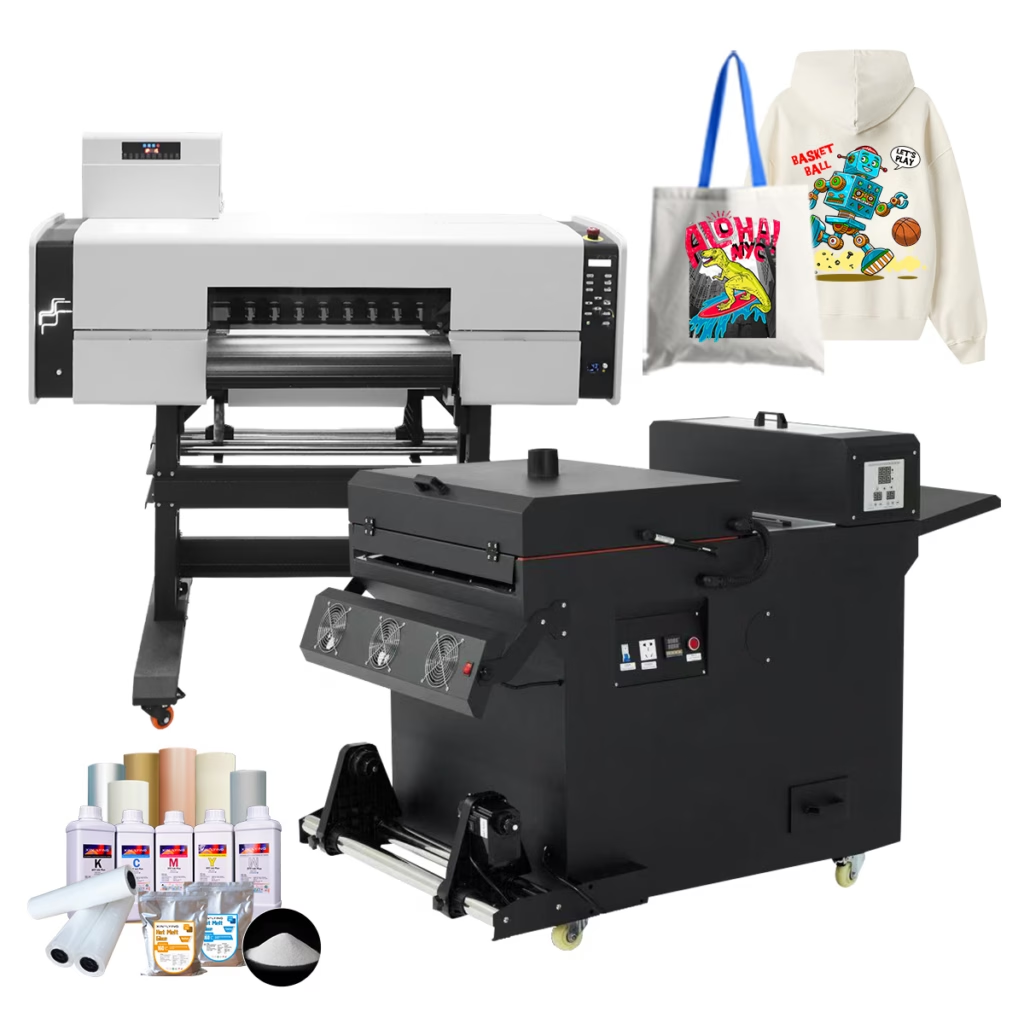
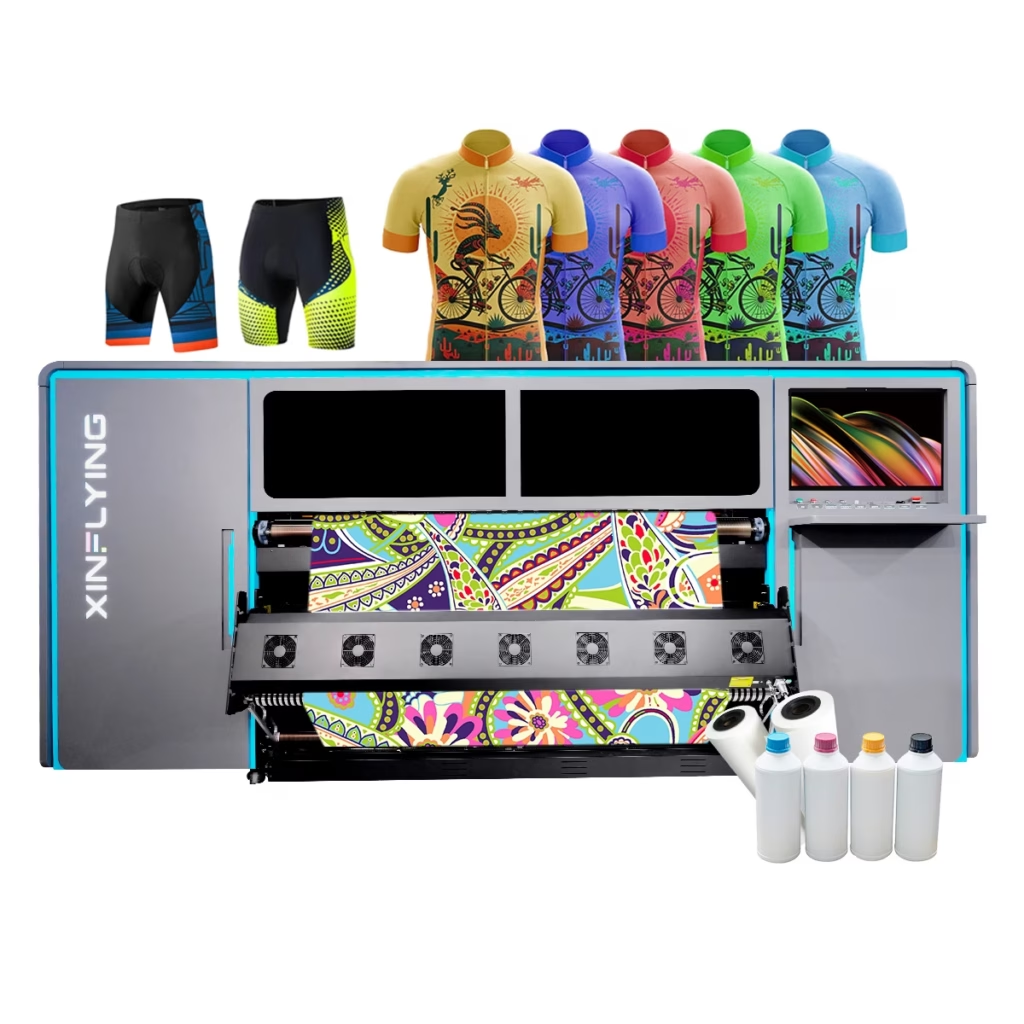
Inkjet printhead technology has advanced significantly in 2026, enabling higher resolution, faster speeds, and improved reliability for DTF, 승화, and DTG printers. These advances are driving broader adoption of digital textile printing by reducing costs and expanding application possibilities.
그만큼 프린트헤드 is the core component of any inkjet printer, responsible for ejecting tiny droplets of ink onto the substrate. Printhead performance determines print quality (해결, dot placement accuracy), 속도 (droplet ejection frequency), 신뢰할 수 있음 (nozzle clogging resistance), and maintenance requirements.
Recent advances include increased nozzle density. Modern printheads contain 4,000–8,000 nozzles per color, up from 1,000–2,000 just five years ago. More nozzles enable higher resolution without sacrificing speed, as more drops can be ejected per pass. Some industrial printheads now achieve native resolutions of 1,200 dpi 이상.
Variable drop size capability has also improved. Printheads can eject droplets ranging from 3 피코리터 (for fine details and smooth gradients) 에게 21 피코리터 (for solid areas and high opacity). This flexibility enables both photographic quality and efficient coverage of large areas without switching print modes.
Higher drop ejection frequencies—now exceeding 100 kHz on advanced printheads—enable faster print speeds. DTF 프린터 with modern printheads can achieve speeds of 30–50 square meters per hour or more, significantly higher than older models. Sublimation printers have reached 550 square meters per hour on single-pass systems.
Reliability improvements are equally important. New printhead designs feature built-in recirculation that continuously moves ink through the nozzles, preventing settling and clogging. This is particularly valuable for white ink and high-pigment formulations prone to sedimentation. Recirculation reduces maintenance frequency and extends printhead life.
Nozzle redundancy is another advance. Printheads now include backup nozzles that can be activated if primary nozzles fail, maintaining print quality without immediate service. Some systems can detect failing nozzles and compensate through software adjustments, further reducing downtime.
Temperature control has become more precise. Printheads maintain consistent ink temperature within ±0.5°C, ensuring stable viscosity and drop formation regardless of ambient conditions. This consistency is essential for color accuracy and print-to-print repeatability.
Material compatibility has expanded. Modern printheads handle a wider range of ink chemistries, including water-based, solvent, UV-curable, and specialty formulations. This flexibility enables single printhead platforms to serve multiple applications with appropriate ink sets.
For print service providers, understanding printhead technology is important for equipment selection and maintenance. Printheads are typically the most expensive consumable component, with replacement costs ranging from $500 에게 $5,000 or more depending on the printer. Proper maintenance—including regular cleaning, proper shutdown procedures, and using high-quality inks—extends printhead life and protects investment.