Memilih teknologi percetakan yang betul adalah penting untuk menjalankan perniagaan percetakan yang menguntungkan. Memandangkan cetakan atas permintaan terus berkembang, beribu-ribu perniagaan menjana pendapatan yang besar dengan memilih peralatan yang betul dari awal.
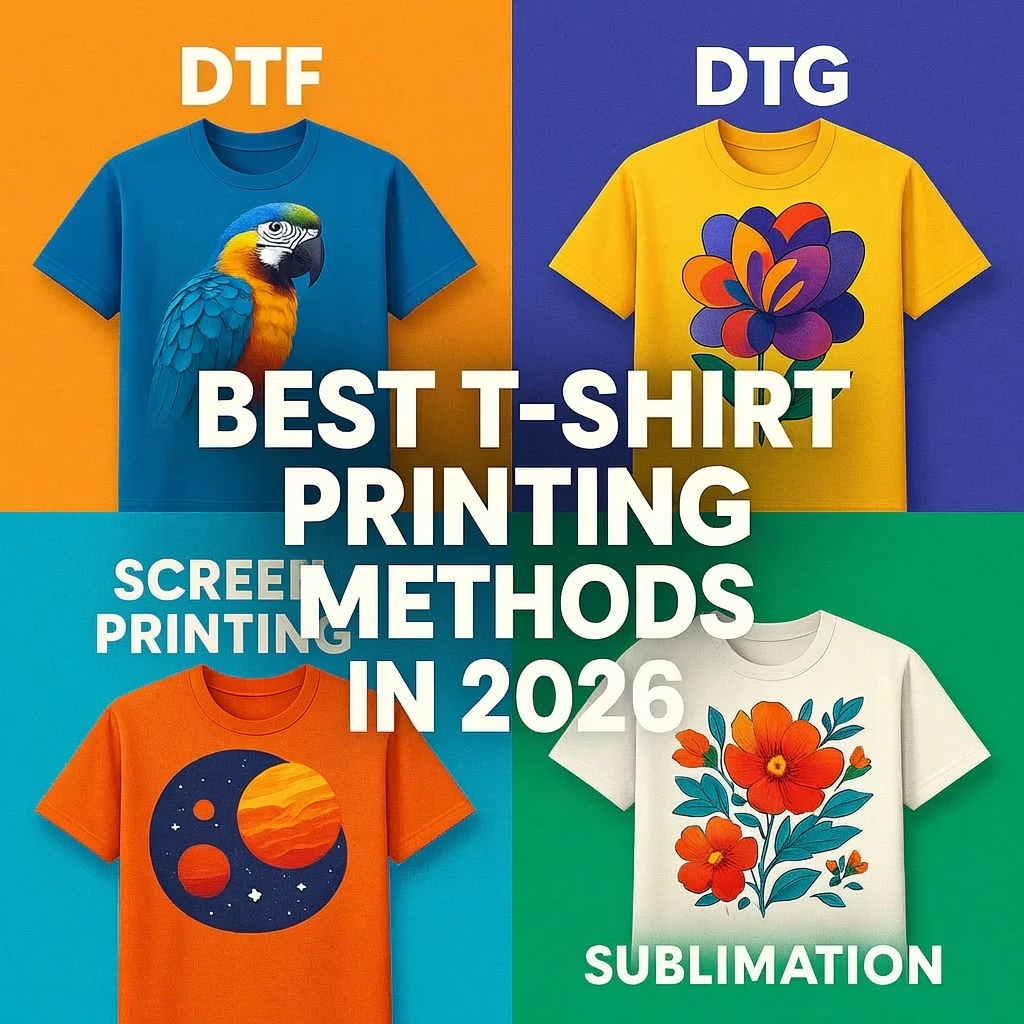
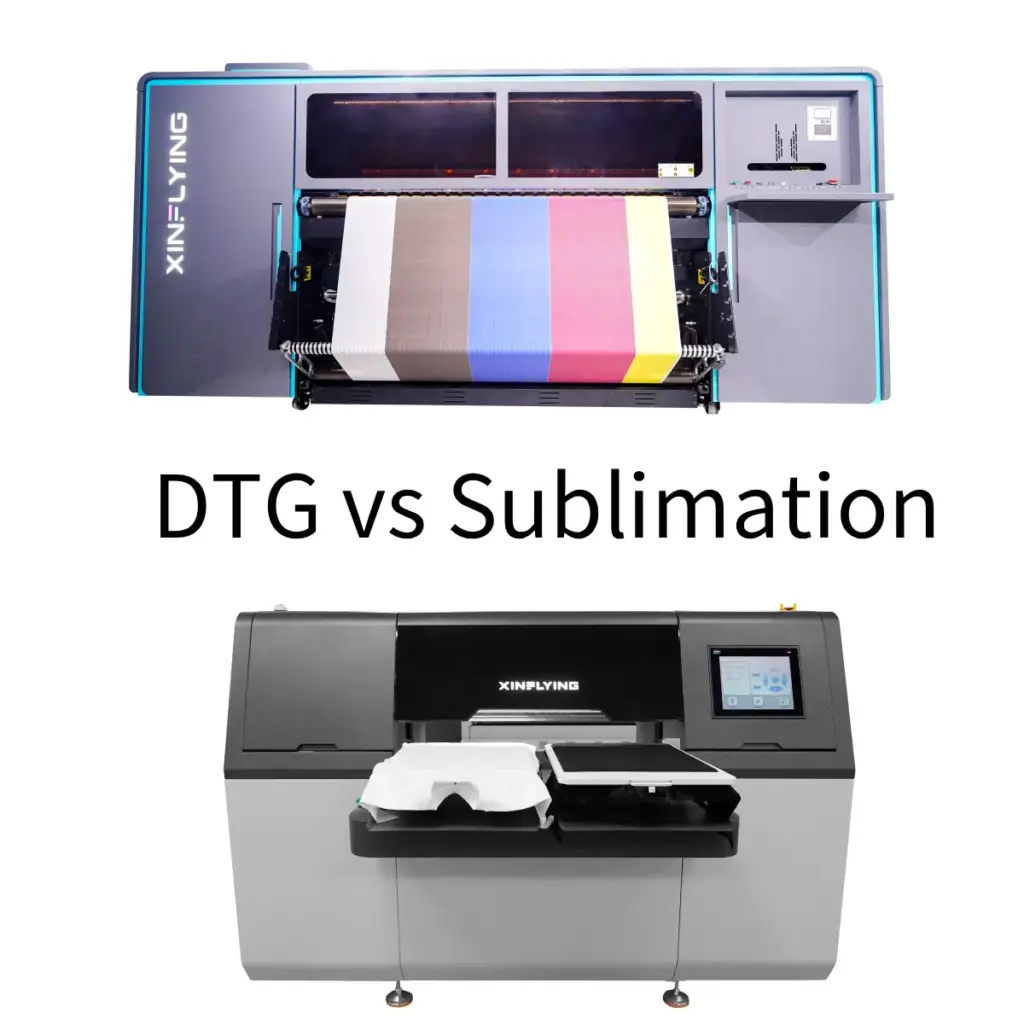
Antara teknologi yang paling diperdebatkan ialah percetakan sublimasi dan DTG (Langsung-ke-kehadaman) percetakan. Kedua-duanya terkenal dengan kualiti cetakan yang sangat baik, tetapi masing-masing menghidangkan bahan yang berbeza, aliran kerja, dan keperluan perniagaan. Jadi, pilihan mana yang terbaik untuk matlamat pencetakan anda?
Panduan ini memecahkan perbezaan antara kualiti pencetakan pemejalwapan dan DTG, kos, keserasian, ketahanan, dan banyak lagi—supaya anda boleh membuat keputusan jangka panjang yang termaklum.
Apa Itu Pencetakan Sublimasi?
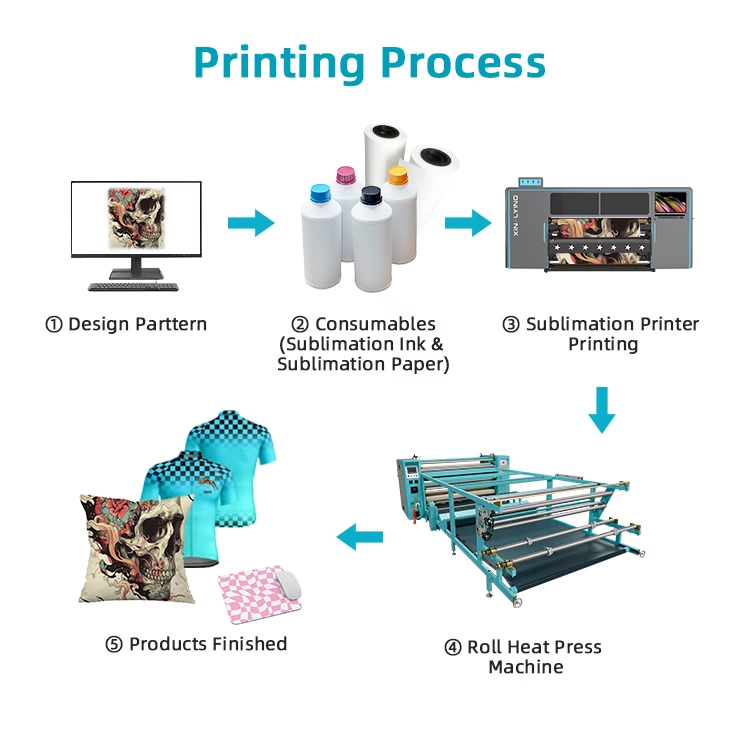
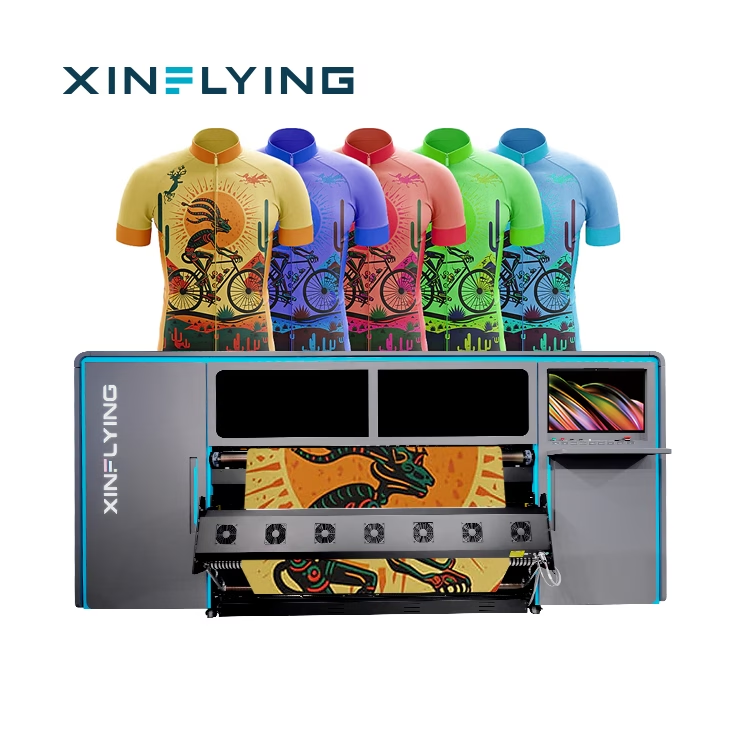
Pencetakan pemejalwapan menggunakan haba dan tekanan terkawal untuk mengubah pewarna pepejal kepada gas, mengikatnya terus ke dalam gentian poliester atau permukaan bersalut polimer. Proses ini bermula dengan pencetak sublimasi yang mencetak reka bentuk pada kertas sublimasi khas menggunakan dakwat sublimasi.
Kerana dakwat bercantum dengan bahan, cetakan menjadi sebahagian daripada fabrik—bermakna ia tidak retak, kupas, atau pudar. Sublimasi sesuai untuk produk promosi, pakaian sukan, dan tekstil cetak atas permintaan.
Bagaimana Pencetakan Sublimasi Berfungsi
- Buat reka bentuk menggunakan perisian reka bentuk grafik.
- Cetak karya seni bercermin ke atas kertas sublimasi menggunakan dakwat sublimasi.
- Letakkan kertas pada produk dan selamatkannya dengan pita tahan haba.
- Sapukan haba dan tekanan menggunakan penekan haba—ini menukarkan dakwat kepada gas dan mengikatnya secara kekal pada bahan.
- Benarkan produk sejuk, kemudian kupas kertas untuk mendedahkan kekal, cetakan bersemangat.
Kebaikan Sublimasi
- Menghasilkan hidup, warna tahan lama
- Dakwat menjadi sebahagian daripada fabrik—tiada retak atau mengelupas
- lancar, kemasan lancar tanpa tekstur terangkat
- Cemerlang untuk reka bentuk fotografi dan penuh warna
- Bekerja pada banyak produk: mug, gelas air, pakaian, hiasan, dan lain-lain.
Keburukan Sublimasi
- Hanya serasi dengan fabrik poliester atau item bersalut polimer
- Tidak berfungsi 100% kapas
- Terhad kepada bahan ringan atau putih
- Peralatan dan bahan habis pakai boleh mahal
- Kelajuan pengeluaran boleh perlahan disebabkan oleh langkah pemindahan haba
Apa itu Percetakan DTG?
DTG (Terus-ke-Pakaian) fungsi percetakan seperti pencetak inkjet, tetapi mencetak terus ke kain. Ikatan dakwat dengan pakaian pra-rawatan untuk menghasilkan yang sangat terperinci, cetakan lembut. DTG sesuai untuk reka bentuk yang rumit, cetakan foto, dan pesanan kumpulan kecil.
Tidak seperti sublimasi, DTG berfungsi paling baik pada gentian semula jadi—terutama kapas.
Bagaimana Percetakan DTG Berfungsi
- Pra-rawat pakaian untuk memastikan ikatan dakwat yang betul.
- Sediakan karya seni menggunakan perisian reka bentuk atau RIP.
- Cetak terus pada pakaian menggunakan dakwat putih dan berwarna.
- Sembuhkan dakwat menggunakan penekan haba atau unit pengawetan terbina dalam.
- Produk akhir siap dengan lembut, cetakan terperinci.

Kebaikan Percetakan DTG
- Sangat baik untuk fabrik kapas dan gentian semula jadi
- Sangat terperinci, cetakan berwarna-warni—walaupun pada pakaian gelap
- Pengeluaran pantas dan aliran kerja yang mudah
- Sesuai untuk pesanan kuantiti kecil atau tersuai
Keburukan Percetakan DTG
- Cetakan terletak pada permukaan kain dan mungkin pudar dari semasa ke semasa
- Memerlukan pra-rawatan fabrik
- Kurang tahan lama berbanding dengan pemejalwapan pada poliester
- Warna mungkin kurang bersemangat pada fabrik gelap atau bertekstur berat
DTG lwn. Sublimasi: Perbezaan Utama
1. Keserasian Fabrik
- Sublimasi: Poliester, campuran poli, produk bersalut polimer
- DTG: Kain kapas dan campuran kapas
2. Kualiti Cetakan
- Sublimasi: Sangat bersemangat, licin, dan diselitkan secara kekal ke dalam bahan
- DTG: Sangat terperinci tetapi mungkin kelihatan kurang bersemangat pada pakaian gelap atau bertekstur
3. Kos Persediaan
- DTG: Pelaburan awal yang lebih tinggi tetapi kos boleh guna berulang yang lebih sedikit
- Sublimasi: Kos peralatan yang lebih rendah tetapi memerlukan dakwat sublimasi & kertas jangka panjang
4. Kos Larian
- DTG: $0.50–$3.50 setiap cetakan bergantung pada warna dan kerumitan
- Sublimasi: Lebih menjimatkan kos untuk kumpulan besar dan cetakan keseluruhan
5. Kelajuan Pengeluaran
- DTG: Lebih cepat untuk pakaian siap, tetapi memerlukan pra-rawatan
- Sublimasi: Pencetakan pantas tetapi aliran kerja lebih panjang untuk reka bentuk fabrik penuh
6. Ketahanan
- Sublimasi: Sangat tahan lama—menjadi sebahagian daripada fabrik
- DTG: Kualiti yang baik tetapi mungkin pudar atau retak dari semasa ke semasa
7. Kesan Alam Sekitar
- DTG: Menggunakan dakwat berasaskan air, mesra alam; pra-rawatan berbeza-beza
- Sublimasi: Pewarna berasaskan air tetapi memerlukan tenaga yang tinggi untuk menekan haba
| kategori | Percetakan DTG | Pencetakan Sublimasi |
|---|---|---|
| Keserasian bahan | Terbaik untuk 100% kapas & Serat semulajadi | Hanya berfungsi pada item bersalut poliester atau polimer |
| Kualiti Cetakan | Perincian tinggi; bagus untuk reka bentuk yang kompleks | Sangat bersemangat; foto-realistik pada poliester |
| Kos Persediaan | Pelaburan permulaan yang lebih tinggi | Kos persediaan yang lebih rendah |
| Kos Larian | Kos setiap cetakan yang lebih tinggi (dakwat + prarawatan) | Kos setiap cetakan yang lebih rendah, terutamanya untuk pukal |
| Kelajuan Pengeluaran | Cepat untuk pesanan kecil; prarawatan diperlukan | Cetakan pantas; lebih perlahan untuk pengeluaran fabrik penuh |
| Ketahanan | bagus, tetapi boleh pudar/mengelupas dari semasa ke semasa | Cemerlang; bercantum menjadi gentian, tidak akan retak |
| Kesan Alam Sekitar | Dakwat berasaskan air tetapi bahan kimia prarawatan terlibat | Dakwat mesra alam; bergantung kepada penggunaan tenaga haba |
| Terbaik Untuk | Pesanan kecil-sederhana, pakaian kapas, karya seni yang terperinci | Pesanan yang banyak, pakaian poliester, pakaian sukan, barang promo |
Sekiranya Anda Memilih DTG atau Sublimasi?
Pilih DTG jika:
- Anda bekerja dengan 100% kapas
- Awak perlukan reka bentuk yang sangat terperinci atau berwarna-warni
- Awak uruskan pesanan kecil atau tersuai
- Anda lebih suka persediaan minimum dan pengeluaran yang cepat
Pilih Sublimasi jika:
- Anda mencetak pada poliester atau fabrik sintetik
- Awak perlukan tahan lama, kekal, hasil yang bertenaga
- Anda menghasilkan pesanan pukal
- Anda adalah seorang permulaan dengan keperluan pengeluaran berskala
Akhirnya, pilihan terbaik bergantung pada model perniagaan anda, rangkaian produk, dan permintaan pelanggan.
Kesimpulan
Kedua-dua pencetakan sublimasi dan DTG menawarkan hasil yang sangat baik—tetapi untuk tujuan yang berbeza.
- DTG adalah terbaik untuk pakaian kapas, Reka bentuk yang rumit, dan pesanan kecil hingga sederhana.
- Sublimasi sesuai untuk bahan poliester, warna terang, dan pengeluaran volum tinggi.
Tidak kira teknologi yang anda pilih, Xinflying menyediakan profesional, boleh dipercayai, dan penyelesaian percetakan kos efektif untuk menyokong pertumbuhan perniagaan anda.
Hubungi Xinflying hari ini untuk meneroka pencetak yang memberikan prestasi luar biasa, ketahanan yang luar biasa, dan nilai yang tiada tandingan untuk perniagaan cetak atas permintaan anda.