
In the rapidly shifting world of garment decoration, “Terus-ke-Filem” (DTF) has moved from a niche innovation to an industrial powerhouse. For business owners currently using screen printing, DTG (Terus-ke-Pakaian), or sublimation, the question is no longer just about the technology—it is about the financial viability. Is a pencetak DTF worth the investment in 2026?
When you evaluate the low cost-per-print, the removal of fabric restrictions, and the ability to scale with a reliable DTF printer supplier, the answer for most professional shops is a resounding yes. Di bawah, we break down the economic and operational factors that determine the ROI of this technology.
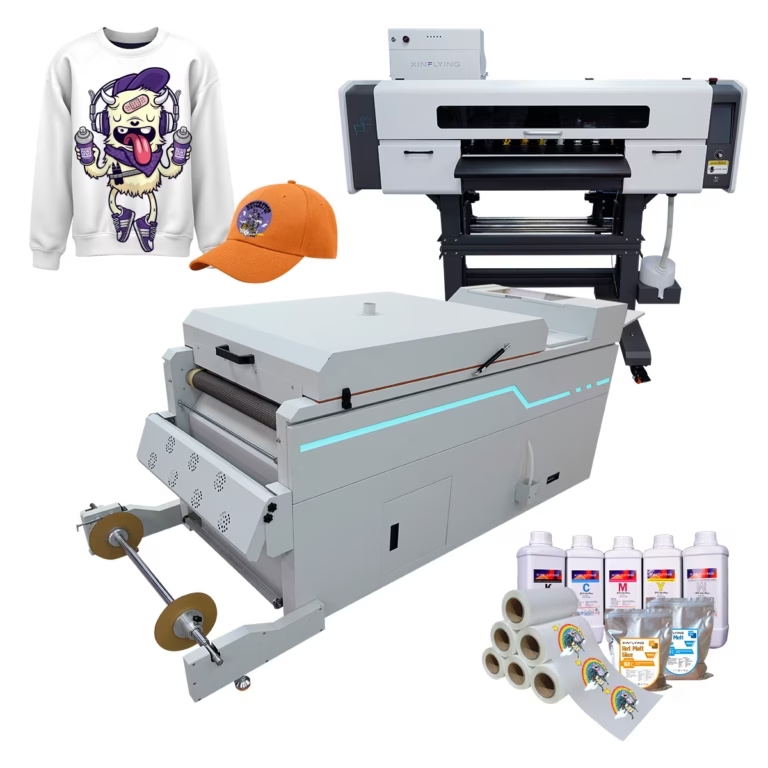
1. serba boleh: The “Yes to Everything” Factor
The primary reason a DTF printer is worth the investment is its ability to handle virtually any substrate. Traditional methods often force you to turn away business. Sublimation only works on white polyester; screen printing requires high minimums to be profitable; DTG requires expensive pre-treatment and struggles with certain synthetics.
A professional DTF system from a leading DTF printer supplier like Xinflying allows you to print on:
100% Kapas (Light and Dark)
Polyester and Sportswear
Nylon and Windbreakers
Canvas, Denim, and Leather
Wood and Hard Surfaces (UV-DTF applications)
The ability to accept a diverse range of orders from a single machine ensures that your equipment is rarely idle, significantly shortening the time it takes to recoup your initial investment.
2. Analyzing the Cost-Per-Print
When asking if a DTF printer is worth it, you must look at the consumables. DTF is widely regarded as one of the most cost-effective digital printing methods available today.
An average 12×12 inci (full chest) design typically costs between $0.50 dan $0.80 USD in total consumables (dakwat, filem, and powder). When you compare this to the $2.00–$4.00 cost of a similar DTG print or the high labor costs of weeding vinyl, the margins become clear. By partnering with a direct Pembekal pencetak DTF, you can further lower these costs by purchasing high-quality consumables in bulk, directly from the source of the machinery.
3. Labor Efficiency and Automation
Time is money in any manufacturing business. Traditional screen printing requires hours of screen preparation, burning, dan mencuci. DTF is a digital process that goes from “file to film” in minutes.
Modern industrial units, such as Xinflying’s 24in DTF printer series, feature integrated powder shakers and dryers. This automation means one operator can manage multiple machines simultaneously. The “set and forget” nature of the automated curing process allows your staff to focus on other high-value tasks, like sales or garment finishing, effectively lowering your overhead costs.
4. Why Choosing the Right DTF Printer Supplier Matters
A machine is only worth it if it stays running. Many entrepreneurs make the mistake of buying “conversion” desktop printers that lack industrial stability, leading to frequent nozzle clogs and downtime. To ensure the investment is worth it, you must source your hardware from an established DTF printer supplier that offers:
Industrial Components: Xinflying uses Epson i3200-A1 heads and Hoson mainboards, which are built for 24/7 pengeluaran.
Integrated R&D: Suppliers that manufacture their own equipment provide better firmware updates and mechanical refinements.
Global Support: Access to 24/7 technical assistance ensures that a minor software glitch doesn’t turn into a week of lost production.
5. CAPEX vs. OPEX: The Break-Even Point
Let’s look at a typical B2B scenario. A mid-range industrial DTF printer setup might cost between $6,000 dan $10,000 USD depending on the width and head configuration.
Average Revenue per Shirt: $15.00 – $25.00
Consumable/Garment Cost: $3.00 – $5.00
Gross Profit per Shirt: $10.00 – $20.00
At a conservative profit of $12 per shirt, a business only needs to sell approximately 600 kepada 800 shirts to pay off the entire machine. For a shop doing just 10 shirts a day, the machine pays for itself in less than three months. For a high-volume factory, the break-even point can be reached in as little as 30 hari.
6. Maintenance and Longevity
The “worth” of a machine is also tied to its lifespan. A professional DTF printer from Xinflying is built with THK linear guides and a heavy-duty chassis designed to last for 5+ years of constant use. Unlike cheaper alternatives, these machines don’t need to be replaced every season. When you calculate the depreciation over five years, the monthly cost of owning the equipment is remarkably low compared to the revenue it generates.
Key Specifications for Value Retention:
Head Longevity: Epson i3200-A1 heads, when maintained, can print millions of meters.
Frame Stability: Heavy-duty aluminum alloy frame prevents vibrations that cause “ghosting.”
White Ink System: Automated circulation prevents the most common cause of printer failure—clogging.
7. Market Trends: Is the Demand Growing?
Akhirnya, an investment is worth it if there is a market for the output. The global custom t-shirt printing market is expected to grow at a CAGR of nearly 10% over the next decade. Consumers are increasingly demanding “small batch” dan “personalized” pakaian. DTF is the only technology that can profitably handle a “batch of one” while still being efficient enough for a “batch of one thousand.”
Kesimpulan: The Verdict
Jadi, is a DTF printer worth it? If you are a business looking to increase your margins, expand your fabric offerings, and reduce manual labor, the answer is a definitive yes.
Namun begitu, yang “worth” is heavily dependent on the reliability of your hardware. By choosing an experienced DTF printer supplier like Xinflying Group, you are not just buying a printer; you are buying a production partner. With their 15-day delivery guarantee, industrial-grade components, dan 24/7 sokongan, Xinflying ensures that your investment remains a profit-generating asset for years to come. In the current landscape of textile decoration, the DTF system offers the highest ratio of versatility to cost, making it the smartest investment for the modern apparel entrepreneur.
