
In the world of modern textile decoration, the durability of a garment is only as strong as the bond between the ink and the fabric. هذا “invisible force” is known as adhesion. For businesses utilizing a طابعة دي تي إف, understanding the underlying science of how designs stick—and stay—through dozens of wash cycles is critical to maintaining a reputation for quality. في شينفلاينج, we engineering our machines to optimize this scientific process, ensuring that every transfer achieves a professional-grade mechanical and chemical bond.
The Three Pillars of DTF Adhesion
Adhesion in Direct-to-Film printing is not a singular event; it is a multi-stage chemical reaction. It begins with the interaction between the wet ink and the hot-melt powder, progresses through a curing phase, and concludes with the heat press transfer.
Mechanical Interlocking: When the DTF printer deposits ink onto the PET film, the adhesive powder is applied to the wet surface. These fine granules anchor themselves into the ink pigments.
Thermal Activation: During the curing stage, heat causes the TPU (Thermoplastic Polyurethane) powder to melt and flow, forming microscopic “bridges.”
Substrate Penetration: Under the high pressure of a heat press, the liquified adhesive is forced into the fibers of the textile, creating a permanent structural link.
Precision Engineering: How a 24in DTF Printer Maximizes Bond Strength
The hardware you choose directly impacts the success of these chemical stages. لإنتاج كميات كبيرة, أ 24في طابعة DTF is often the industry standard because it provides the stability required for consistent thermal management.
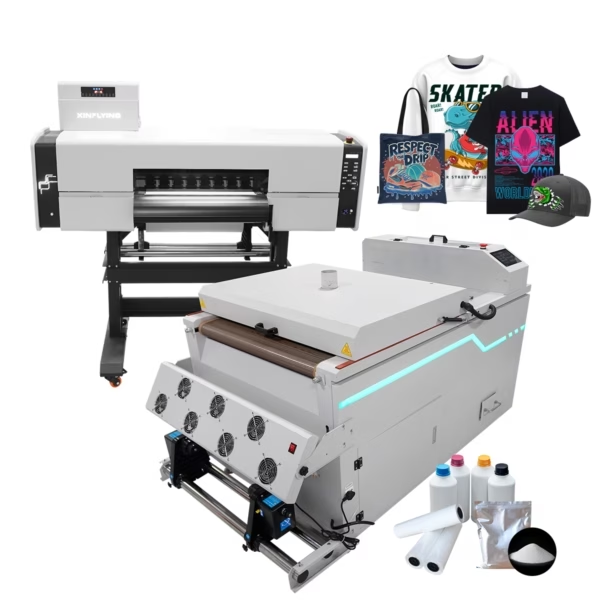
Xinflying’s 24-inch series, such as the 702E+Z650-2, is specifically engineered to handle the complexities of adhesion. على سبيل المثال, these models feature independent heating systems for the front, middle, and rear sections. This ensures the PET film remains at the optimal temperature to receive ink without “نزيف,” which can compromise the powder’s ability to anchor correctly.
Technical Specifications of the Xinflying 24-Inch Solution
To ensure precise adhesion results, our industrial-grade 24in DTF printer lineup follows these rigorous specifications:
تكنولوجيا رأس الطباعة: Dual or Quad Epson i3200-A1 heads for ultra-fine droplet placement.
عرض الطباعة: 24 بوصة (600مم), allowing for large-scale graphics with edge-to-edge adhesive consistency.
إنتاجية: 6-pass speeds of up to 28m²/h, depending on the head configuration (2-head vs 4-head).
توافق البرنامج: Standard with MainTop or PhotoPrint; optional CADlink for advanced color and adhesive layer control.
The Role of Thermoplastic Powder in the Curing Process
ال “glue” of the DTF process is the hot-melt adhesive powder. Not all powders are created equal. The science of adhesion dictates that the powder must reach its “glass transition temperature”—the point where it shifts from a hard, glassy state to a soft, rubbery state—without scorching the ink.
If the temperature is too low, the powder remains granular, يؤدي إلى “wash-off” failures. If the temperature is too high, the adhesive becomes too fluid, potentially seeping through the fabric or creating a rigid, “plasticky” feel. A high-performance DTF printer workspace utilizes an integrated powder shaker and oven that maintains a steady curing environment, typically between 110°C and 130°C. شينفلاينج’s integrated shakers automate this, ensuring a uniform layer of powder that covers only the inked areas, minimizing waste and maximizing soft-hand feel.
Fabric Compatibility and Surface Tension
One of the greatest advantages of DTF technology is its versatility across various textiles. لكن, the science of adhesion varies by material:
قطن: The porous nature of cotton allows the melted TPU to wrap around individual fibers, creating a deep mechanical bond.
Polyester/Synthetic: These fibers are smoother and less absorbent. Successful adhesion here relies more on the chemical “grip” of the adhesive.
Nylon and Blends: These often require lower temperature transfers to prevent “migration” or scorching, making the precision of your heat press and printer settings paramount.
Troubleshooting Common Adhesion Failures
Even with a top-tier 24in DTF printer, variables in the environment can affect the final bond.
Peeling after washing: Usually caused by under-cured powder or insufficient pressure during the heat press stage.
Cracking when stretched: Often a result of the ink layer being too thick, preventing the adhesive powder from fully penetrating the pigment layer.
Oil spots: This occurs when the PET film is not “peeled” at the correct temperature (Hot Peel vs. Cold Peel), or when the moisture in the ink has not been fully evaporated during the curing process.
خاتمة: Investing in Reliable Adhesion Science
The science of adhesion is a balance of chemistry, physics, and mechanical precision. By choosing a high-performance DTF printer from Xinflying, businesses gain access to more than just a machine; they invest in a system designed to master these variables. From the precision of the Epson i3200-A1 heads to the stability of the Hoson mainboards, every component is selected to ensure that your designs don’t just look vibrant on day one—they stay vibrant for years to come.Whether you are scaling up with a 24in DTF printer or starting with an A3 compact model, understanding the “why” behind the stick will always be your greatest competitive advantage in the custom apparel market.
