
As a global digital printing solutions provider, we at Xinflying focus on delivering stable, efektyvus, and production-ready technologies for textile and industrial printing users worldwide. Among the most widely used components in modern inkjet systems is the spausdinimo galvutė, which directly determines output quality, consistency, and long-term machine reliability.
In DTF printing workflows, the DTF XP600 printhead has become a popular choice due to its balance of cost-efficiency, tikslumas, ir universalumas. Tačiau, achieving stable production results requires proper handling, Priežiūra, and operational discipline. Šiame straipsnyje, we explore safe operation practices and key technical insights to help businesses maximize performance and extend equipment lifespan.
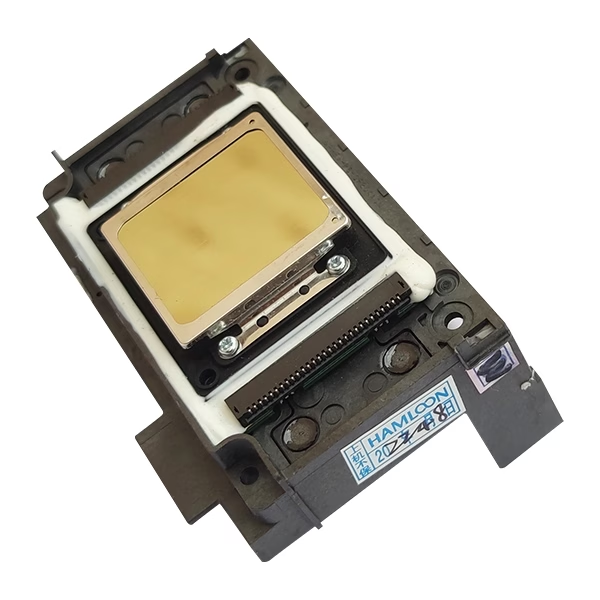
Understanding the Role of Printhead in DTF Printing Systems
The printhead is the core component of any digital printing system, responsible for jetting ink droplets onto transfer film with precision. In DTF applications, this precision directly impacts color accuracy, edge sharpness, and overall transfer quality.
DTF XP600 printhead is designed to support multiple ink types, including eco-solvent, water-based, UV, and DTF inks, making it highly adaptable across different production environments.
With 1080 nozzles and a minimum droplet size of 3.5 picoliters, the XP600 system delivers fine detail reproduction suitable for both textile printing and small-format graphic applications. This balance between affordability and performance makes it a common choice for entry-level and mid-range production systems.
Technical Structure and Ink Channel Configuration of XP600 Printhead
Proper understanding of the printhead structure is essential for safe operation. The XP600 model is built with multiple ink supply channels designed to ensure stable ink distribution across CMYK and additional color paths.
Each color channel is supported by multiple nozzle groups, allowing balanced ink flow and consistent droplet ejection. Paprastai, 180 nozzles are allocated per color channel, ensuring uniform coverage and reducing banding risks during high-speed printing.
In DTF systems, the DTF XP600 printhead configuration plays a role in maintaining color consistency across continuous production runs. Any imbalance in ink supply or pressure can directly affect print quality, making system stability a key operational requirement.
Safe Operating Environment for Printhead Longevity
Maintaining a stable environment is one of the most important factors in protecting the printhead during daily production. Temperature and humidity fluctuations can affect ink viscosity and nozzle performance.
For the DTF XP600 printhead, we recommend maintaining a controlled workspace with stable humidity levels to prevent ink drying or clogging. Dust-free environments are also essential, as airborne particles can interfere with nozzle function and reduce print accuracy.
Operators should also avoid exposing the printhead system to direct sunlight or excessive heat, as this may accelerate ink evaporation and shorten the lifespan of sensitive components. Under normal conditions, the XP600 printhead typically lasts between three to six months depending on usage intensity and maintenance quality.
Daily Maintenance Practices for Stable Printhead Performance
Regular maintenance is essential for ensuring the long-term stability of any printhead system. In DTF printing workflows, clogging is one of the most common issues affecting print quality and production efficiency.
To maintain a healthy DTF XP600 printhead, operators should perform routine cleaning cycles using manufacturer-approved cleaning solutions. Automatic cleaning functions should be activated at regular intervals to prevent ink sedimentation inside the nozzles.
It is also important to ensure proper ink circulation before starting production. This helps maintain consistent ink pressure and prevents air bubbles from entering the system, which can lead to missing nozzles or uneven output.
„Xinflying“., we emphasize preventive maintenance as the most effective strategy for reducing downtime and extending equipment lifespan in industrial printing environments.
Safe Ink Handling and System Compatibility Considerations
Ink compatibility plays a major role in printhead safety and performance stability. The XP600 system is compatible with multiple ink types, including eco-solvent, water-based, UV, and DTF inks. Tačiau, using inconsistent or low-quality ink formulations can significantly increase the risk of clogging or nozzle damage.
For the DTF XP600 printhead, stable ink viscosity is essential to ensure smooth droplet formation and accurate jetting. Ink that is too thick or too thin can disrupt pressure balance inside the nozzle channels, leading to inconsistent print output.
Operators should also avoid mixing different ink batches without proper flushing, as chemical incompatibility may cause sedimentation inside the printhead system. Proper ink storage and controlled usage are key factors in maintaining long-term stability.
Operational Practices for High-Quality DTF Output
Efficient use of a printhead requires not only proper maintenance but also correct operational settings. Print resolution, greitis, and pass settings should be adjusted based on material type and production requirements.
The DTF XP600 printhead performs best when balanced between speed and quality settings. Overloading the system with excessively high-speed printing can reduce print accuracy and increase mechanical stress on the nozzle system.
Operators should also conduct nozzle checks before each production shift to ensure all channels are functioning properly. Early detection of missing nozzles helps prevent large-scale production defects and reduces material waste.
„Xinflying“., we recommend establishing standardized operating procedures to ensure consistent output quality across different operators and production shifts.
Building Long-Term Stability in Printhead-Based Production Systems
Sustainable production in DTF printing depends heavily on the reliability of the printhead system. While the XP600 model is designed for cost efficiency and versatility, its performance is closely tied to operational discipline and maintenance routines.
The DTF XP600 printhead offers strong adaptability across multiple printing environments, but its lifespan and performance stability depend on how carefully it is handled in daily use. Proper environmental control, ink management, and cleaning procedures are essential for achieving consistent results.
By integrating these practices into regular production workflows, businesses can significantly reduce downtime, improve print consistency, and extend equipment service life.
Final Recommendations for Safe Printhead Usage in DTF Systems
As DTF printing continues to grow in global markets, the importance of safe and efficient printhead operation becomes increasingly critical. The XP600 model remains a widely adopted solution due to its balance of cost, kokybės, ir universalumas.
„Xinflying“., we continue to support printing businesses with reliable equipment knowledge and production guidance to help them maximize the value of the DTF XP600 printhead.
By combining proper maintenance, controlled operating environments, and standardized workflows, businesses can achieve stable, high-quality DTF printing performance while minimizing operational risks and long-term costs.