Escolher a tecnologia de impressão certa é essencial para administrar um negócio de impressão lucrativo. À medida que a impressão sob demanda continua a crescer, milhares de empresas estão gerando receitas significativas selecionando o equipamento certo desde o início.
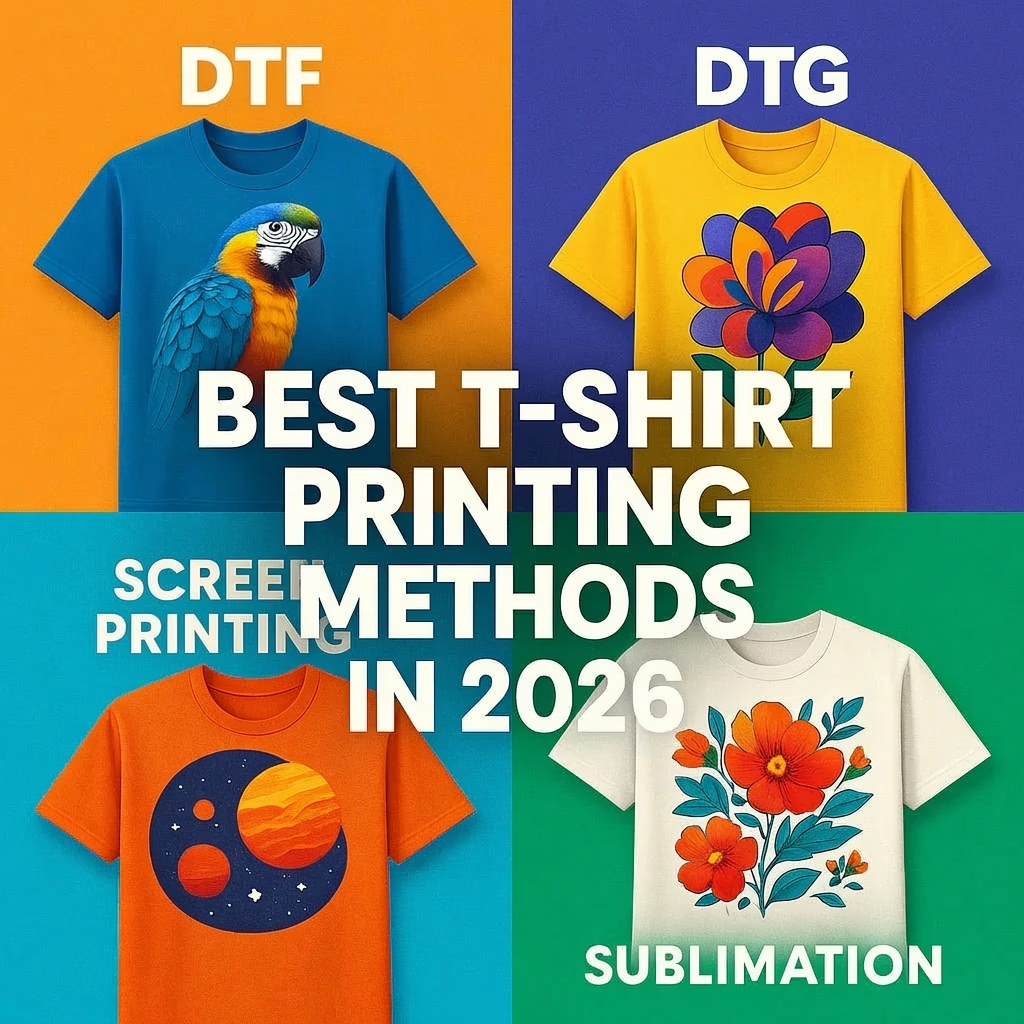
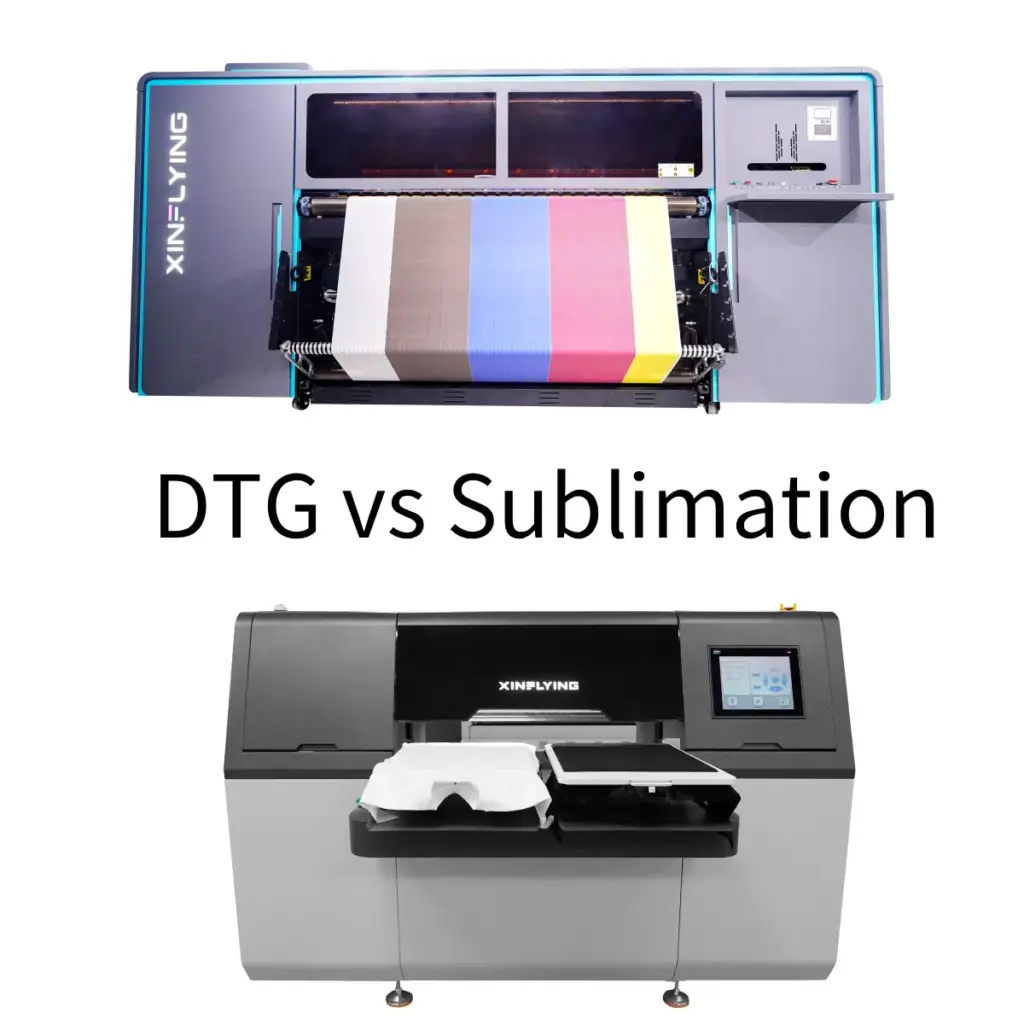
Entre as tecnologias mais debatidas estão impressão por sublimação e DTG (direto na roupa) impressão. Ambos são conhecidos pela excelente qualidade de impressão, mas cada um serve materiais diferentes, fluxos de trabalho, e necessidades de negócios. Então, qual opção é melhor para seus objetivos de impressão?
Este guia detalha as diferenças entre sublimação e impressão DTG – qualidade, custo, compatibilidade, durabilidade, e muito mais – para que você possa tomar uma decisão informada a longo prazo.
O que é impressão por sublimação?
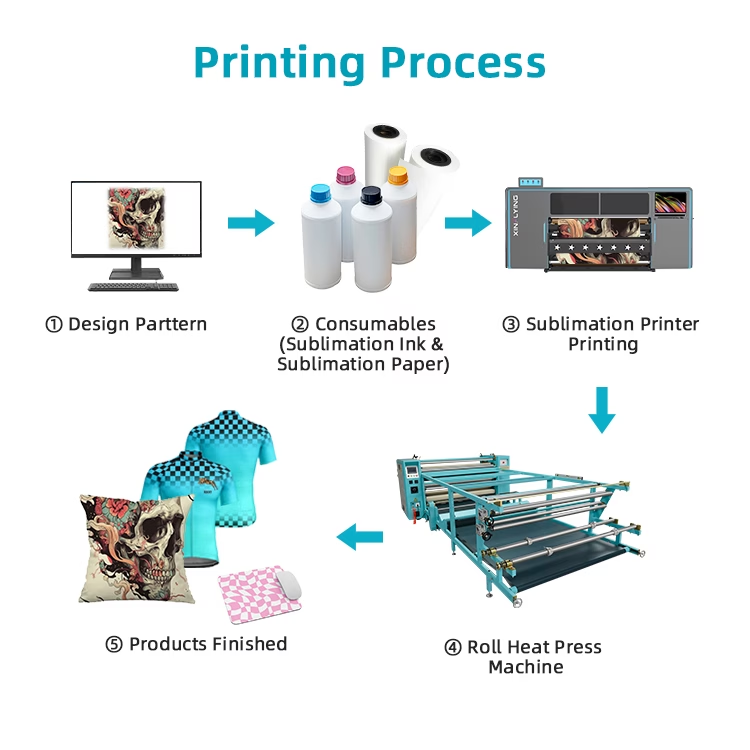
A impressão por sublimação usa calor e pressão controlados para transformar corante sólido em gás, colá-lo diretamente em fibras de poliéster ou superfícies revestidas com polímero. O processo começa com uma impressora de sublimação que imprime desenhos em papel especial de sublimação usando tinta de sublimação.
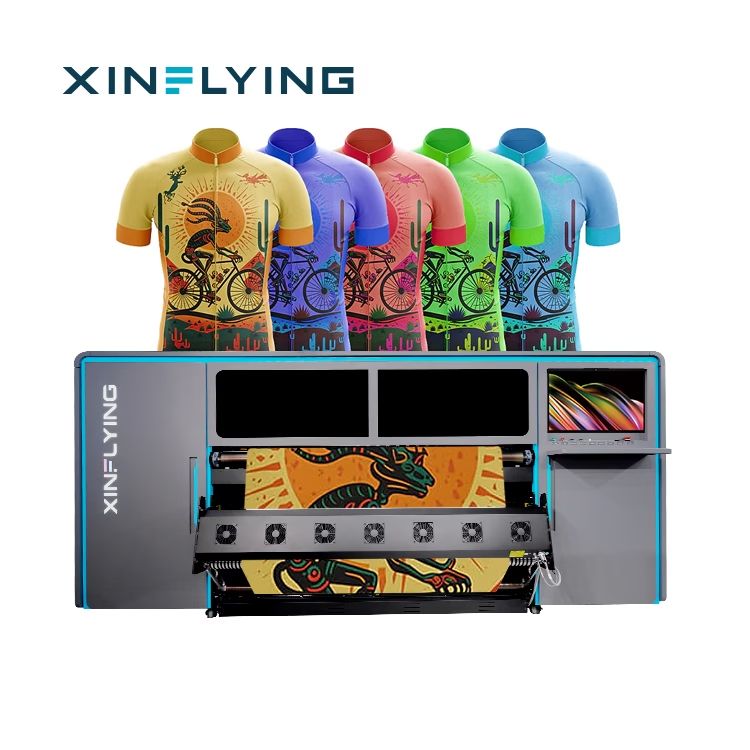
Porque a tinta se funde com o material, a estampa passa a fazer parte do tecido – o que significa que não racha, casca, ou desaparecer. A sublimação é ideal para produtos promocionais, roupas esportivas, e têxteis impressos sob demanda.
Como funciona a impressão por sublimação
- Crie o projeto usando software de design gráfico.
- Imprima a arte espelhada em papel de sublimação usando tinta de sublimação.
- Posicione o papel no produto e fixe-o com fita resistente ao calor.
- Aplique calor e pressão usando uma prensa térmica – isso transforma a tinta em gás e a liga permanentemente ao material.
- Deixe o produto esfriar, em seguida, retire o papel para revelar um permanente, impressão vibrante.
Prós da sublimação
- Produz vívido, cores duradouras
- A tinta torna-se parte do tecido – sem rachar ou descascar
- Suave, acabamento perfeito sem textura elevada
- Excelente para designs fotográficos e coloridos
- Funciona em muitos produtos: canecas, copos, vestuário, decoração, etc.
Contras da sublimação
- Compatível apenas com tecidos de poliéster ou itens revestidos com polímero
- Não funciona em 100% algodão
- Limitado a materiais claros ou brancos
- Equipamentos e consumíveis podem ser caros
- A velocidade de produção pode diminuir devido às etapas de transferência de calor
O que é impressão DTG?
DTG (Direto para a roupa) a impressão funciona como uma impressora jato de tinta, mas imprime diretamente no tecido. A tinta adere a uma peça de roupa pré-tratada para criar detalhes altamente detalhados., impressões suaves. DTG é ideal para designs complexos, impressões de fotos, e pedidos de pequenos lotes.
Ao contrário da sublimação, DTG funciona melhor em fibras naturais – especialmente algodão.
Como funciona a impressão DTG
- Pré-trate a roupa para garantir a ligação adequada da tinta.
- Prepare a arte usando software de design ou RIP.
- Imprima diretamente na roupa usando tintas brancas e coloridas.
- Cure a tinta usando uma prensa térmica ou unidade de cura embutida.
- Produto final está pronto com um suave, impressão detalhada.

Prós da impressão DTG
- Excelente para tecidos de algodão e fibras naturais
- Altamente detalhado, estampas coloridas – mesmo em roupas escuras
- Produção rápida e fluxo de trabalho simples
- Ideal para pedidos de pequenas quantidades ou personalizados
Contras da impressão DTG
- As impressões ficam na superfície do tecido e podem desbotar com o tempo
- Requer pré-tratamento do tecido
- Menos durável em comparação com a sublimação em poliéster
- As cores podem ser menos vibrantes em tecidos escuros ou com muita textura
DTG versus. Sublimação: Principais diferenças
1. Compatibilidade de tecido
- Sublimação: Poliéster, misturas poli, produtos revestidos com polímero
- DTG: Tecidos de algodão e mistura de algodão
2. Qualidade de impressão
- Sublimação: Ultra-vibrante, suave, e permanentemente infundido no material
- DTG: Altamente detalhado, mas pode parecer menos vibrante em roupas escuras ou texturizadas
3. Custos de configuração
- DTG: Maior investimento inicial, mas menos custos recorrentes com consumíveis
- Sublimação: Menor custo de equipamento, mas requer tinta de sublimação & papel a longo prazo
4. Custo operacional
- DTG: $0.50–$3,50 por impressão dependendo da cor e complexidade
- Sublimação: Mais econômico para grandes lotes e impressões completas
5. Velocidade de produção
- DTG: Mais rápido para roupas prontas, mas requer pré-tratamento
- Sublimação: Impressão rápida, mas fluxo de trabalho mais longo para designs de tecido completo
6. Durabilidade
- Sublimação: Extremamente durável – torna-se parte do tecido
- DTG: Boa qualidade, mas pode desbotar ou rachar com o tempo
7. Impacto Ambiental
- DTG: Usa tintas à base de água, ecológico; pré-tratamentos variam
- Sublimação: Corantes à base de água, mas requerem alta energia para prensagem térmica
| Categoria | Impressão DTG | Impressão por sublimação |
|---|---|---|
| Compatibilidade de materiais | Melhor para 100% algodão & fibras naturais | Funciona apenas em itens revestidos de poliéster ou polímero |
| Qualidade de impressão | Alto detalhe; ótimo para projetos complexos | Extremamente vibrante; fotorrealista em poliéster |
| Custo de configuração | Maior investimento inicial | Menor custo de configuração |
| Custo operacional | Maior custo por impressão (tinta + pré-tratamento) | Menor custo por impressão, especialmente para granel |
| Velocidade de produção | Rápido para pedidos pequenos; pré-tratamento necessário | Impressão rápida; mais lento para produção completa de tecido |
| Durabilidade | Bom, mas pode desbotar/descascar com o tempo | Excelente; fundido em fibras, não vai quebrar |
| Impacto Ambiental | Tintas à base de água, mas produtos químicos de pré-tratamento envolvidos | Tintas ecológicas; depende do uso de energia térmica |
| Melhor para | Pedidos pequenos e médios, vestuário de algodão, arte detalhada | Grandes pedidos, roupas de poliéster, roupas esportivas, itens promocionais |
Você deve escolher DTG ou sublimação?
Escolha DTG se:
- Você trabalha com 100% algodão
- Você precisa designs altamente detalhados ou coloridos
- Você cuida pedidos pequenos ou personalizados
- Você prefere configuração mínima e produção rápida
Escolha Sublimação se:
- Você imprime em tecidos de poliéster ou sintéticos
- Você precisa durável, permanente, resultados vibrantes
- Você produz pedidos em grandes quantidades
- Você é um comece com necessidades de produção escalonáveis
Em última análise, a melhor escolha depende do seu modelo de negócio, gama de produtos, e demanda do cliente.
Conclusão
Tanto a sublimação quanto a impressão DTG oferecem excelentes resultados – mas para finalidades diferentes.
- DTG é melhor para roupas de algodão, Designs intrincados, e pedidos de pequeno e médio porte.
- Sublimação é ideal para materiais de poliéster, cores vivas, e produção em alto volume.
Não importa qual tecnologia você escolha, Xinflying fornece profissional, confiável, e soluções de impressão económicas para apoiar o crescimento do seu negócio.
Entre em contato com a Xinflying hoje para explorar impressoras que oferecem desempenho excepcional, excelente durabilidade, e valor imbatível para o seu negócio de impressão sob demanda.