
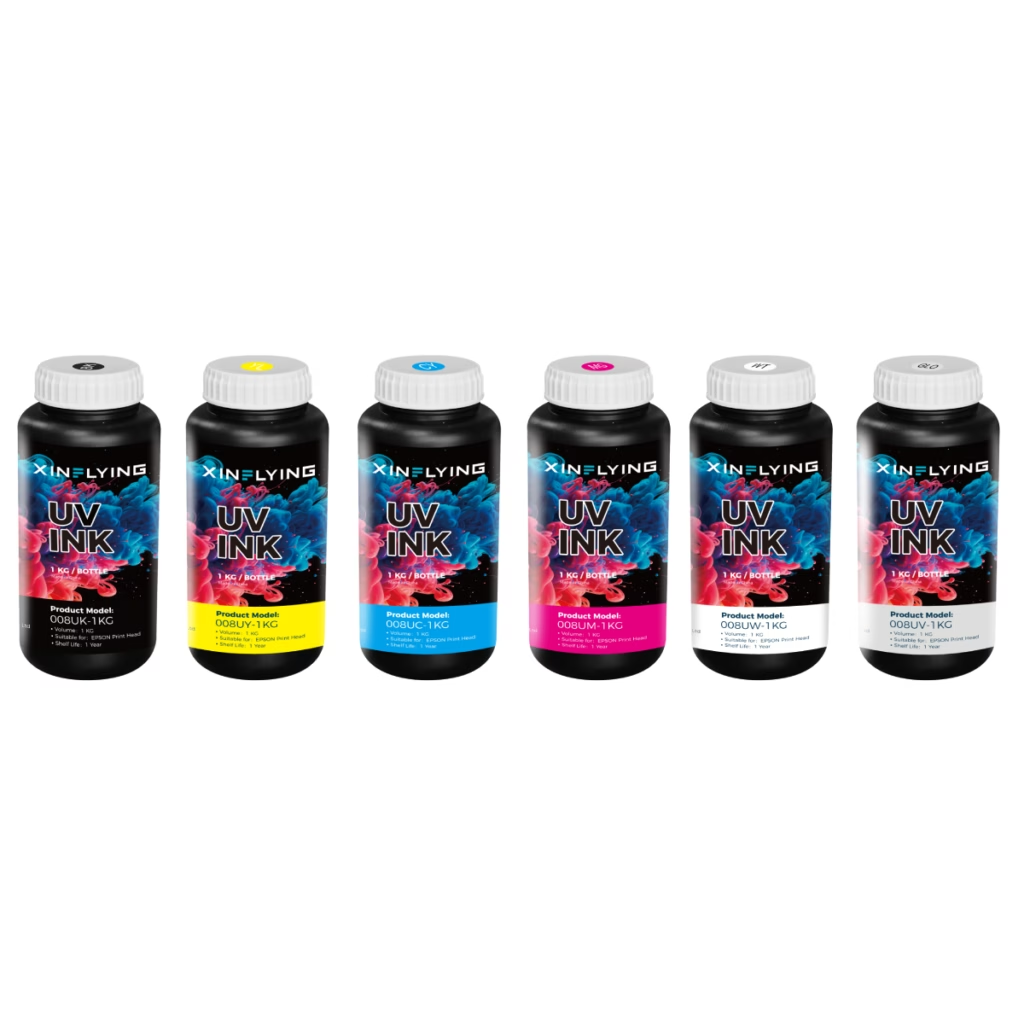
Tại Xinflying, chúng tôi đã dành nhiều năm chuyên về ngành in kỹ thuật số, phấn đấu dẫn đầu sự đổi mới đồng thời đóng vai trò là đối tác đáng tin cậy của khách hàng toàn cầu. Through our work with print shops transitioning from solvent or eco-solvent systems to UV technology, we have observed that one technical concept causes more confusion than almost any other: viscosity and its effect on Mực UV behavior. Understanding how UV curing ink flows through printheads, spreads on substrates, and responds to temperature is not merely academic—it directly impacts print quality, production speed, and equipment longevity. As a supplier of high-quality UV ink for DTF and flatbed printers, we believe that mastering these principles separates professional operations from those struggling with banding, nozzle clogs, and inconsistent results.
Why Viscosity Matters for Printhead Performance
Viscosity describes a fluid’s resistance to flow. For UV curing ink, this property determines how easily the ink is ejected through microscopic nozzles. If the UV ink is too thick (high viscosity), the printhead struggles to fire droplets consistently, leading to missing nozzles, irregular dot placement, and banding across your prints. If the UV ink is too thin (low viscosity), it may drip from nozzles between firings, create satellite dots, or spread excessively on non-porous substrates. Every printhead brand and model is engineered to operate within a specific viscosity range, typically 8–12 centipoise (cP) for industrial UV curing ink hệ thống. Our UV ink is formulated precisely to meet these specifications across a broad assortment of branded printheads, ensuring reliable ejection and consistent droplet formation from the first print to the thousandth.
Temperature’s Direct Effect on Ink Flow
UV curing ink viscosity is not a fixed number—it changes significantly with temperature. As UV ink warms up, its viscosity decreases, becoming thinner and more fluid. As it cools, viscosity increases, becoming thicker and more resistant to flow. Most UV printers rely on built-in heating systems to maintain ink reservoirs and printheads at an optimal temperature, typically 35°C–45°C. This temperature control ensures that UV curing ink maintains stable viscosity regardless of the ambient room conditions. We have seen customers blame their UV ink for poor performance when the real issue was a malfunctioning printhead heater or a cold workshop. Monitoring your printer’s reported ink temperature and allowing adequate warm-up time each morning are simple habits that prevent viscosity-related failures. Fast UV curing is designed to improve production efficiency and reduce downtime, but consistent flow depends on stable temperature first.
Viscosity’s Role in Adhesion and Curing
The flow properties of UV curing ink also influence how well it wets and bonds to different substrates. Lower viscosity UV ink spreads more readily, which helps it flow into microscopic surface textures on materials like acrylic or metal, promoting stronger mechanical adhesion. Tuy nhiên, overly thin UV ink can run or pool on vertical surfaces or create mottled solids. Higher viscosity UV ink holds sharper edges and finer details but may struggle to adhere to extremely smooth or non-absorbent surfaces. Our UV ink balances these competing needs, producing bright, high-definition prints with consistent color quality across multiple runs. It offers excellent adhesion and durability, ensuring prints stick firmly to a variety of surfaces—glass, kim loại, acrylic, and more—with scratch-resistant and long-lasting results. The correct viscosity allows the UV curing ink to level properly before exposure to UV light, creating a smooth, uniform film that cures into a durable finish.
Mastering Flow for Professional Results
Viscosity and flow principles govern every successful UV print job. From printhead compatibility and temperature management to adhesion on challenging substrates, understanding how UV ink behaves empowers you to troubleshoot issues and optimize production. Tại Xinflying, our UV curing ink is engineered for stable viscosity, fast curing, và sôi động, Bản in bền. Khi bạn hợp tác với chúng tôi, you receive not only premium UV ink but also the technical knowledge to make it perform at its peak. Let us help you achieve flawless results, drop by drop.