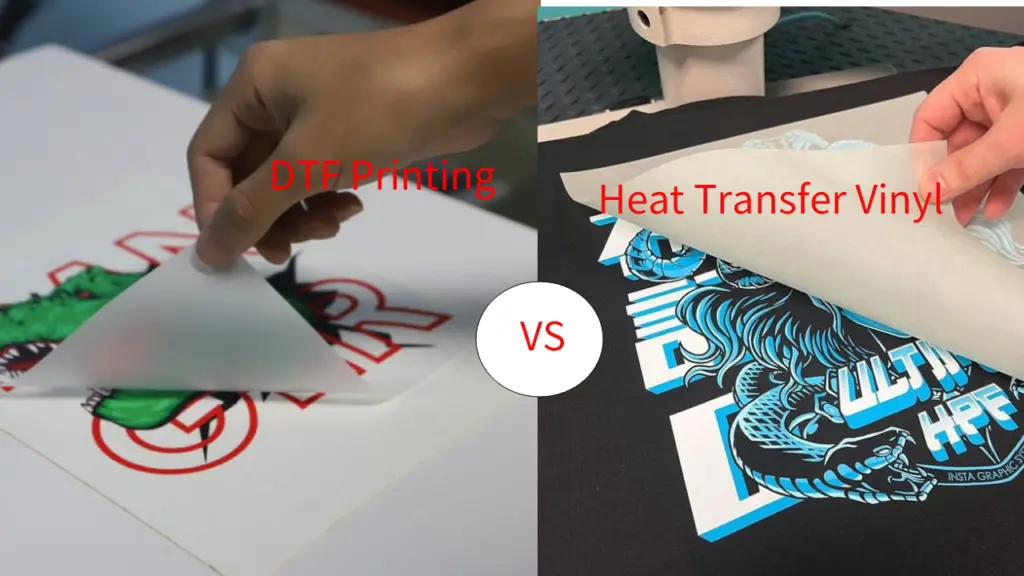
Impression DTF et. Vinyle de transfert de chaleur (VTH) — quelle méthode est la meilleure pour les vêtements personnalisés? Pour les petites imprimeries et les décorateurs de vêtements, c'est une question importante.
DTF (Direct-to-Film) est une technologie relativement nouvelle qui a gagné rapidement en popularité au cours de la dernière décennie en raison de ses couleurs vives., détail fin, et polyvalence. Avant DTF, Vinyle de transfert de chaleur (VTH) dominé l'industrie de l'impression personnalisée, et il est encore largement utilisé pour les conceptions simples et la personnalisation en petits lots.
Aujourd'hui, les deux méthodes sont largement utilisées et continuent de transformer le marché des vêtements sur mesure. Chacun a ses propres forces et faiblesses. Décomposons les différences pour vous aider à décider laquelle correspond le mieux à vos besoins..
Qu'est-ce que l'impression DTF?
La taille du marché mondial de l’impression directe sur film a été estimée à USD 2,720.0 millions en 2024 et devrait atteindre USD 3,920.0 millions par 2030, croître à un TCAC de 6.0% depuis 2025 à 2030. La croissance est principalement influencée par des facteurs tels que l'adoption croissante de technologies d'impression avancées., demande croissante de vêtements personnalisés et à la demande, et une prise de conscience croissante des entreprises quant à la rentabilité et à la polyvalence de l'impression DTF par rapport aux méthodes traditionnelles..(Source: Recherche sur Grand View, Rapport sur le marché de l’impression directe sur film)
Principales tendances du marché & Connaissances
- L'Europe a représenté 36.0% part du marché global dans 2024.
- Par type, Le segment des imprimantes DTF dédiées représentait la plus grande part du marché. 45.0% dans 2024.
- Par film, Le segment des films pelables à froid détenait une part de marché importante en 2024.
- Par produit final, Le segment des t-shirts a dominé le marché de l'impression DTF en 2024.(Source: Recherche sur Grand View, Rapport sur le marché de l’impression directe sur film)
Taille du marché & Prévision
- 2024 Taille du marché: USD 2,720.0 Million
- 2030 Taille projetée du marché: USD 3,920.0 Million
- TCAC (2025-2030): 6.0%(Source: Recherche sur Grand View, Rapport sur le marché de l’impression directe sur film)
L'impression DTF commence par l'impression de votre dessin sur un film de transfert PET à l'aide d'encres spécialisées à base d'eau., y compris l'encre blanche pour les couches de base et CMJN pour les couleurs.
Après l'impression, La poudre adhésive thermofusible TPU est appliquée sur la conception humide. La poudre est ensuite durcie à la chaleur, créant un lien fort pour le transfert sur les tissus avec une presse à chaud.
Les composants clés de l'impression DTF comprennent:
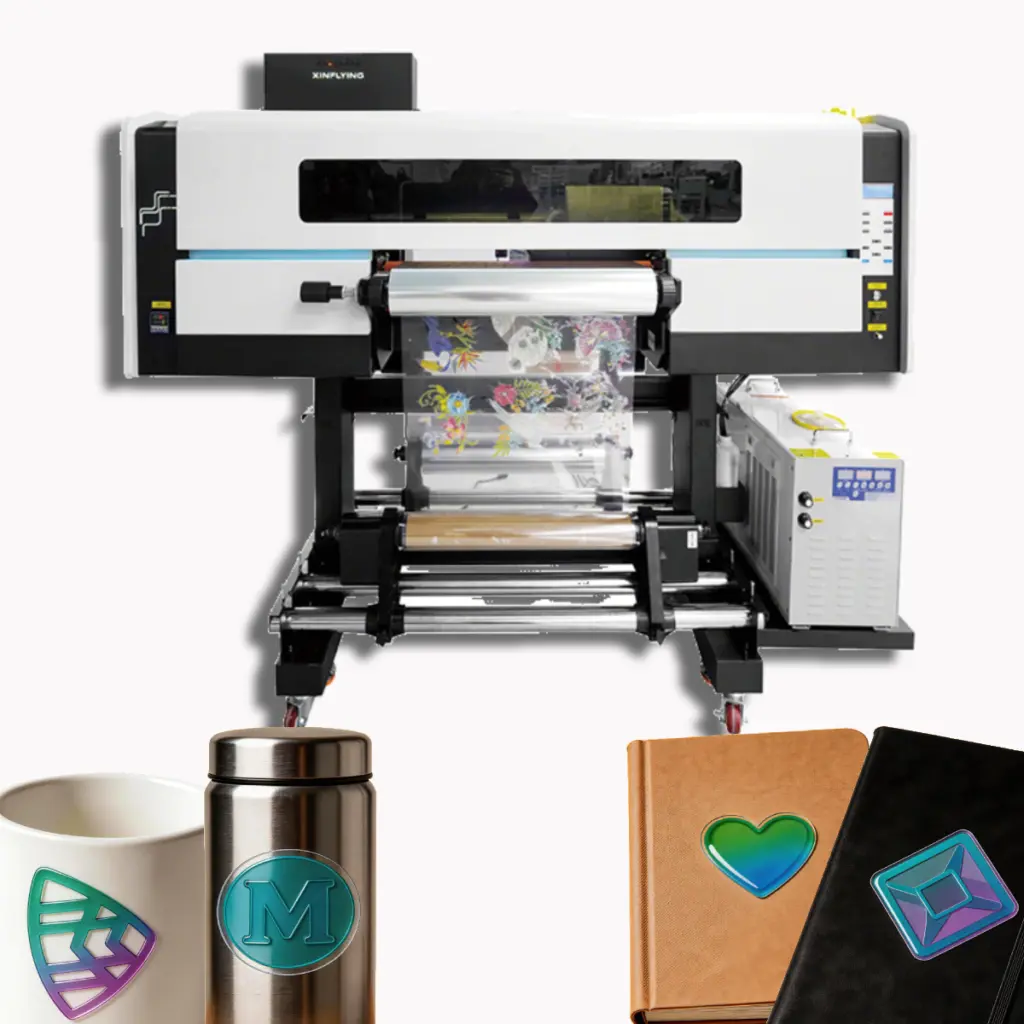
- Imprimante DTF – Des imprimeurs spécialisés qui produisent des couleurs vives, dessins précis directement sur film. Xinflying propose des modèles pour la production à petite et à grande échelle.
- Film PET DTF – Film de haute qualité avec une couche adhésive, disponible en différentes tailles.
- Encres DTF – Encres pigmentées à base d’eau qui fournissent de la brillance, couleurs durables.
- Logiciel RIP – Prépare vos illustrations pour l’imprimeur et optimise les couleurs, demi-teintes, et couches.
- DTF Poudre – Poudre adhésive qui garantit que les motifs adhèrent fermement au tissu.
- Machine de presse à chaud – Transfère le motif durci du film aux vêtements avec une chaleur et une pression contrôlées.
DTF fonctionne bien sur coton, polyester, mélanges, tissus foncés, et même des surfaces non textiles. Il excelle dans les conceptions complexes avec des détails fins et des dégradés de couleurs.
Qu'est-ce que le vinyle de transfert thermique (VTH)?
HTV est une méthode d'impression plus simple utilisant des feuilles de vinyle. Les motifs sont découpés dans du vinyle coloré puis pressés à chaud sur du tissu..
Outils et matériels requis pour le VTH:
- Feuilles de vinyle – Feuilles prédécoupées ou personnalisables de différentes couleurs, textures, et finitions.
- Coupeur de vinyle – Découpe des motifs dans la feuille de vinyle.
- Presse chauffée – Applique la température et la pression pour faire adhérer le motif au vêtement.
- Feuille de téflon – Protège le design lors du pressage à chaud.
HTV produit des impressions durables adaptées aux petits lots, dessins unicolores, ou des finitions spéciales comme des paillettes et des textures métalliques.
Principales différences entre DTF et HTV
1. Flexibilité de conception
- DTF: Couleurs illimitées, dégradés, et des images photoréalistes. Plusieurs couleurs imprimées simultanément sur un seul film.
- VTH: Idéal pour les dessins vectoriels simples et les couleurs unies. Les motifs multicolores nécessitent une superposition, travail et complexité croissants.
2. Compatibilité des matériaux
- DTF: Fonctionne sur presque tous les tissus – coton, polyester, nylon, cuir, mélanges - et même du bois, métal, ou en céramique.
- VTH: Principalement du coton et du polyester. Les mélanges nécessitent un contrôle minutieux de la température; moins polyvalent dans l'ensemble.
3. Efficacité de production
- DTF: Aucun désherbage requis. Plusieurs motifs imprimés sur une seule feuille. Efficace pour la production de lots moyens à grands.
- VTH: Chaque couleur et motif doit être coupé et désherbé. À forte intensité de main d'œuvre pour les conceptions complexes. Unicolore, les petits lots sont plus rapides.
4. Durabilité
- DTF: Résiste 50+ lavages, résiste aux fissures et au pelage, maintient la flexibilité.
- VTH: Dure généralement 25 à 30 lavages. La qualité varie selon le type de vinyle; peut se fissurer avec le temps, surtout avec plusieurs couches.
5. Sentir & Apparence
- DTF: Mince, sensation de tissu. Encombrement minimal, doux au toucher.
- VTH: Texture légèrement surélevée; l'épaisseur augmente avec les couches. Les vinyles spéciaux peuvent sembler plastiques.
6. Coût & Équipement
- DTF: Investissement initial plus élevé (imprimante, encrer, film, poudre), mais coût unitaire inférieur pour les commandes groupées.
- VTH: Coût de démarrage réduit (coupeur de vinyle + presse chauffée), mais une main d'œuvre par unité plus élevée pour les conceptions multicolores ou complexes.
Quand choisir DTF
- Photoréaliste, pente, ou des conceptions complexes
- Volumes de production importants ou moyens
- Besoin d’une durabilité maximale
- Divers types de tissus
- Oeuvre multicolore
Quand choisir le HTV
- Conceptions simples de texte ou de logo
- Petits lots ou personnalisation
- Configurations soucieuses du budget
- Finitions spécialisées comme les paillettes ou le métallisé
- Travaux rapides en une seule couleur
Le DTF est-il meilleur que le HTV?
DTF et HTV ont leur place. Pour grand volume, détaillé, et des impressions durables, DTF est supérieur. Pour simple, petit lot, et des applications économiques, Le HTV reste idéal.
Le choix dépend entièrement des besoins de votre entreprise, complexité de conception, et échelle de production.
Choisir la bonne imprimante DTF
Choisir la bonne imprimante est la clé de votre réussite. Imprimantes DTF Xinflying livrer des couleurs éclatantes, des détails précis, et des performances stables sur tous les tissus, y compris le coton et le cuir.
Avec soutien technique, entraînement, et 24/7 service en ligne, Xinflying vous aide à maximiser votre productivité, minimiser les temps d'arrêt, et assurer la cohérence, des résultats de haute qualité pour toutes les applications d'impression.
Source de données: Recherche sur Grand View, Rapport sur le marché de l’impression directe sur film
https://www.grandviewresearch.com/industry-analysis/direct-film-printing-market-report