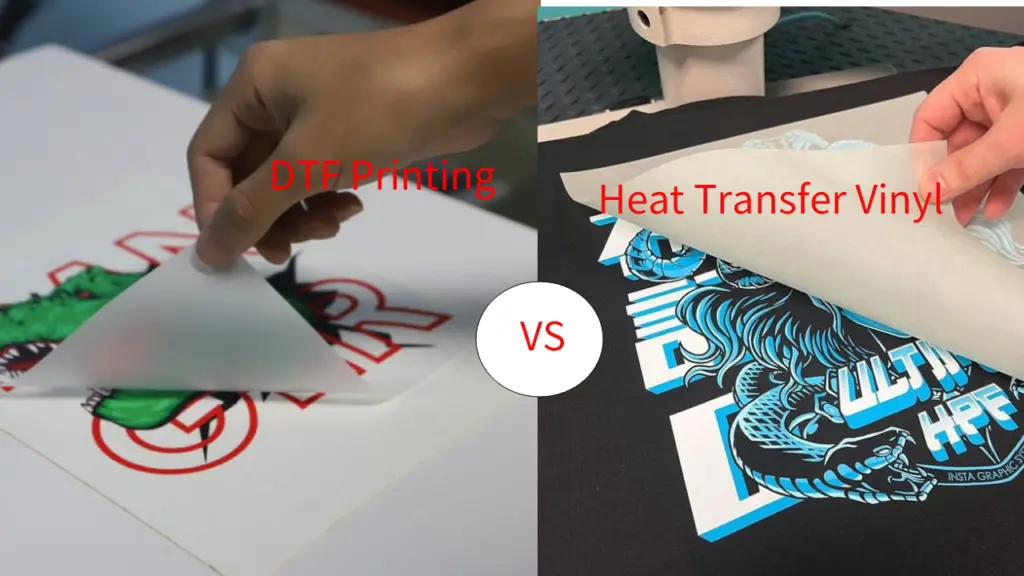
Impresión DTF frente a. Vinilo de transferencia de calor (TVH) — ¿Qué método es mejor para prendas personalizadas?? Para pequeñas imprentas y decoradores de indumentaria., esta es una pregunta importante.
DTF (Directo a la película) Es una tecnología relativamente nueva que ha ganado rápidamente popularidad en la última década debido a sus colores vibrantes., fino detalle, y versatilidad. Antes de la DTF, Vinilo de transferencia de calor (TVH) dominó la industria de la impresión personalizada, y todavía se usa ampliamente para diseños simples y personalización de lotes pequeños..
Hoy, Ambos métodos se utilizan ampliamente y continúan transformando el mercado de prendas personalizadas.. Cada uno tiene sus propias fortalezas y debilidades.. Analicemos las diferencias para ayudarle a decidir cuál se adapta mejor a sus necesidades..
¿Qué es la impresión DTF??
El tamaño del mercado mundial de impresión directa a película se estimó en USD 2,720.0 millones en 2024 y se prevé que alcance los USD 3,920.0 millones por 2030, creciendo a una CAGR de 6.0% de 2025 a 2030. El crecimiento está influenciado principalmente por factores como la creciente adopción de tecnologías de impresión avanzadas., Creciente demanda de ropa personalizada y bajo demanda., y una creciente conciencia empresarial sobre la rentabilidad y versatilidad de la impresión DTF en comparación con los métodos tradicionales..(Fuente: Investigación de gran vista, Informe de mercado de impresión directa a película)
Tendencias clave del mercado & Perspectivas
- Europa representó 36.0% participación del mercado total en 2024.
- Por tipo, El segmento de impresoras DTF dedicadas representó la mayor proporción de 45.0% en 2024.
- Por película, El segmento de películas de pelado en frío tenía una importante participación de mercado en 2024.
- Por producto final, El segmento de camisetas dominó el mercado de impresión DTF en 2024.(Fuente: Investigación de gran vista, Informe de mercado de impresión directa a película)
Tamaño del mercado & Pronóstico
- 2024 Tamaño del mercado: Dólar estadounidense 2,720.0 Millón
- 2030 Tamaño de mercado proyectado: Dólar estadounidense 3,920.0 Millón
- Tocón (2025-2030): 6.0%(Fuente: Investigación de gran vista, Informe de mercado de impresión directa a película)
La impresión DTF comienza imprimiendo su diseño en una película de transferencia de PET utilizando tintas especializadas a base de agua., Incluye tinta blanca para capas base y CMYK para colores..
Después de imprimir, Se aplica polvo adhesivo termofusible de TPU al diseño húmedo. Luego, el polvo se cura con calor., creando una unión fuerte para transferir a telas con una prensa térmica.
Los componentes clave de la impresión DTF incluyen:
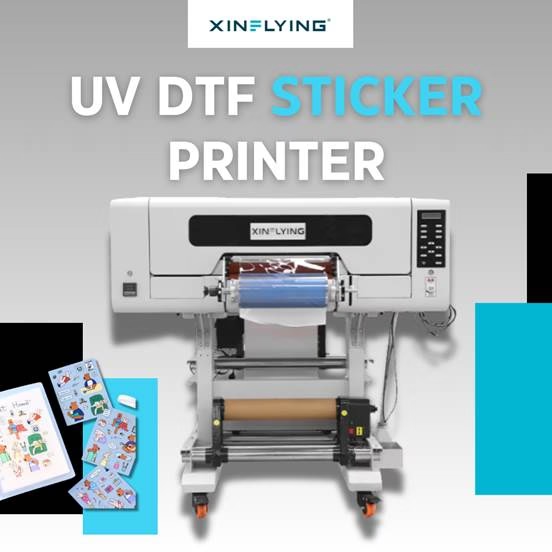
- Impresora DTF – Impresoras especializadas que producen vibrantes, diseños precisos directamente sobre la película. Xinflying ofrece modelos para producción a pequeña y gran escala..
- Película de PET DTF – Película de alta calidad con una capa adhesiva., disponible en varios tamaños.
- Tintas DTF – Tintas pigmentadas a base de agua que proporcionan brillo., colores duraderos.
- Software RIP – Prepara tu obra de arte para la impresora y optimiza los colores., medios tonos, y capas.
- Polvo DTF – Polvo adhesivo que asegura que los diseños se adhieran firmemente a la tela..
- Máquina de prensa de calor – Transfiere el diseño curado de la película a prendas con calor y presión controlados..
DTF funciona bien en algodón, poliéster, mezclas, telas oscuras, e incluso superficies no textiles. Destaca en diseños complejos con detalles finos y degradados a todo color..
¿Qué es el vinilo de transferencia de calor? (TVH)?
HTV es un método de impresión más sencillo que utiliza láminas de vinilo. Los diseños se cortan de vinilo de colores y luego se prensan con calor sobre tela..
Herramientas y materiales necesarios para HTV.:
- Hojas de vinilo – Hojas precortadas o personalizables en varios colores., texturas, y acabados.
- Cortador de vinilo – Corta diseños de la lámina de vinilo..
- Prensa de calor – Aplica temperatura y presión para adherir el diseño a la prenda..
- Hoja de teflón – Protege el diseño durante el prensado en caliente..
HTV produce impresiones duraderas adecuadas para lotes pequeños, diseños de un solo color, o acabados especiales como purpurina y texturas metálicas..
Diferencias clave entre DTF y HTV
1. Flexibilidad de diseño
- DTF: Colores ilimitados, gradientes, e imágenes fotorrealistas. Múltiples colores impresos a la vez en una sola película.
- TVH: Lo mejor para diseños vectoriales simples y colores sólidos.. Los diseños multicolores requieren capas, trabajo y complejidad crecientes.
2. Compatibilidad de materiales
- DTF: Funciona en casi todos los tejidos: algodón., poliéster, nylon, cuero, mezclas, e incluso madera, metal, o cerámica.
- TVH: Principalmente algodón y poliéster.. Las mezclas requieren un control cuidadoso de la temperatura.; menos versátil en general.
3. Eficiencia de producción
- DTF: No es necesario desmalezar. Múltiples diseños impresos en una sola hoja.. Eficiente para producción de lotes medianos y grandes.
- TVH: Cada color y diseño debe ser cortado y desherbado.. Trabajo intensivo para diseños complejos. Monocolor, los lotes pequeños son más rápidos.
4. Durabilidad
- DTF: Resiste 50+ lava, resiste el agrietamiento y el pelado, mantiene la flexibilidad.
- TVH: Normalmente dura entre 25 y 30 lavados.. La calidad varía según el tipo de vinilo.; puede agrietarse con el tiempo, especialmente con múltiples capas.
5. Sentir & Apariencia
- DTF: Delgado, sensación de tela. Volumen mínimo, suave al tacto.
- TVH: Textura ligeramente elevada; El espesor aumenta con las capas.. Los vinilos especiales pueden sentirse pegajosos.
6. Costo & Equipo
- DTF: Mayor inversión inicial (impresora, tinta, película, polvo), pero menor costo por unidad para pedidos al por mayor.
- TVH: Menor costo inicial (cortador de vinilo + prensa de calor), pero mayor mano de obra por unidad para diseños multicolores o complejos.
Cuándo elegir DTF
- Fotorrealista, gradiente, o diseños complejos
- Grandes o medianos volúmenes de producción.
- Necesidad de máxima durabilidad
- Diversos tipos de telas
- Obra multicolor
Cuándo elegir HTV
- Diseños simples de texto o logotipo.
- Lotes pequeños o personalización
- Configuraciones conscientes del presupuesto
- Acabados especiales como brillo o metálico.
- Trabajos rápidos de un solo color
¿Es DTF mejor que HTV??
Tanto DTF como HTV tienen su lugar. Para alto volumen, detallado, e impresiones duraderas, DTF es superior. Para simple, lote pequeño, y aplicaciones económicas, HTV sigue siendo ideal.
La elección depende completamente de las necesidades de su negocio., complejidad del diseño, y escala de producción.
Elegir la impresora DTF adecuada
Seleccionar la impresora adecuada es clave para su éxito. Impresoras DTF Xinflying ofrecer colores vibrantes, detalles precisos, y rendimiento estable en todos los tejidos, incluyendo algodón y cuero.
Con apoyo técnico, capacitación, y 24/7 servicio en línea, Xinflying te ayuda a maximizar la productividad, minimizar el tiempo de inactividad, y garantizar la coherencia, Resultados de alta calidad para todas las aplicaciones de impresión..
Fuente de datos: Investigación de gran vista, Informe de mercado de impresión directa a película
https://www.grandviewresearch.com/industry-analysis/direct-film-printing-market-report