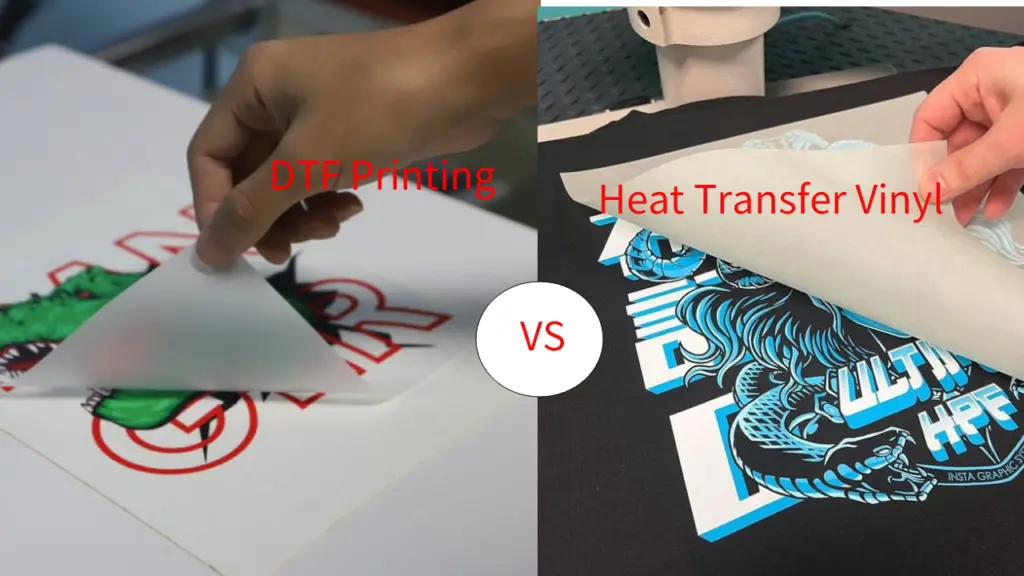
Pencetakan DTF vs. Vinil Perpindahan Panas (HTV) — metode mana yang lebih baik untuk pakaian khusus? Untuk usaha percetakan kecil dan dekorator pakaian, ini adalah pertanyaan penting.
DTF (Langsung ke Film) adalah teknologi yang relatif baru yang mendapatkan popularitas pesat dalam dekade terakhir karena warnanya yang cerah, detail halus, dan keserbagunaan. Sebelum DTF, Vinil Perpindahan Panas (HTV) mendominasi industri percetakan khusus, dan masih banyak digunakan untuk desain sederhana dan personalisasi dalam jumlah kecil.
Hari ini, kedua metode ini digunakan secara luas dan terus mentransformasi pasar pakaian adat. Masing-masing memiliki kekuatan dan kelemahannya masing-masing. Mari kita uraikan perbedaannya untuk membantu Anda memutuskan mana yang terbaik sesuai kebutuhan Anda.
Apa itu Pencetakan DTF?
Ukuran pasar pencetakan film langsung ke global diperkirakan sebesar USD 2,720.0 juta masuk 2024 dan diproyeksikan mencapai USD 3,920.0 juta oleh 2030, tumbuh pada CAGR sebesar 6.0% dari 2025 ke 2030. Pertumbuhan ini terutama dipengaruhi oleh faktor-faktor seperti meningkatnya adopsi teknologi pencetakan canggih, meningkatnya permintaan akan pakaian yang disesuaikan dan sesuai permintaan, dan meningkatnya kesadaran bisnis akan efektivitas biaya dan keserbagunaan pencetakan DTF dibandingkan metode tradisional.(Sumber: Penelitian Pandangan Besar, Laporan Pasar Pencetakan Langsung ke Film)
Tren Pasar Utama & Wawasan
- Eropa menyumbang 36.0% pangsa pasar keseluruhan di 2024.
- Berdasarkan jenis, segmen printer DTF khusus menyumbang bagian terbesar 45.0% di dalam 2024.
- Berdasarkan film, segmen film cold peel memegang pangsa pasar yang besar 2024.
- Berdasarkan produk akhir, Segmen kaos mendominasi pasar DTF Printing di 2024.(Sumber: Penelitian Pandangan Besar, Laporan Pasar Pencetakan Langsung ke Film)
Ukuran Pasar & Ramalan
- 2024 Ukuran Pasar: Rp 2,720.0 Juta
- 2030 Ukuran Pasar yang Diproyeksikan: Rp 3,920.0 Juta
- CAGR (2025-2030): 6.0%(Sumber: Penelitian Pandangan Besar, Laporan Pasar Pencetakan Langsung ke Film)
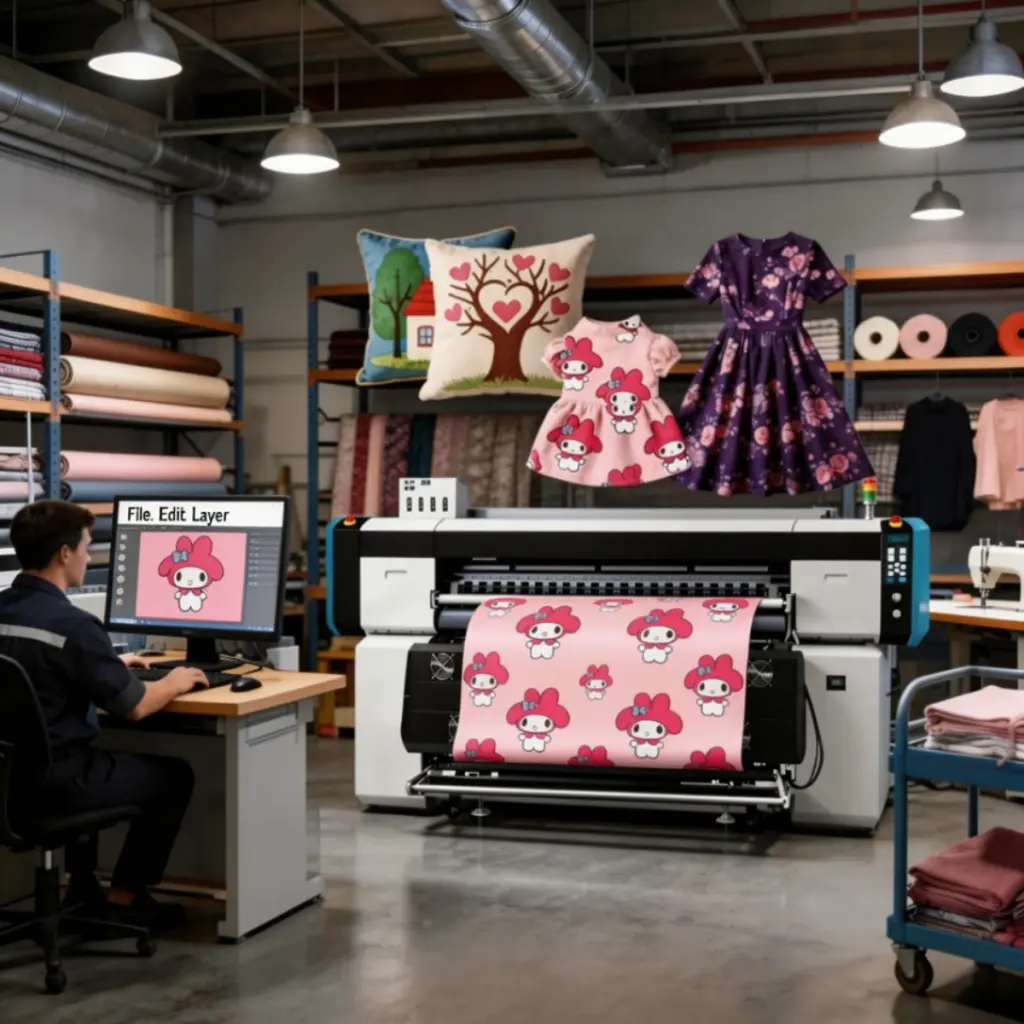
Pencetakan DTF dimulai dengan mencetak desain Anda ke film transfer PET menggunakan tinta khusus berbahan dasar air, termasuk tinta putih untuk lapisan dasar dan CMYK untuk warna.
Setelah dicetak, Bubuk perekat lelehan panas TPU diaplikasikan pada desain basah. Bubuk tersebut kemudian diawetkan dengan menggunakan panas, menciptakan ikatan yang kuat untuk dipindahkan ke kain dengan alat press panas.
Komponen utama pencetakan DTF meliputi:
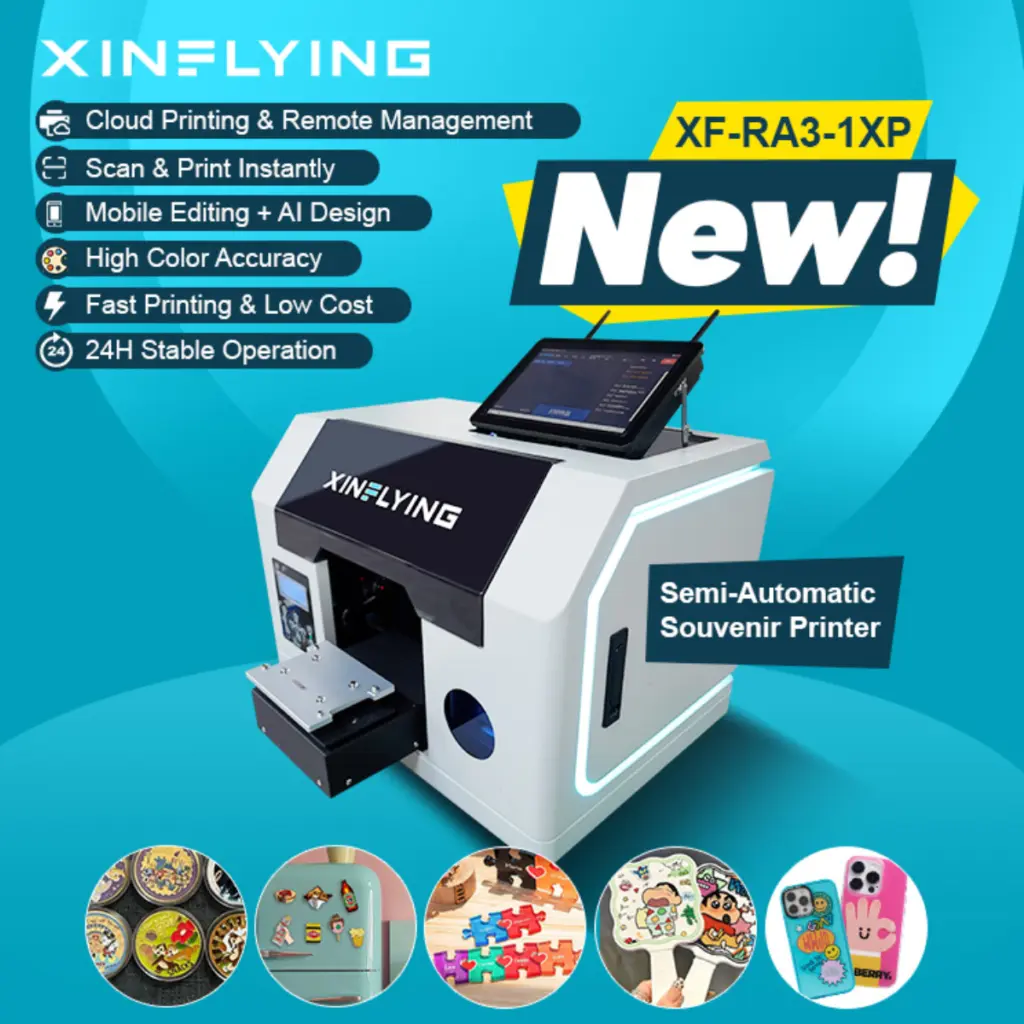
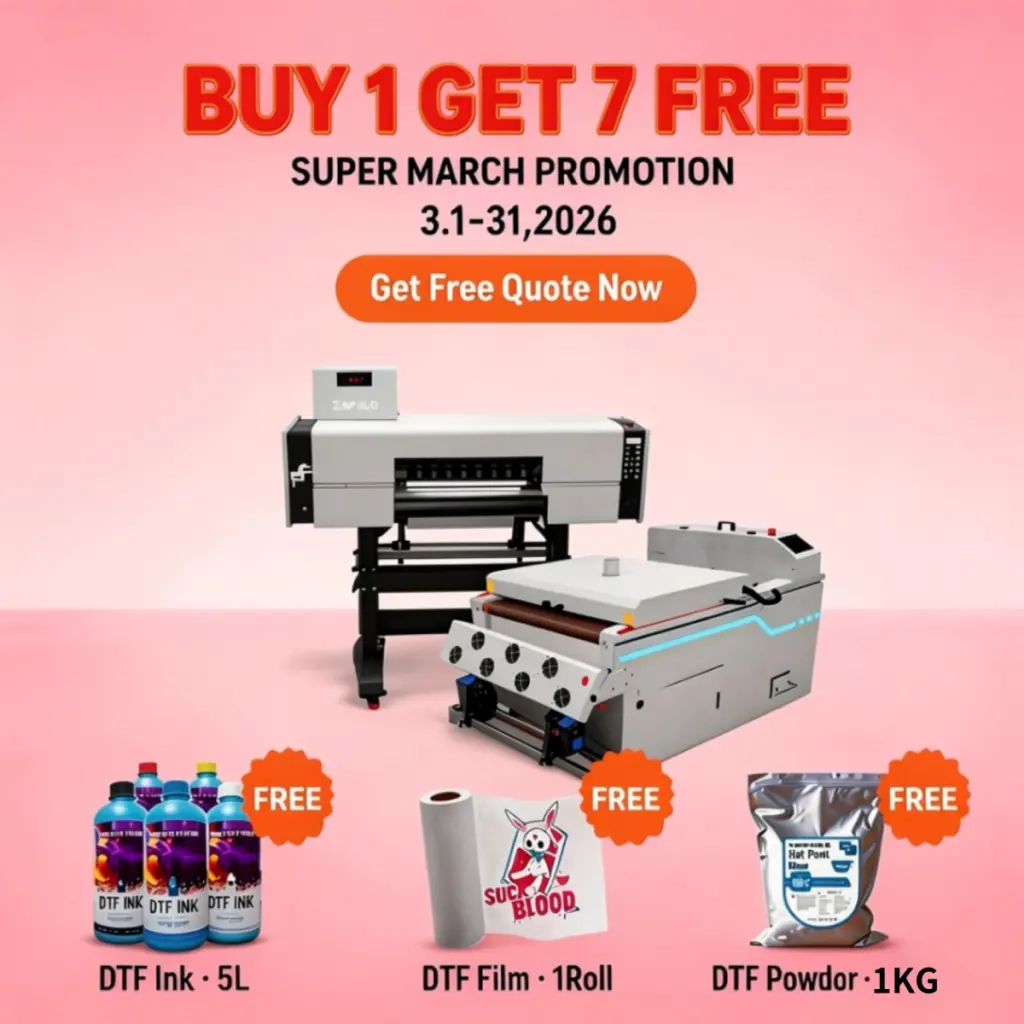
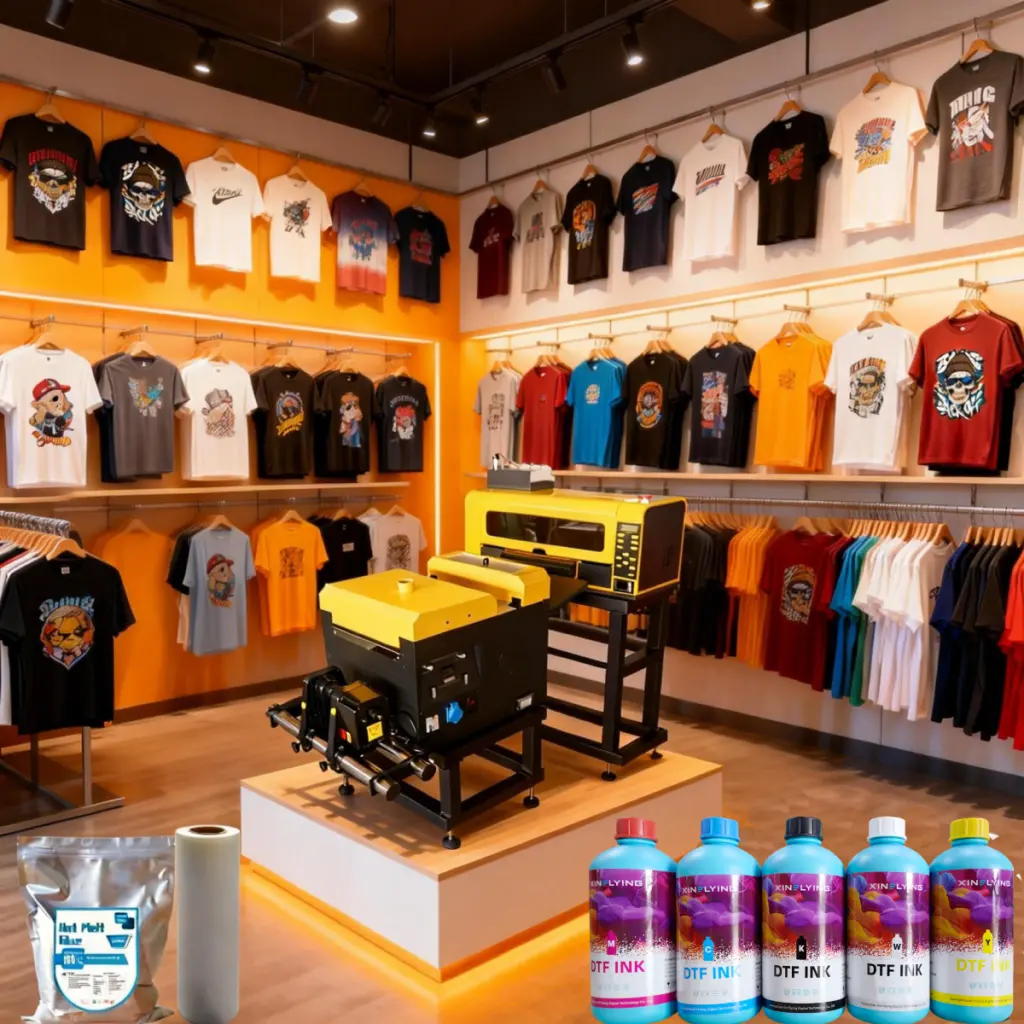
- Pencetak DTF – Printer khusus yang menghasilkan warna cerah, desain yang tepat langsung ke film. Xinflying menawarkan model untuk produksi skala kecil dan besar.
- Film PET DTF – Film berkualitas tinggi dengan lapisan perekat, tersedia dalam berbagai ukuran.
- Tinta DTF – Tinta pigmen berbahan dasar air yang memberikan kecerahan, warna tahan lama.
- Perangkat Lunak RIP – Mempersiapkan karya seni Anda untuk printer dan mengoptimalkan warna, setengah nada, dan lapisan.
- bubuk DTF – Bubuk perekat yang memastikan desain menempel kuat pada kain.
- Mesin Press Panas – Mentransfer desain yang diawetkan dari film ke pakaian dengan panas dan tekanan terkontrol.
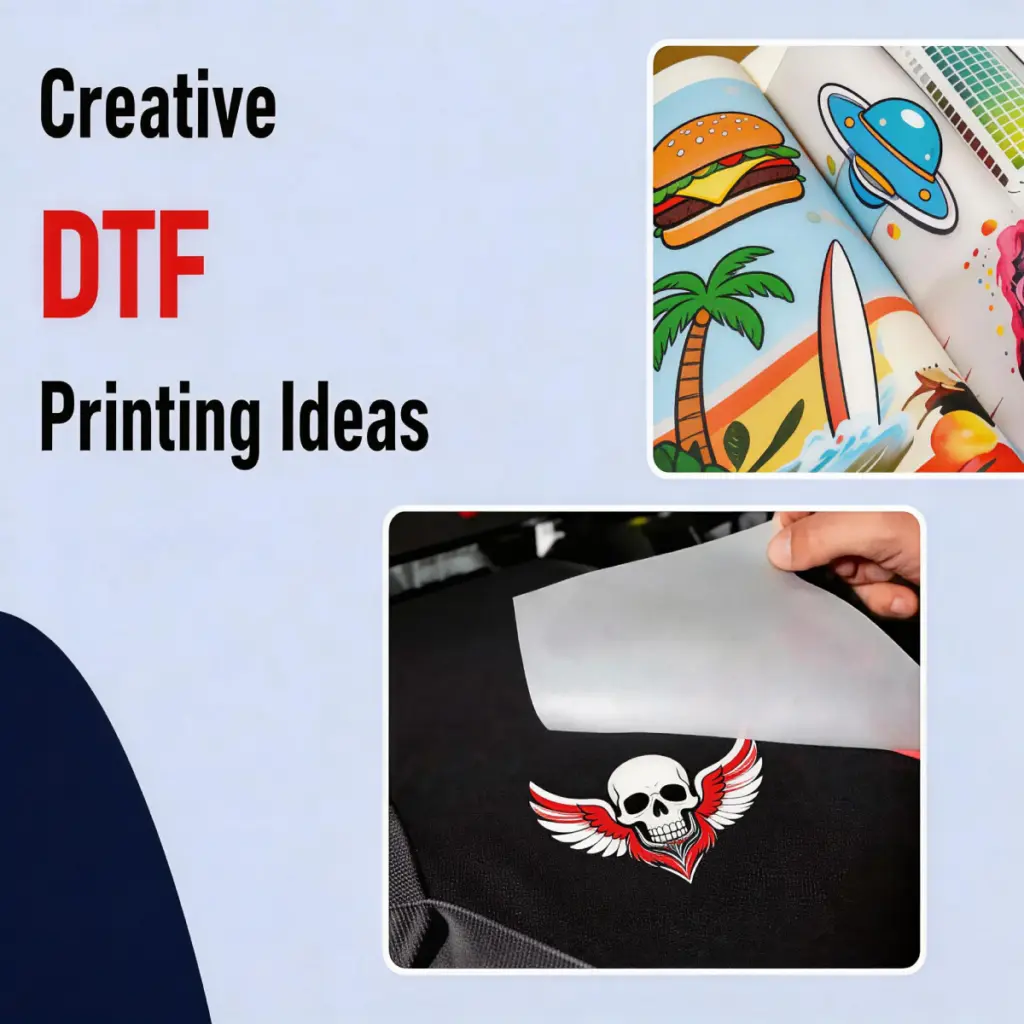
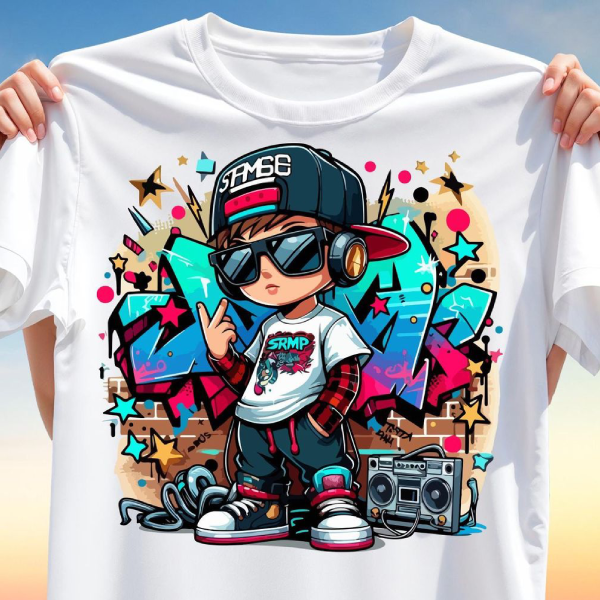
DTF bekerja dengan baik kapas, poliester, campuran, kain gelap, dan bahkan permukaan non-tekstil. Ini unggul dalam desain kompleks dengan detail halus dan gradien penuh warna.
Apa itu Vinyl Perpindahan Panas (HTV)?
HTV adalah metode pencetakan yang lebih sederhana menggunakan lembaran vinil. Desain dipotong dari vinil berwarna dan kemudian ditekan dengan panas ke kain.
Alat dan bahan yang diperlukan untuk HTV:
- Lembaran Vinyl – Lembaran yang telah dipotong sebelumnya atau dapat disesuaikan dalam berbagai warna, tekstur, dan selesai.
- Pemotong Vinil – Memotong desain dari lembaran vinil.
- Tekan Panas – Menerapkan suhu dan tekanan untuk menempelkan desain pada pakaian.
- Lembaran Teflon – Melindungi desain selama pengepresan panas.
HTV menghasilkan cetakan tahan lama yang cocok untuk jumlah kecil, desain satu warna, atau hasil akhir khusus seperti tekstur berkilau dan metalik.
Perbedaan Utama Antara DTF dan HTV
1. Fleksibilitas Desain
- DTF: Warna tidak terbatas, gradien, dan gambar fotorealistik. Berbagai warna dicetak sekaligus pada satu film.
- HTV: Terbaik untuk desain vektor sederhana dan warna solid. Desain multi-warna memerlukan pelapisan, meningkatkan tenaga kerja dan kompleksitas.
2. Kompatibilitas Bahan
- DTF: Dapat digunakan pada hampir semua jenis kain — katun, poliester, nilon, kulit, campuran — dan bahkan kayu, logam, atau keramik.
- HTV: Terutama katun dan poliester. Campuran memerlukan kontrol suhu yang cermat; secara keseluruhan kurang serbaguna.
3. Efisiensi Produksi
- DTF: Tidak diperlukan penyiangan. Beberapa desain dicetak dalam satu lembar. Efisien untuk produksi batch menengah hingga besar.
- HTV: Setiap warna dan desain harus dipotong dan disiangi. Padat karya untuk desain yang rumit. Satu warna, batch kecil lebih cepat.
4. Daya tahan
- DTF: Tahan 50+ mencuci, tahan retak dan terkelupas, mempertahankan fleksibilitas.
- HTV: Biasanya berlangsung 25–30 kali pencucian. Kualitas bervariasi menurut jenis vinil; mungkin retak seiring berjalannya waktu, terutama dengan banyak lapisan.
5. Merasa & Penampilan
- DTF: Tipis, terasa seperti kain. Minimal massal, lembut untuk disentuh.
- HTV: Tekstur sedikit terangkat; ketebalannya bertambah seiring bertambahnya lapisan. Vinil khusus mungkin terasa seperti plastik.
6. Biaya & Peralatan
- DTF: Investasi awal yang lebih tinggi (pencetak, tinta, film, bubuk), tetapi biaya per unit lebih rendah untuk pesanan massal.
- HTV: Biaya awal yang lebih rendah (pemotong vinil + tekan panas), tetapi tenaga kerja per unit yang lebih tinggi untuk desain multiwarna atau kompleks.
Kapan Memilih DTF
- Fotorealistik, gradien, atau desain yang rumit
- Volume produksi besar atau menengah
- Kebutuhan akan daya tahan maksimum
- Jenis kain beragam
- Karya seni multi-warna
Kapan Memilih HTV
- Desain teks atau logo sederhana
- Batch kecil atau personalisasi
- Pengaturan yang sadar anggaran
- Hasil akhir khusus seperti glitter atau metalik
- Pekerjaan satu warna yang cepat
Apakah DTF Lebih Baik Dari HTV?
Baik DTF dan HTV memiliki tempatnya masing-masing. Untuk volume tinggi, terperinci, dan cetakan yang tahan lama, DTF lebih unggul. Untuk sederhana, batch kecil, dan aplikasi ramah anggaran, HTV tetap ideal.
Pilihannya sepenuhnya bergantung pada kebutuhan bisnis Anda, kompleksitas desain, dan skala produksi.
Memilih Printer DTF yang Tepat
Memilih printer yang tepat adalah kunci kesuksesan Anda. Printer DTF Xinflying memberikan warna-warna cerah, detail yang tepat, dan kinerja yang stabil di seluruh kain, termasuk katun dan kulit.
Dengan dukungan teknis, pelatihan, Dan 24/7 layanan daring, Xinflying membantu Anda memaksimalkan produktivitas, meminimalkan waktu henti, dan memastikan konsisten, hasil berkualitas tinggi untuk semua aplikasi pencetakan.
Sumber Data: Penelitian Pandangan Besar, Laporan Pasar Pencetakan Langsung ke Film
https://www.grandviewresearch.com/industry-analisis/direct-film-printing-market-report