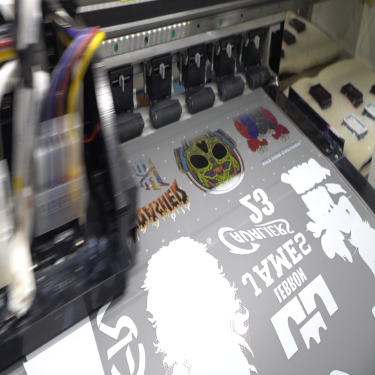
DTF (フィルムにダイレクト) 印刷 カスタムアパレル生産において最も急速に成長しているテクノロジーの1つとなっています. 生地の前処理は不要です, ほぼすべての素材と互換性があります, 最低注文は 1 個から — このガイドでは、知っておくべきことをすべて説明します。, DTF の背後にある科学から、DTF がビジネス モデルにどのように適合するかまで.
40+:色あせのない標準的な洗濯サイクル (プレミアムインク)
1 パソコン:最小注文 — 在庫プレッシャーゼロ
90%:プリントできる生地の種類は、
01. DTF印刷とは?
DTFはの略ですフィルムにダイレクト. この技術はフルカラーのデザインを印刷することで機能します。 (白インクベース層を含む) 特殊なPETに (ポリエステル) 映画, ホットメルト接着剤パウダーでコーティング, オーブンで粉末を硬化させる, その後、転写全体を最終的な衣類または基材に熱プレスします。.
従来の熱転写ビニールとは異なります (HTV), DTF はソフトを生成します, 硬いエッジやプラスチックの感触のない柔軟なインク層. DTGとは異なります (衣服に直接), デザインが衣服に触れる前に、フィルム上の白インクがカバーベースとして機能するため、濃い色の生地に前処理液を使用する必要はありません。.
💡 市場の状況
DTF が主流になったのは、 2019 そして 2021 その後、アジア全土に急速に拡大しました, ヨーロッパ, そしてアメリカ大陸. ブラジル市場は、以来特に大きな成長を遂げています。 2022, ファッションにおける小ロットのパーソナライゼーションの需要が原動力, スポーツウェア, および販促品.
02. DTF 印刷の仕組み
3 つのコア材料が連携して DTF を可能にします: DTFインク, PETフィルム, そしてホットメルト接着剤粉末. それぞれを理解することで、消耗品を調達する際により適切な決定を下すことができます。.
DTFインク (CMYK + 白)
DTF では 2 種類のインクを特定の順序で印刷します。:
- CMYKカラーインク — フルカラーのデザインを忠実に再現; 布地への直接吸収ではなく、PET フィルムへの接着を目的として特別に配合されています。
- 白インク — カラー画像の上にフラッドレイヤーとして印刷されます (映画の視点から) 明るさのベースとして機能する; 転写すると、濃い色や色のついた布地でも鮮やかな色が保証されます。
PETフィルム
フィルムは一時的なキャリアです。コーティングされたポリエステルシートで、パウダーが結合してヒートプレスが機能するのに十分な長さだけインクを保持します。. 転送後, フィルムは剥がされて廃棄されます, 布地にインク層だけを残す.
ホットメルト接着剤パウダー (DTFパウダー)
DTF パウダーまたはホットメルト パウダーと呼ばれることが多い, これはインクと生地の間の接着媒体です。. 硬化オーブンで加熱した場合, 粉末が溶けてインク層と融合します, 柔らかさと伸縮性を維持しながら生地の繊維をグリップする柔軟な接着層を作成します。.
✅ 重要な洞察
白いインク層により、DTF は前処理なしで濃い色の衣類にも機能します。. DTG印刷には前処理液のスプレーが必要です (PTM) 印刷前の濃い色の生地に; DTF はそれを完全にスキップします - ホワイトベースはすでに転送の一部です.
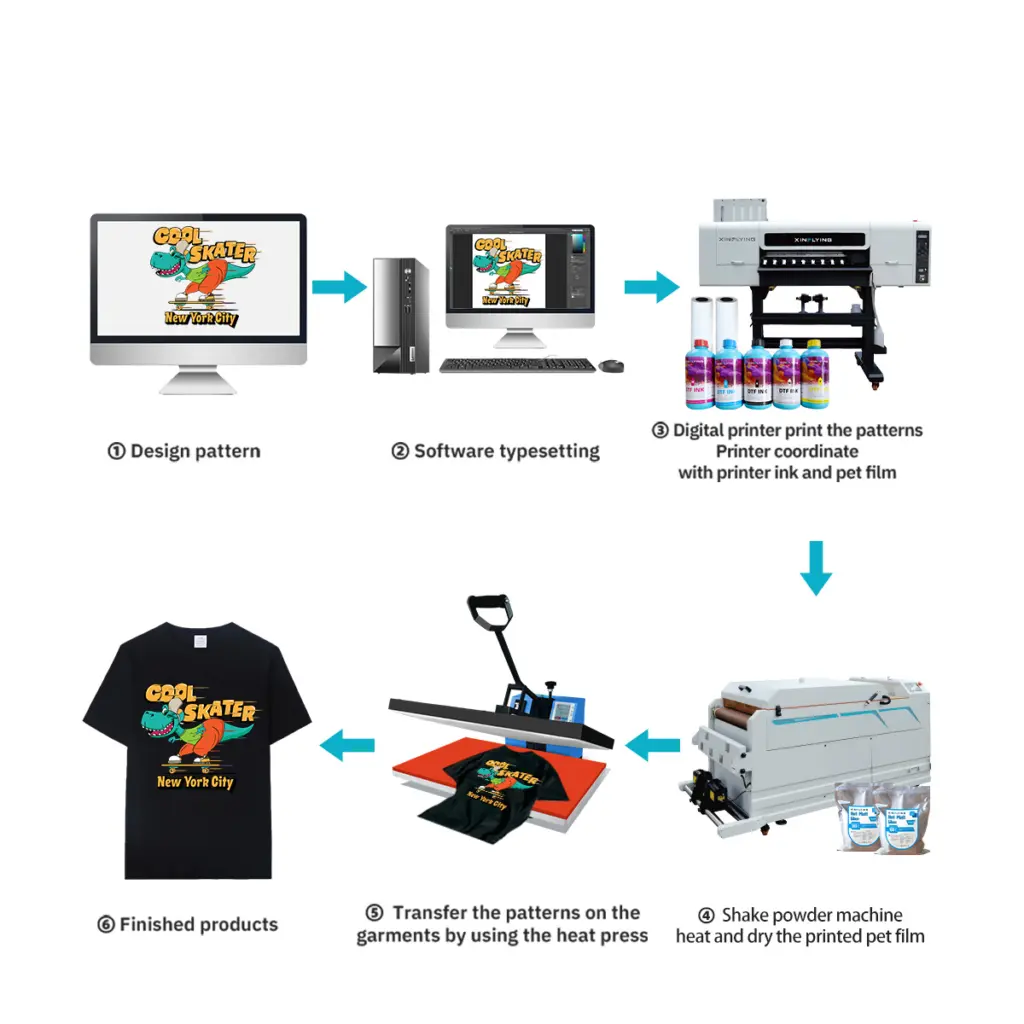
03. 完全な DTF 製造プロセス — ステップバイステップ
1. 設計準備 & RIP処理
デザイン ソフトウェアでアートワークを準備する (フォトショップ, イラストレーター, CorelDRAW). 次に、それを RIP ソフトウェアにインポートします (メイントップ, 写真プリント, ワサッチ, 等), 画像をプリンタで読み取り可能なデータに変換し、白インクの適用範囲を制御します。, カラーカーブ, そしてプリント注文.
2. PETフィルムへの印刷
PETフィルムをプリンターにセットし、印刷を開始します。. ほとんどの DTF プリンタは最初にカラー レイヤーを印刷します。, 次に白いインク層をその上に塗り込みます. 一部のマシンではこの順序が逆になります。常にメーカーの RIP プロファイルに従ってください。. 印刷後, インクは少し湿っている必要があります (完全に乾燥していない) 次のステップの前に.
3. ホットメルトパウダーを塗布する
インクがまだベタベタしているうちに (印刷後約 30 秒以内), 印刷部分にDTF接着剤パウダーを均一に塗布します。. これは、フィルム上でパウダーを振ることによって手動で行うことができます。, またはパウダーシェーカーマシンを使用して自動的に. 余分な粉末はたたき取られ、再利用のために収集されます.
4. オーブンで硬化する
粉末フィルムを硬化オーブンに通すか、スタンドアロンの DTF オーブンを約 160 ~ 170°C で 60 ~ 90 秒間使用します。. これによりパウダーが溶けてインク層に溶け込みます。. 治ったら, 転写フィルムはすぐに使用することも、重ねて室温で数か月間保管することもできます。.
5. ヒートプレス転写
フィルムのインク面を下にして衣服の上に置きます. ヒートプレスを使用し、中高圧で約160℃、15~20秒間加熱します。. わずかに冷却されるまで数秒待ちます, フィルムを剥がすと、デザインが生地に接着されます。.
6. (オプション) セカンドプレス
洗濯耐久性向上のため, デザインの上にシリコンシートを置き、5 ~ 10 秒間 2 回目のプレスを行います。. これ “シールプレス” ステップは作業着として特におすすめです, スポーツウェア, または頻繁に洗濯される衣類.
⚠️初心者にありがちな間違い
パウダーを塗るのが遅すぎる (インクが乾いた後) または不適切なヒートプレスの温度と圧力の使用は、DTF で最も頻繁に発生する問題です。. 常に赤外線温度計を使用してヒートプレスを校正してください, 印刷後 2 ~ 3 分以内に粉末化ステップを完了します。.
04. 消耗品: 適切なインクの選択, 膜 & 粉
DTF インクに求めるもの
- プリンターの互換性 — 常に機械メーカーが推奨または認定したインクを使用してください; 互換性のないインクを混合すると、プリントヘッドが詰まる危険性があります
- 白インクの安定性 — 白インクの顔料はすぐに定着します; メンテナンス時間を短縮する、沈降速度が遅い微粒子配合物を探す
- 色域 — 高品質 DTF インクは少なくとも以下の範囲をカバーする必要があります。 95% sRGB色空間の
- 洗濯堅牢度 — ISO をリクエストする 105 洗濯堅牢度試験結果; グレード 4 ~ 5 は許容可能な耐久性の業界標準です
PETフィルム仕様
- コールドピール vs. ホットピール — コールド ピール フィルムは、剥がす前に転写を冷却する必要があり、細かいデザインのディテールをより鮮明にします。; ホットピールフィルムはプレス後すぐに剥がせます, スループットの向上
- コーティングの種類 — フィルムのコーティングがインクの付着速度と転写品質を決定します; まとめ買いする前に、必ず新しいフィルムを既存のインクでテストしてください
- 幅 — フィルムロールの幅をプリンターの印刷幅に合わせます (30 cm, 60 cm, または 120 cm)
ホットメルトパウダー
- 粒子サイズ — 80 ~ 120 メッシュ (細かい粉末) より薄いものを生成します, 細かいデザインに最適なソフトな感触; 60 メッシュ (粗い) 作業服に強力な接着力を提供します
- 色 — 軽い生地用の白い粉; 濃い色の生地用の黒色火薬 (白い斑点が透けて見えるのを防ぎます); 特殊用途向けの透明な粉末
05. DTF 対 DTG 対 スクリーン印刷: 完全な比較
| 比較係数 | DTF | DTG | スクリーン印刷 |
|---|---|---|---|
| 最低注文数量 | 1 ピース | 1 ピース | 通常 50+ |
| ファブリックの互換性 | ほぼすべての生地 | 綿が多い, ポリに弱い | 主にフラット生地 |
| ダークファブリックの前処理 | 不要 | 必須 (PTM ソリューション) | 白いアンダーベースが必要です |
| フルカラーのグラデーション | はい, 無制限の色 | はい, 無制限の色 | 色数による制限 |
| 洗濯耐久性 | 40+ サイクル (プレミアム) | 50+ サイクル | 60+ サイクル |
| 単価 50 個 | 低~中 | 中~高 | 中くらい (含む. 設定償却) |
| 単価 500 個 | 中くらい | 高い | 低い |
| 設備立ち上げ費用 | $3K – 25,000 ドル | $15K–30,000 ドル以上 | 低い (マニュアル) 中程度まで |
| デザイン切り替え | インスタント, セットアップがありません | インスタント, セットアップがありません | カラーごとの新しいスクリーン |
| オペレータのスキルが必要 | 低~中 | 中~高 | 中くらい (必要な経験) |
| 衣服の感触 | わずかな触感層 | 柔らかい, 布地のような | 濃いインクではわずかに盛り上がる |
06. ビジネスアプリケーション: DTFで儲かっているのは誰か?
オンデマンド印刷 (ポッド) 電子商取引
DTF は Shopify に合わせてカスタマイズされています, Etsy, およびパーソナライゼーション ストアを運営するマーケットプレイスの販売者. 注文が入った場合のみ生産します, 在庫を持たない, 1品目あたり40~70%の利益率を維持. 最小 1 個が重要な実現要因です.
法人ギフト & 販促品
記念日の贈り物, 従業員の制服, イベント商品 — 50 ~ 300 個の範囲の注文が DTF のスイートスポットです. フルカラーのロゴの複製を少量で短納期で行う場合、DTF は常に代替案を上回るパフォーマンスを発揮します。.
スポーツチーム & 制服
選手番号, 名前, クラブのロゴは個別にカスタマイズする必要があるため、スクリーン印刷では小ロットではコスト効率よく実現できません。. DTF はこれを自然に処理します, そして、サッカー文化が深く根付いているブラジル市場は、パーソナライズされたチームキットに対する膨大な需要を生み出しています。.
作業服 & スタッフの制服
レストラン, 物流会社, 複雑なロゴが付いた均一商品を 20 ~ 200 個注文する小売チェーン. DTF のフルカラーの精度は、詳細なデザインでは刺繍を上回り、少量の場合はスクリーン印刷を上回ります。.
インディペンデントなストリートウェア & デザイナーブランド
DTF を使用すると、独立した設計者が市場の需要をテストできるようになります。 10 コミットする前の単位 500. 迅速かつ手頃な価格で反復できる機能は、小規模ブランドにとってビジネス モデルの変革をもたらします.
07. DTF の利点 & 本当の限界
DTF が得意とすること
- 生地の前処理が不要 - 時間を節約します, 化学薬品, そして労働
- 1-個数の最小注文 — オンデマンド生産モデルに最適
- 幅広いファブリック互換性: コットン, ポリエステル, ナイロン, ブレンドする, レザー, もっと
- フルカラー, 滑らかなグラデーションによる写実的なデザインの再現
- 事前に印刷された転写フィルムはバッチ生産および保管が可能, 印刷と印刷の切り離し
- DTG よりも機械的な複雑さが低く、可動部品が少ない, メンテナンスコストの削減
- 標準化されたプロセス - DTG 校正と比較してオペレーターのトレーニングが容易
理解すべき正直な限界
- 手触り — 印刷領域の上には常にわずかな触覚層が存在します。; 高級インクとパウダーはこれを最小限に抑えます, しかしそれはプロセスに固有のものです
- 通気性 — 印刷された領域の空気の流れはわずかに減少しますが、. ブランク生地; 薄い粉末製剤では問題が少ない
- 大きな全面プリント — 大規模な全面プリントの場合 500+ 単位, スクリーン印刷の方がコスト効率が高い; DTF は中小規模の走行で威力を発揮します
- 白インクのメンテナンス — 白インクには定期的な撹拌が必要です (手動または自動); マシンがアイドル状態になる 24+ 詰まりを防ぐために白インク チャネルのフラッシングが必要な時間
- 粉塵 — 粉末塗布ステップでは十分な換気が必要です; オペレーターは密閉された作業スペースでは基本的な防塵マスクを着用する必要があります
08. よくある質問
熱伝達紙?
標準的な熱転写紙はワックスまたは樹脂コーティングを使用しており、硬い質感を生み出します。, プラスチック感があり、洗濯を繰り返すと亀裂が入りやすくなる (通常 10 ~ 15 回の洗濯). DTFはPETフィルムに専用インクとホットメルトパウダーを使用, 柔軟な作成, 品質を維持する伸縮性のある転写層 40+ プレミアム素材を使用した洗浄.
はい, いくつかの調整を加えて. 本革は熱に弱いので, そのため、プレス温度を 140 ~ 150°C に下げ、時間を 25 ~ 30 秒に増やします。. 必ず最初にサンプル片でテストしてください. 人口皮革 (PU) 一般に、より寛容で、標準の DTF 設定でうまく機能します。.
高品質のインクを使用, 正しく硬化された粉末, および適切なヒートプレスパラメータ, DTF プリントは定期的にパスします 40+ ISO標準の洗濯サイクルで、重大な色あせやひび割れはありません. 漂白剤を使用せずに冷水で裏返して洗うと、寿命がさらに延びます。.