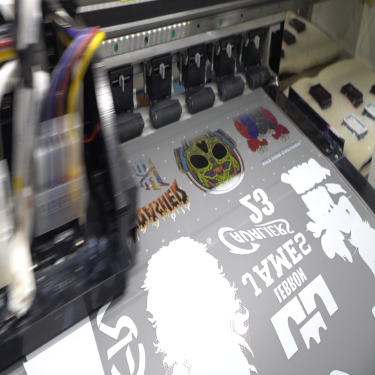
DTF (Trực tiếp tới phim) in ấn đã trở thành một trong những công nghệ phát triển nhanh nhất trong sản xuất hàng may mặc theo yêu cầu. Không cần xử lý trước vải, tương thích với hầu hết mọi vật liệu, đơn hàng tối thiểu chỉ một sản phẩm — hướng dẫn này sẽ hướng dẫn bạn mọi thứ bạn cần biết, từ khoa học đằng sau DTF đến cách nó phù hợp với mô hình kinh doanh của bạn.
40+:Chu trình giặt tiêu chuẩn không phai màu (mực cao cấp)
1 máy tính:Đơn hàng tối thiểu - áp lực tồn kho bằng không
90%:Các loại vải có thể in trên
01. In DTF là gì?
DTF là viết tắt củaTrực tiếp tới phim. Công nghệ hoạt động bằng cách in một thiết kế đầy đủ màu sắc (trong đó có lớp nền mực trắng) trên một PET đặc biệt (polyester) phim ảnh, phủ nó bằng bột kết dính nóng chảy, chữa bột trong lò, và sau đó ép nhiệt toàn bộ quá trình chuyển lên quần áo hoặc chất nền cuối cùng.
Không giống như vinyl truyền nhiệt truyền thống (HTV), DTF tạo ra một phần mềm, lớp mực dẻo không có cạnh cứng hoặc cảm giác dẻo. Không giống như DTG (Trực tiếp đến may mặc), nó không yêu cầu giải pháp xử lý trước trên vải tối màu - vì mực trắng trên phim đóng vai trò là lớp nền che phủ trước khi thiết kế chạm vào quần áo.
💡 Bối cảnh thị trường
DTF đã trở thành xu hướng chủ đạo giữa 2019 Và 2021 và từ đó đã mở rộng nhanh chóng khắp châu Á, Châu Âu, và châu Mỹ. Thị trường Brazil đã chứng kiến sự tăng trưởng đặc biệt mạnh mẽ kể từ 2022, được thúc đẩy bởi nhu cầu cá nhân hóa hàng loạt nhỏ trong thời trang, đồ thể thao, và sản phẩm khuyến mãi.
02. Cách thức hoạt động của in DTF
Ba vật liệu cốt lõi phối hợp với nhau để biến DTF thành hiện thực: Mực DTF, màng PET, Vàbột kết dính nóng chảy. Hiểu rõ từng yếu tố giúp bạn đưa ra quyết định tốt hơn khi tìm nguồn cung ứng hàng tiêu dùng.
Mực DTF (CMYK + Trắng)
DTF sử dụng hai loại mực in theo một trình tự cụ thể:
- Mực màu CMYK — tái tạo thiết kế đầy đủ màu sắc với độ trung thực cao; công thức đặc biệt để bám dính vào màng PET thay vì hấp thụ vải trực tiếp
- Mực trắng - được in dưới dạng một lớp lũ trên hình ảnh màu (từ góc nhìn của bộ phim) hoạt động như một cơ sở độ sáng; đảm bảo màu sắc sống động trên vải tối màu hoặc vải màu sau khi được chuyển
Phim PET
Phim là chất mang tạm thời - một tấm polyester tráng có tác dụng giữ mực vừa đủ lâu để bột liên kết và máy ép nhiệt thực hiện công việc của nó.. Sau khi chuyển, bộ phim được bóc đi và loại bỏ, chỉ để lại lớp mực trên vải.
Bột keo nóng chảy (Bột DTF)
Thường được gọi là bột DTF hoặc bột nóng chảy, đây là chất kết dính giữa mực và vải. Khi đun nóng trong lò sấy, bột tan chảy và hòa quyện với lớp mực, tạo ra lớp liên kết linh hoạt bám chặt vào sợi vải mà vẫn giữ được độ mềm mại và co giãn.
✅ Thông tin chi tiết quan trọng
Lớp mực trắng giúp DTF hoạt động trên quần áo tối màu mà không cần xử lý trước. In DTG yêu cầu phun dung dịch tiền xử lý (PTM) trên vải tối màu trước khi in; DTF bỏ qua hoàn toàn điều đó - nền trắng đã là một phần của quá trình chuyển giao.
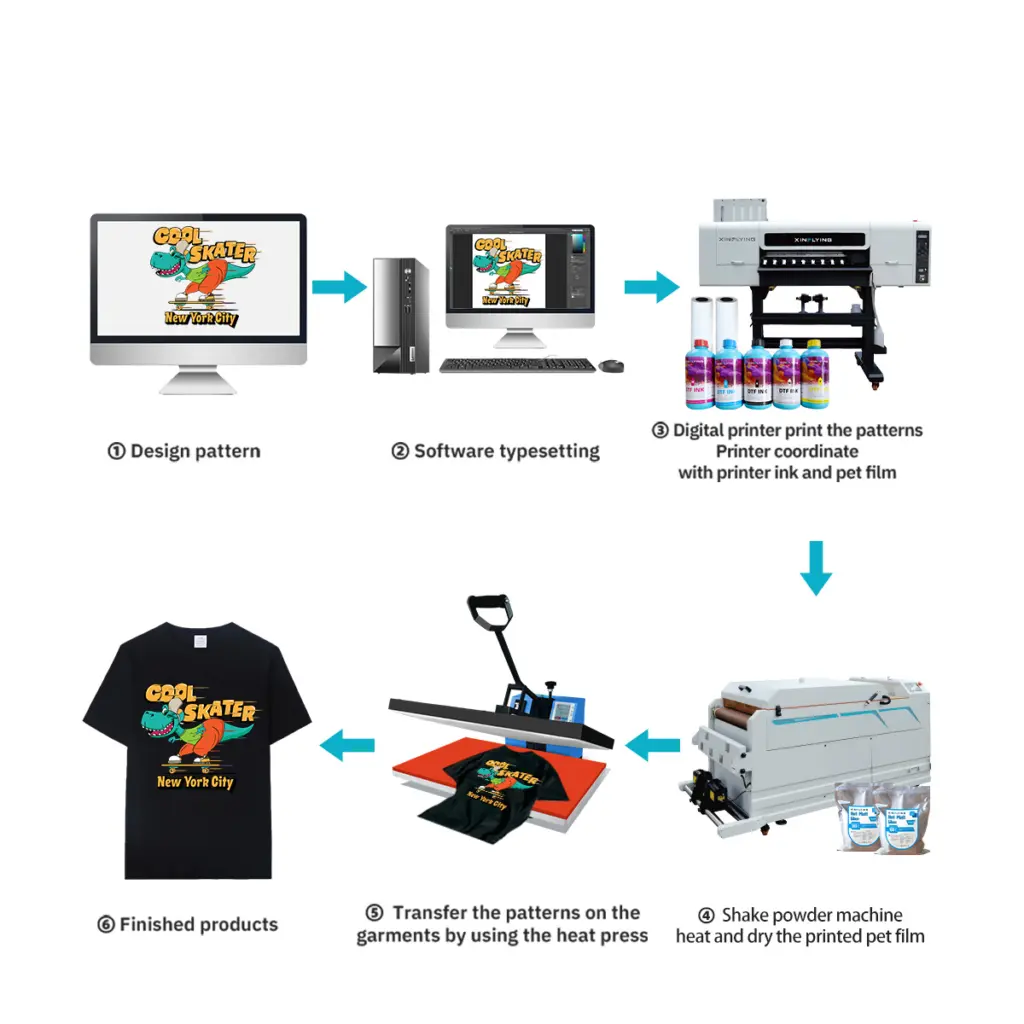
03. Quy trình sản xuất DTF đầy đủ - Từng bước
1. Thiết kế chuẩn bị & Xử lý RIP
Chuẩn bị tác phẩm nghệ thuật của bạn trong phần mềm thiết kế (Photoshop, Họa sĩ minh họa, CorelDRAW). Sau đó import vào phần mềm RIP (máy chủ, In ảnh, Wasatch, vân vân.), chuyển đổi hình ảnh thành dữ liệu có thể đọc được bằng máy in và kiểm soát vùng phủ mực trắng, đường cong màu sắc, và lệnh in.
2. In lên phim PET
Nạp màng PET vào máy in và bắt đầu in. Hầu hết các máy in DTF đều in các lớp màu trước, sau đó quét lớp mực trắng lên trên. Một số máy đảo ngược thứ tự này - luôn tuân theo hồ sơ RIP của nhà sản xuất của bạn. Sau khi in, mực cần hơi ướt (chưa khô hoàn toàn) trước bước tiếp theo.
3. Bôi bột nóng chảy
Trong khi mực vẫn còn dính (trong vòng ~30 giây kể từ khi in), phủ đều vùng in bằng bột kết dính DTF. Việc này có thể được thực hiện thủ công bằng cách lắc bột lên màng., hoặc tự động bằng máy lắc bột. Bột thừa được loại bỏ và thu gom để tái sử dụng.
4. Chữa bệnh trong lò
Đưa màng bột qua lò sấy hoặc sử dụng lò DTF độc lập ở khoảng 160–170°C trong 60–90 giây. Điều này làm tan chảy bột và kết dính vào lớp mực. Một lần khỏi bệnh, màng chuyển có thể được sử dụng ngay hoặc xếp chồng lên nhau và bảo quản ở nhiệt độ phòng trong nhiều tháng.
5. Truyền ép nhiệt
Đặt mặt mực của phim hướng xuống trên quần áo. Áp dụng nhiệt ở khoảng 160°C trong 15–20 giây ở áp suất trung bình cao bằng máy ép nhiệt. Đợi vài giây để nguội nhẹ, sau đó bóc lớp màng - thiết kế hiện đã được dán vào vải.
6. (Không bắt buộc) Bấm lần thứ hai
Để cải thiện độ bền giặt, đặt một tấm silicon lên trên thiết kế và ấn lần thứ hai trong 5–10 giây. Cái này “ép kín” bước đặc biệt được khuyến khích cho quần áo bảo hộ lao động, đồ thể thao, hoặc bất kỳ quần áo nào sẽ được giặt thường xuyên.
⚠️ Những lỗi thường gặp của người mới bắt đầu
Thoa phấn quá muộn (sau khi mực đã khô) hoặc sử dụng nhiệt độ và áp suất ép nhiệt không chính xác là những vấn đề thường gặp nhất ở DTF. Luôn hiệu chỉnh máy ép nhiệt của bạn bằng nhiệt kế hồng ngoại, và hoàn thành bước tạo bột trong vòng 2–3 phút sau khi in.
04. Vật tư tiêu hao: Chọn loại mực phù hợp, Phim ảnh & bột
Những gì cần tìm trong mực DTF
- Khả năng tương thích của máy in — luôn sử dụng loại mực được nhà sản xuất máy của bạn khuyến nghị hoặc chứng nhận; trộn các loại mực không tương thích có nguy cơ làm tắc đầu in
- Độ ổn định của mực trắng – Sắc tố mực trắng lắng xuống nhanh chóng; tìm kiếm công thức hạt mịn với tốc độ lắng chậm giúp giảm thời gian bảo trì
- Gam màu — mực DTF chất lượng cao phải bao phủ ít nhất 95% của không gian màu sRGB
- Độ bền giặt - yêu cầu ISO 105 kết quả kiểm tra độ bền giặt; Cấp 4–5 là tiêu chuẩn ngành cho độ bền chấp nhận được
Thông số kỹ thuật phim PET
- Vỏ lạnh vs. vỏ nóng — màng bóc lạnh yêu cầu chuyển màng để nguội trước khi gỡ bỏ và tạo ra các chi tiết sắc nét hơn trên các thiết kế đẹp; màng vỏ nóng có thể được gỡ bỏ ngay sau khi nhấn, cải thiện thông lượng
- Loại sơn — lớp phủ của màng quyết định tốc độ bám mực và chất lượng truyền mực; luôn thử phim mới với loại mực hiện có của bạn trước khi mua số lượng lớn
- Chiều rộng — khớp chiều rộng cuộn phim với chiều rộng in của máy in của bạn (30 cmt, 60 cmt, hoặc 120 cmt)
Bột nóng chảy
- Kích thước hạt — 80–120 lưới (bột mịn) tạo ra chất mỏng hơn, cảm giác nhẹ nhàng hơn lý tưởng cho các thiết kế chi tiết; 60 lưới (thô) cung cấp độ bám dính mạnh hơn cho quần áo bảo hộ lao động
- Màu sắc - bột màu trắng cho vải nhẹ; bột màu đen cho vải tối màu (ngăn chặn các đốm trắng xuất hiện); bột trong suốt cho các ứng dụng đặc biệt
05. DTF vs DTG vs In ấn màn hình: So sánh đầy đủ
| Yếu tố so sánh | DTF | DTG | In lụa |
|---|---|---|---|
| Số lượng đặt hàng tối thiểu | 1 cái | 1 cái | Tiêu biểu 50+ |
| Khả năng tương thích của vải | Hầu hết mọi loại vải | nặng bông, yếu trên poly | Vải phẳng chủ yếu |
| Xử lý trước vải tối màu | Không bắt buộc | Yêu cầu (giải pháp PTM) | Yêu cầu nền trắng |
| Độ dốc đầy đủ màu sắc | Đúng, màu sắc không giới hạn | Đúng, màu sắc không giới hạn | Bị giới hạn bởi số lượng màu sắc |
| Độ bền giặt | 40+ chu kỳ (phần thưởng) | 50+ chu kỳ | 60+ chu kỳ |
| Đơn giá tại 50 chiếc | Thấp–Trung bình | Trung bình-Cao | Trung bình (bao gồm. thiết lập khấu hao) |
| Đơn giá tại 500 chiếc | Trung bình | Cao | Thấp |
| Chi phí khởi động thiết bị | $3K–$25K | $15K–$30K+ | Thấp (thủ công) đến trung bình |
| Chuyển đổi thiết kế | Lập tức, không cần thiết lập | Lập tức, không cần thiết lập | Màn hình mới cho mỗi màu |
| Yêu cầu kỹ năng vận hành | Thấp–Trung bình | Trung bình-Cao | Trung bình (cần kinh nghiệm) |
| Cảm nhận trên quần áo | Lớp xúc giác nhẹ | Mềm mại, giống vải | Tăng nhẹ trên mực dày |
06. Ứng dụng kinh doanh: Ai đang kiếm tiền với DTF?
In theo yêu cầu (POD) Thương mại điện tử
DTF được thiết kế riêng cho Shopify, Etsy, và người bán hàng trên thị trường đang điều hành các cửa hàng cá nhân hóa. Chỉ sản xuất khi có đơn hàng, không mang theo hàng tồn kho, và duy trì tỷ suất lợi nhuận 40–70% trên mỗi mặt hàng. Mức tối thiểu 1 sản phẩm là yếu tố kích hoạt chính.
Quà Tặng Doanh Nghiệp & Hàng khuyến mãi
Quà tặng kỷ niệm, đồng phục nhân viên, hàng hóa sự kiện - các đơn đặt hàng trong phạm vi 50–300 đơn vị là điểm hấp dẫn của DTF. Tái tạo logo đầy đủ màu sắc với số lượng nhỏ với thời gian quay vòng nhanh là điều khiến DTF luôn vượt trội so với các lựa chọn thay thế.
Đội thể thao & Đồng phục
Số người chơi, Tên, và logo câu lạc bộ yêu cầu tùy chỉnh riêng lẻ mà in lụa không thể mang lại hiệu quả về mặt chi phí khi chạy số lượng nhỏ. DTF xử lý việc này một cách tự nhiên, và thị trường Brazil — với nền văn hóa bóng đá sâu sắc — tạo ra nhu cầu to lớn về bộ quần áo đội tuyển được cá nhân hóa.
Quần áo bảo hộ lao động & Đồng phục nhân viên
Nhà hàng, công ty hậu cần, chuỗi bán lẻ đặt hàng 20–200 bộ đồng phục có logo phức tạp. Độ chính xác đầy đủ màu sắc của DTF vượt trội hơn so với thêu trên các thiết kế chi tiết và đánh bại việc in lụa với số lượng nhỏ.
Thời trang dạo phố độc lập & Thương hiệu thiết kế
DTF cho phép các nhà thiết kế độc lập kiểm tra nhu cầu thị trường bằng 10 đơn vị trước khi cam kết 500. Khả năng lặp lại nhanh chóng và giá cả phải chăng là yếu tố thay đổi cuộc chơi mô hình kinh doanh cho các thương hiệu nhỏ.
07. Ưu điểm của DTF & Hạn chế thực sự
DTF làm gì tốt
- Không cần xử lý trước vải - tiết kiệm thời gian, hóa chất, và lao động
- 1-đơn hàng tối thiểu theo sản phẩm — hoàn hảo cho các mô hình sản xuất theo yêu cầu
- Khả năng tương thích vải rộng: bông, polyester, nylon, pha trộn, da thú, và hơn thế nữa
- đầy đủ màu sắc, tái tạo thiết kế quang học với độ dốc mượt mà
- Phim chuyển in sẵn có thể được sản xuất hàng loạt và lưu trữ, tách in khỏi cách nhấn
- Độ phức tạp cơ học thấp hơn DTG - ít bộ phận chuyển động hơn, chi phí bảo trì thấp hơn
- Quy trình được tiêu chuẩn hóa - dễ dàng đào tạo người vận hành hơn so với hiệu chuẩn DTG
Những hạn chế trung thực cần hiểu
- Cảm giác tay — luôn có một lớp xúc giác nhẹ trên vùng in; mực và bột cao cấp giảm thiểu điều này, nhưng nó vốn có trong quá trình
- Thoáng khí — khu vực in có luồng không khí giảm nhẹ so với. vải trống; ít vấn đề hơn với công thức bột mỏng
- Bản in toàn diện cỡ lớn — dành cho các bản in toàn diện lớn tại 500+ đơn vị, in ấn màn hình tiết kiệm chi phí hơn; DTF tỏa sáng ở các giải chạy vừa và nhỏ
- Bảo trì mực trắng - mực trắng cần khuấy thường xuyên (thủ công hoặc tự động); máy nhàn rỗi cho 24+ giờ cần xả kênh mực trắng để tránh tắc nghẽn
- Bụi bột — bước phủ bột đòi hỏi phải thông gió tốt; Người vận hành nên đeo khẩu trang chống bụi cơ bản trong không gian làm việc kín
08. Câu hỏi thường gặp
giấy truyền nhiệt?
Giấy truyền nhiệt tiêu chuẩn sử dụng lớp phủ sáp hoặc nhựa tạo ra độ cứng, kết quả có cảm giác dẻo có xu hướng bị nứt sau khi giặt nhiều lần (thường là 10–15 lần giặt). DTF sử dụng màng PET với mực chuyên dụng và bột nóng chảy, tạo ra sự linh hoạt, lớp chuyển co giãn duy trì chất lượng cho 40+ giặt bằng vật liệu cao cấp.
Đúng, với một số điều chỉnh. Da thật rất nhạy cảm với nhiệt, vì vậy hãy giảm nhiệt độ máy ép xuống 140–150°C và tăng thời gian lên 25–30 giây. Luôn kiểm tra mẫu trước. giả da (PU) nói chung dễ tha thứ hơn và hoạt động tốt ở cài đặt DTF tiêu chuẩn.
Với loại mực chất lượng, bột xử lý đúng cách, và các thông số ép nhiệt thích hợp, Bản in DTF thường xuyên vượt qua 40+ Chu trình giặt tiêu chuẩn ISO không bị phai màu hoặc nứt đáng kể. Giặt từ trong ra ngoài bằng nước lạnh không dùng chất tẩy sẽ kéo dài tuổi thọ hơn nữa.