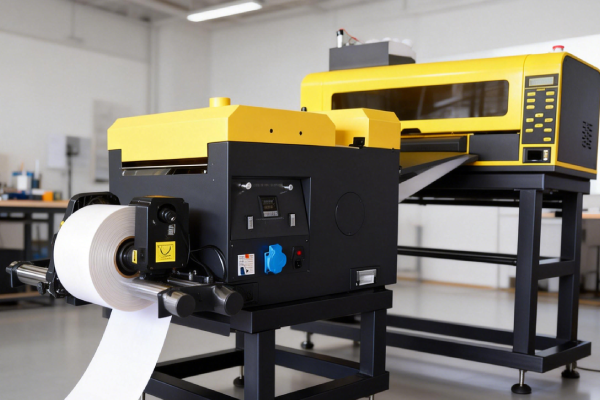
ДТФ (Директно на филм) and HTV (Хеат Трансфер Винил) are two popular heat transfer technologies for garment decoration in 2026, each with distinct advantages for different applications and business models. Understanding the trade-offs between these technologies helps print service providers choose the right tools for their target markets.
HTV has been a staple of the garment decoration industry for decades. The process involves cutting designs from colored vinyl sheets, weeding away excess material, and heat pressing the remaining design onto garments. HTV offers excellent durability, живе боје, and a relatively low equipment investment—entry-level vinyl cutters cost just a few hundred dollars.
Међутим, HTV has significant limitations. Each color requires a separate layer of vinyl, making multi-color designs labor-intensive and time-consuming. Photographic or gradient designs are impossible with standard HTV. Weeding complex designs is tedious and requires skilled operators. For small businesses, these limitations restrict the types of orders they can profitably fulfill.
DTF addresses many of HTV’s limitations. DTF can print full-color, photo-quality designs with unlimited colors in a single transfer. Gradients, фини детаљи, and small text that would be impossible to weed with HTV are easily produced with DTF. The process requires less manual labor—printing and powdering are automated, with no weeding required.
Equipment costs for DTF are higher than for HTV. Entry-level DTF systems start around $3,000–$7,000 compared to $200–$500 for vinyl cutters. Међутим, DTF’s higher productivity and broader application range often justify the additional investment for businesses producing multi-color or detailed designs regularly.
Material costs also differ. HTV costs vary by color and finish, typically ranging from $0.50–$2.00 per square foot. DTF consumables (филм, мастило, прах) cost approximately $0.40–$0.70 per print, though costs vary significantly based on print size and ink coverage. For small designs with few colors, HTV may be cheaper. For large, дизајни у пуној боји, DTF often has lower per-unit costs.
Production speed is another consideration. Simple one- or two-color designs may be produced faster with HTV, especially for small quantities. Complex multi-color designs are dramatically faster with DTF, which prints and powders the entire design in a single automated process versus manual layering and weeding with HTV.
Fabric compatibility differs. HTV works on most fabrics, though some vinyl types are optimized for specific materials. DTF works on virtually any fabric—cotton, полиестер, најлон, кожа, and blends—without special considerations. For businesses serving diverse customer needs, DTF’s versatility is valuable.
Durability is comparable between quality HTV and DTF. Both technologies produce transfers that withstand repeated washing when properly applied. Међутим, DTF transfers have a slightly thicker feel than thin HTV films, which some customers prefer and others dislike depending on application.
For many print service providers, the optimal solution is to offer both technologies. HTV remains ideal for simple designs, sportswear numbers and letters, and budget-conscious customers. DTF excels at full-color designs, photographs, complex artwork, and applications requiring maximum versatility.
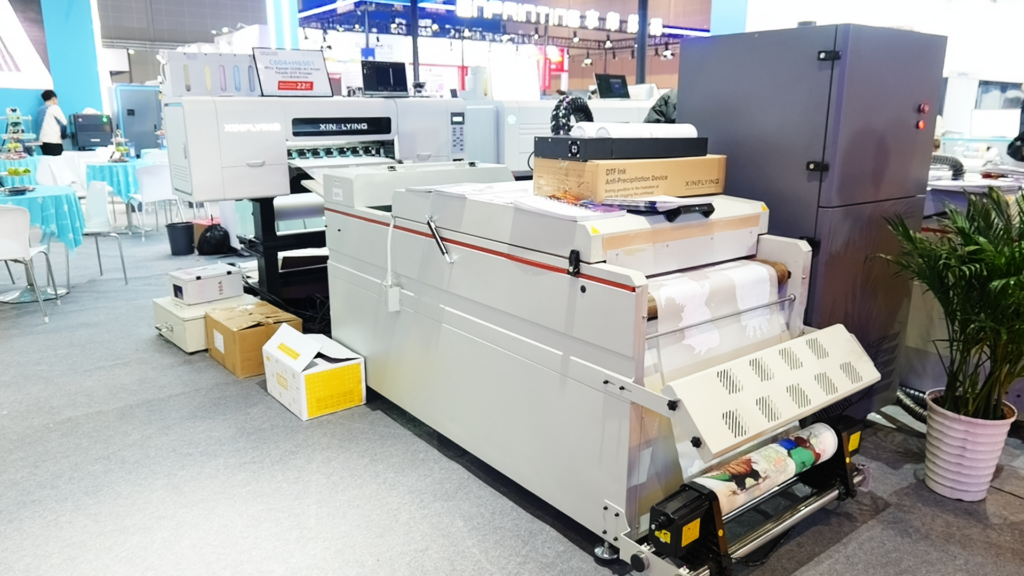
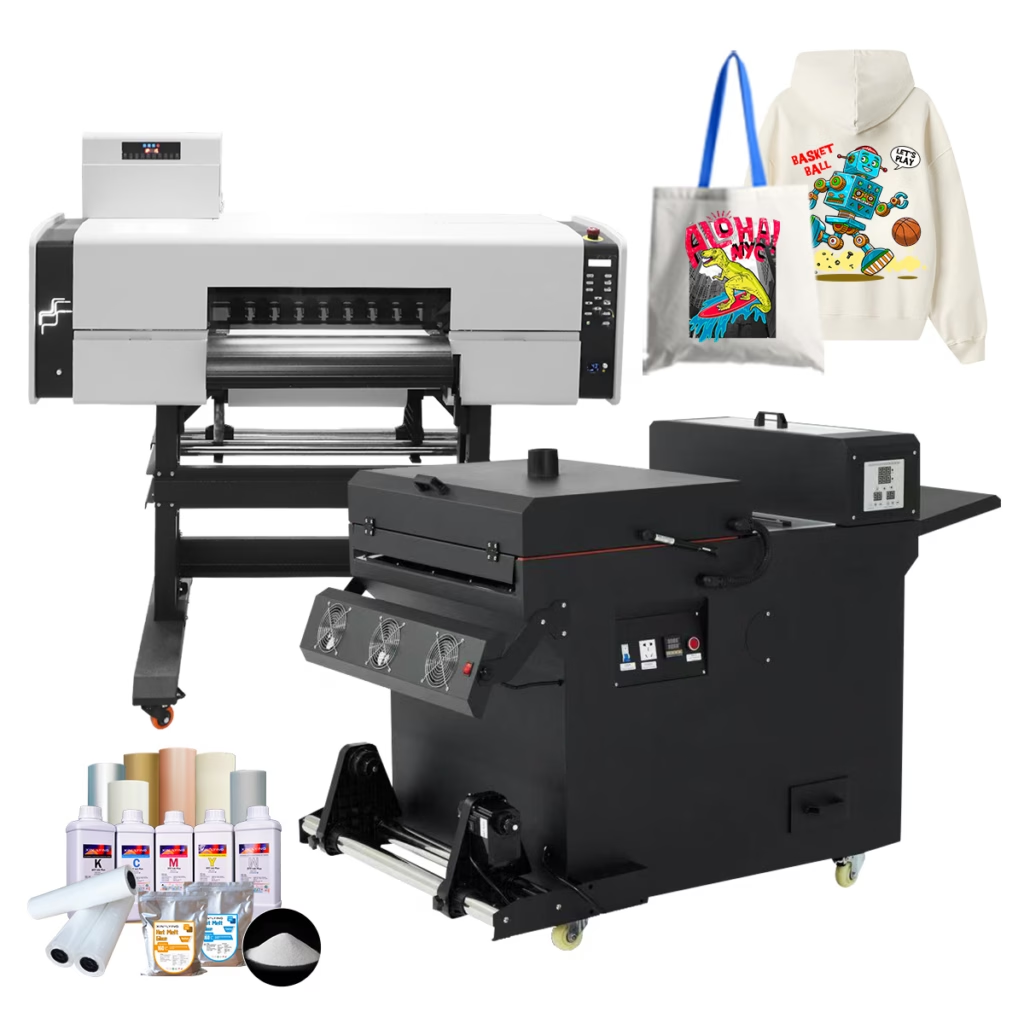
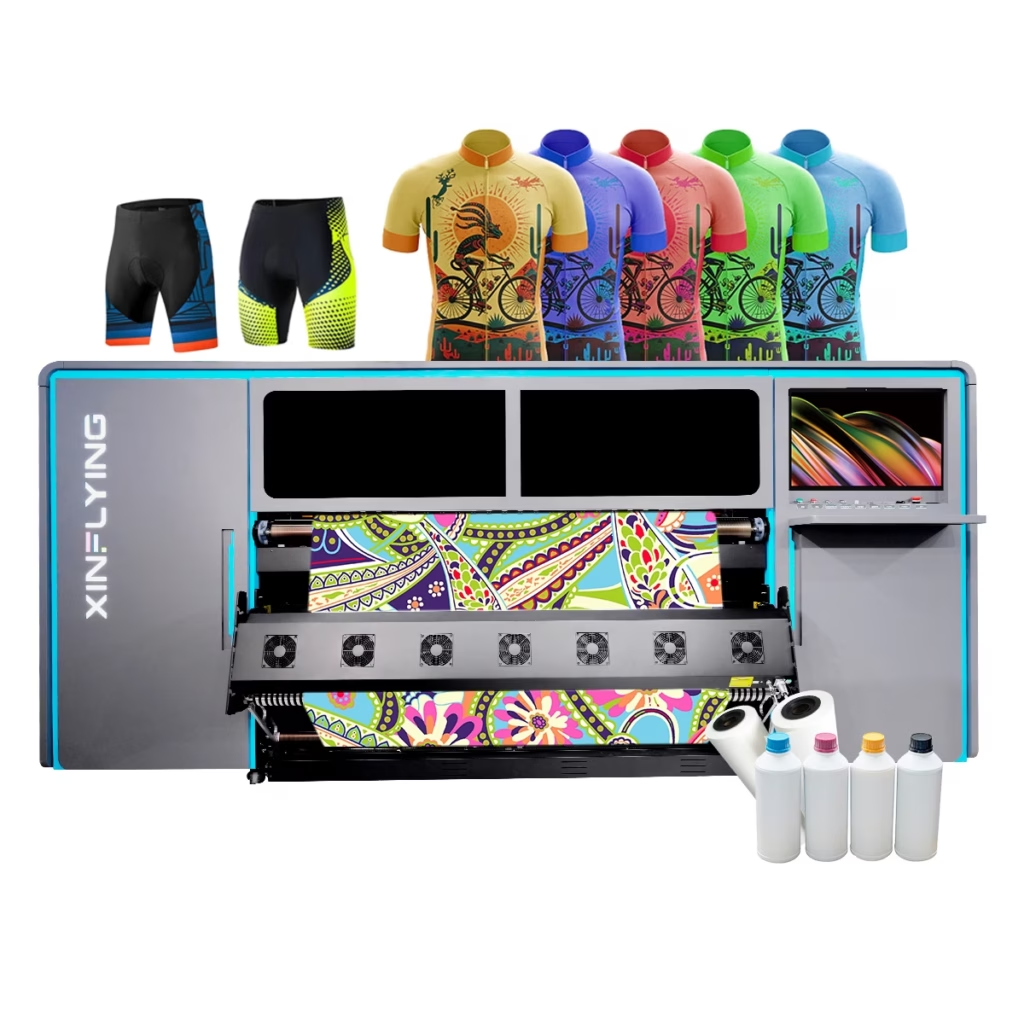
Xinflying Group offers ДТФ штампачи for businesses ready to expand beyond HTV limitations. Our solutions deliver professional-quality transfers for full-color designs while complementing existing HTV operations.