Introduktion
Thinking about starting your own t-shirt printing business but unsure where to begin? DTF (Direkt till film) printing could be the perfect solution for you. Not only is it beginner-friendly, but it’s also one of the most profitable methods in the printing world. With Yahoo Finance predicting the DTF market to reach $2.72 miljarder med 2024, there’s never been a better time to dive in.
The best part? DTF printing is simple enough to be done at home. No need for elaborate machinery or an expensive setup—just a few essential tools and materials. This beginner’s guide will walk you through the basics of DTF printing, from the equipment you need to the process of transferring designs onto fabric.
What is DTF Printing and Why Should You Try It?
DTF printing is a method where designs are printed onto a special transfer film, coated with adhesive powder, and then heat pressed onto your chosen fabric. While it may sound complex, the process is actually quite straightforward and user-friendly, speciellt för nybörjare.
Here are some of the top benefits of DTF printing:
- Vibrerande, Högkvalitativa utskrifter: DTF printing produces sharp, färgrik, and detailed designs. It can handle intricate and complex artwork, making it ideal for custom t-shirts and other promotional items.
- Works on Multiple Fabrics: Oavsett om du arbetar med bomull, polyester, or blended fabrics, DTF printing is highly versatile. You can even print on dark-colored materials without worrying about the design fading.
- No Pretreatment Required: Unlike other printing methods that require pretreating the fabric, DTF printing simplifies the process by allowing you to print directly onto the film. The only preparation needed is curing the adhesive powder, which saves you time.
- Snabb vändningstid: Med DTF -utskrift, you can create high-quality prints in under 12 minuter, including the heat pressing process.
- Lågt underhåll: The process is relatively low-maintenance, with few moving parts and minimal cleanup compared to other printing methods.
Essential Equipment and Materials for DTF Printing at Home
Before you start printing, there are a few essential tools and materials you’ll need to ensure success. Here’s a breakdown of the key items required:
- DTF-skrivare:
To get started, you’ll need a printer that can handle DTF printing. För nybörjare, entry-level A4 or A3 printers work perfectly. These smaller models allow you to experiment with smaller designs, and you can scale up as your skills improve. - Förbrukningsmaterial:
Consumables include DTF transfer films, självhäftande pulver, and ink. These materials will be used up during the printing process, so it’s best to invest in quality products. Buying in bulk can save you money in the long run. - Värmepressmaskin:
A heat press machine is a must for transferring your designs onto fabric. Choose one with adjustable temperature and pressure settings. A 15”x15” or 16”x20” platen size is ideal for beginners. Look for machines with digital displays for better control. - Computer with RIP Software:
You’ll need a computer with RIP (Raster Image Processor) software to manage and prepare your designs. This software is essential for converting your designs into a format that the printer can understand. - Tyg (Substrate):
Start with a single fabric type, som bomull, to familiarize yourself with the printing process. Once you’ve mastered this, you can experiment with other materials, including polyester, blandade tyger, och mer. - Cutting Tools:
Cutting tools like scissors, rotary cutters, and craft knives are needed to trim the transfer film before heat pressing. You don’t need a cutting machine right away—basic tools are sufficient to begin with.
Choosing the Right Printer for DTF Printing
The equipment you choose plays a big role in your success with DTF printing. While many high-quality DTF printers are available, you don’t need to invest in a top-of-the-line model just yet.
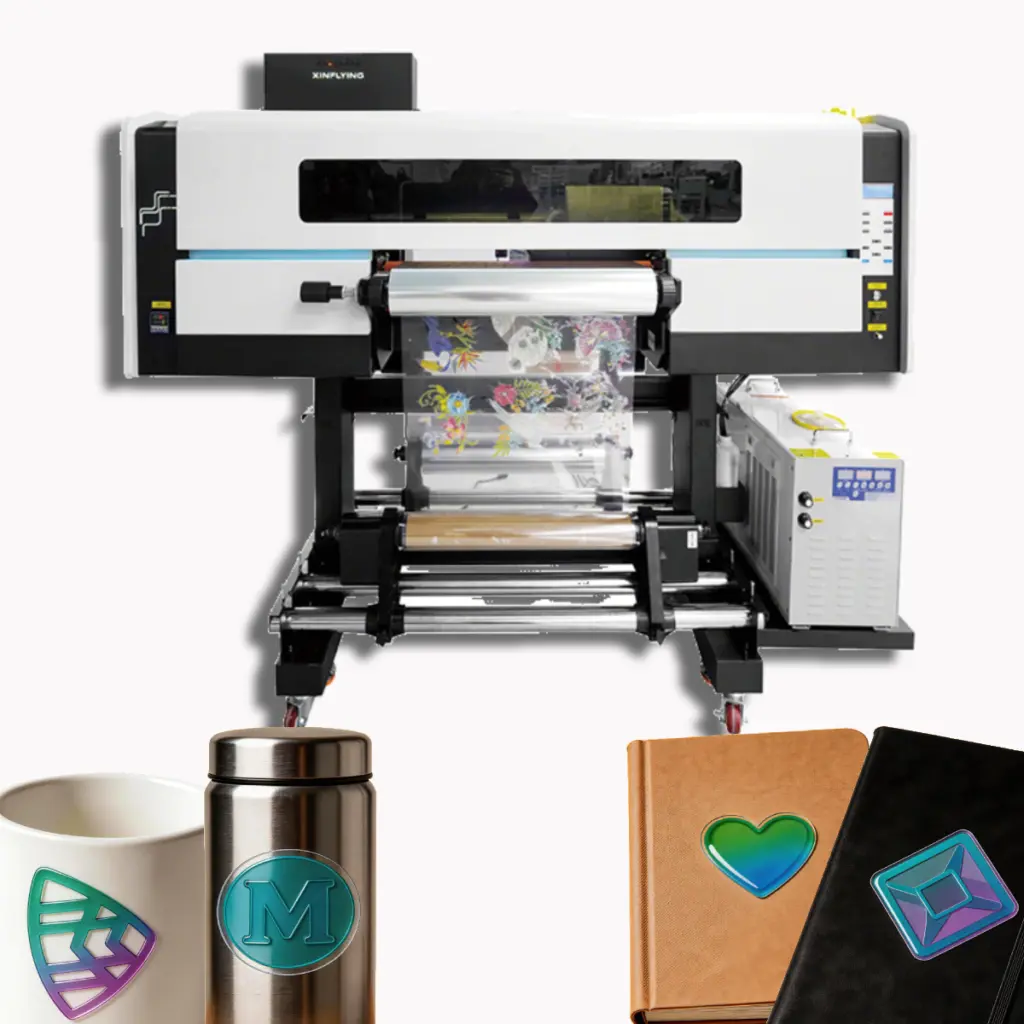
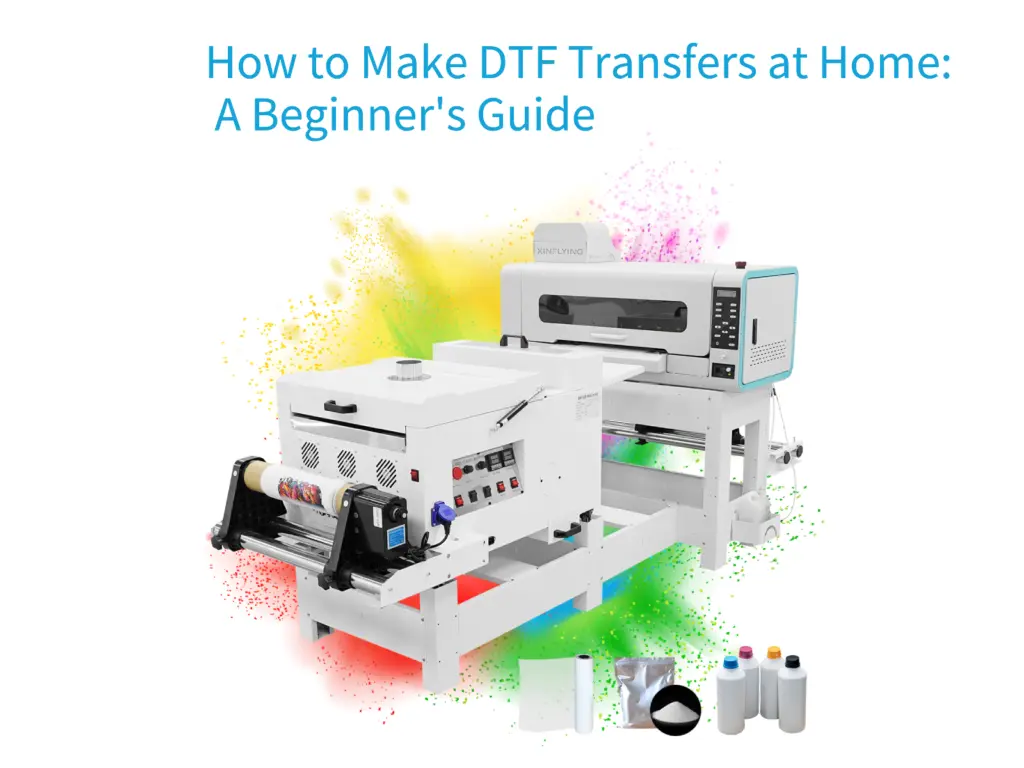
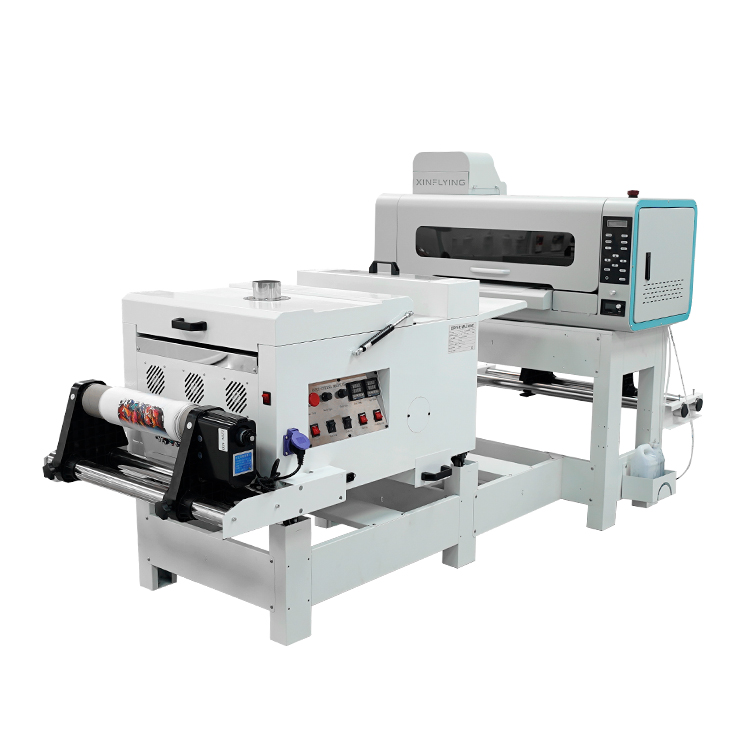
One popular option for beginners is the Xinflying A2 Dual I1600 Printheads DTF Printer. It’s compact, lätt att använda, and perfect for smaller businesses or home setups. With its Epson 1600 skrivhuvud, it produces vibrant prints using CMYK+W ink. This model prints up to 12 tum bred, and with a speed of 1.6 m² per hour at lower resolution, it’s great for quick, högkvalitativa resultat. Dessutom, its roll printing system and touchscreen interface make it user-friendly for beginners.
The DTF Printing Process at Home
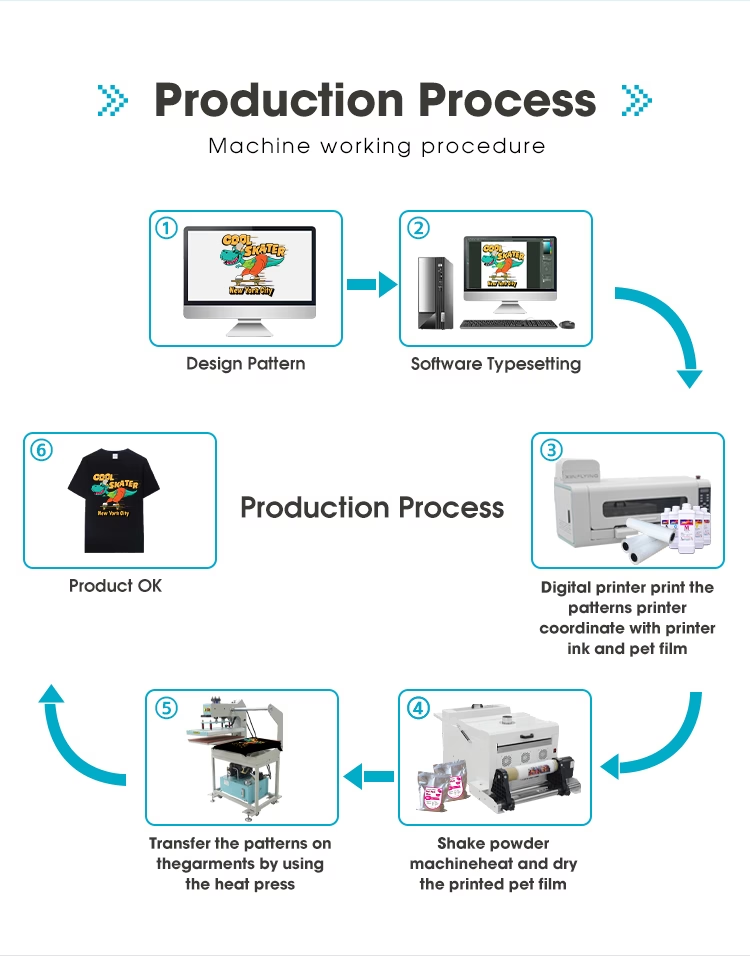
Now that you have the equipment, it’s time to dive into the actual DTF printing process. Här är en steg-för-steg-guide:
- Create or Choose Your Design:
Using your computer and RIP software, start with simple designs like logos or text. As you gain confidence, you can move on to more intricate graphics. - Print the Design on Transfer Film:
Load the transfer film into your printer and print the design. Make sure the film is properly aligned to prevent smudging or misprints. - Apply Adhesive Powder:
Immediately after printing, apply adhesive powder to the wet ink on the transfer film. Shake off any excess powder for an even coating. - Cure the Design:
Using your heat press, cure the adhesive powder. This step melts the powder and ensures it bonds to the ink. - Heat Press the Design onto the Fabric:
Place the transfer film on your fabric, align it correctly, and press it using the heat press. Make sure to preheat the fabric slightly to remove any moisture. - Skala och avsluta:
After pressing, you can peel the film. If the film is a hot peel type, remove it immediately. For cold peel films, wait for the design to cool before peeling.
Slutsats
DTF printing is an ideal option for beginners looking to enter the custom printing industry. It’s cost-effective, easy to set up, and versatile enough to print on a wide variety of fabrics. Whether you’re starting a hobby or a small business, DTF printing offers a quick, low-maintenance solution for creating high-quality prints.
By following the simple steps outlined in this guide and investing in the right equipment, you’ll be able to create vibrant, professional designs from the comfort of your home. Don’t worry about mistakes—they’re a part of the learning process. As you gain experience, your skills and design quality will improve. Start your DTF journey today and unlock your creative potential!
Vanliga frågor
- How do I do DTF transfers at home?
To start DTF transfers at home, you’ll need a DTF printer, värmepressmaskin, RIP programvara, överföringsfilm, självhäftande pulver, and fabric. Make sure you have a well-ventilated workspace and proper storage for consumables. - Do I need an expensive printer to start?
Inga, you can begin with an entry-level or converted printer. As long as the printer can handle white ink (in addition to CMYK), you’re good to go. - What fabrics can I use for DTF transfers?
DTF transfers work on almost any fabric, inklusive bomull, polyester, and blended materials. You can print on both light and dark-colored fabrics. - What are the advantages of DTF printing?
DTF -utskrift är mångsidig, kostnadseffektivt, and easy to use. It doesn’t require pretreatment, and it works on a variety of fabrics without compromising print quality. - What is the shelf life of DTF transfer films and inks?
DTF films typically last 6 months to a year, while inks can last anywhere from 12 till 24 månader, depending on storage conditions.