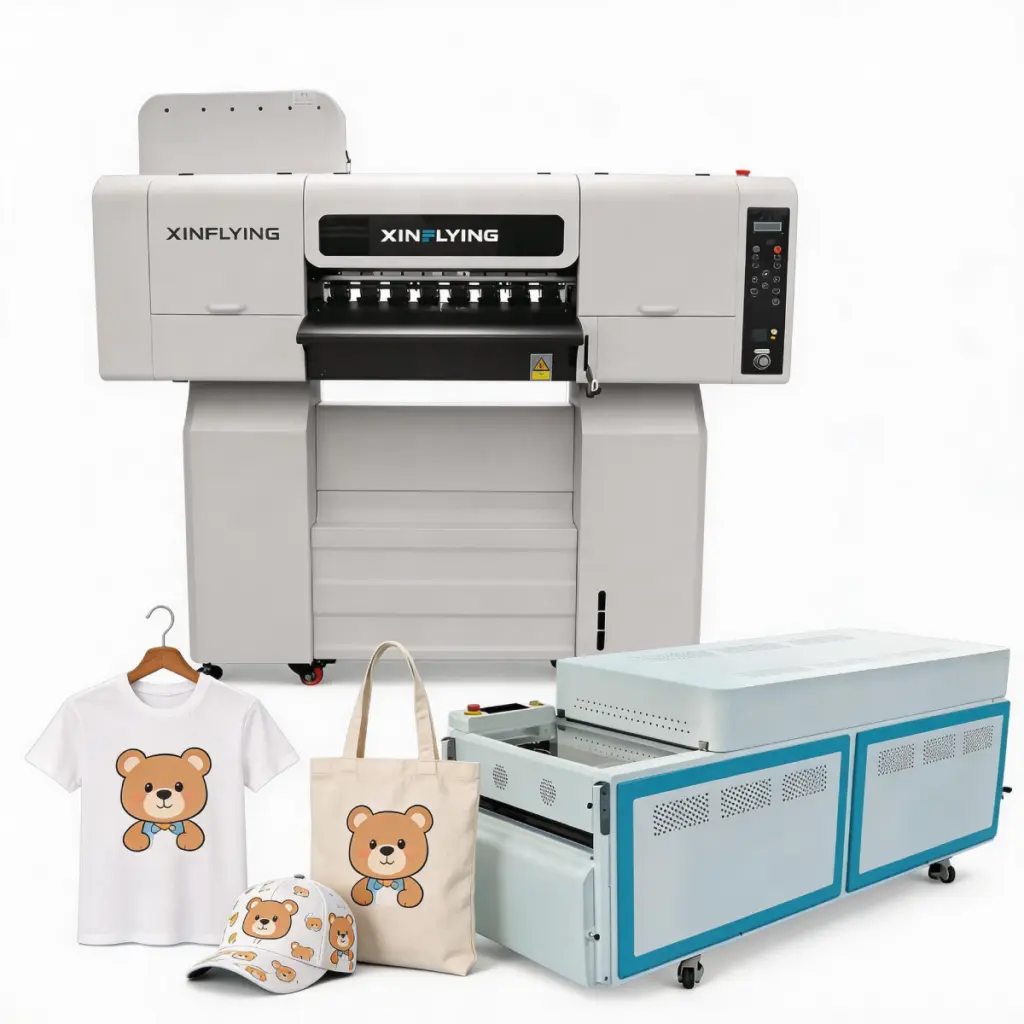
Textile finishing automation is transforming post-processing operations in 2026, reducing labor requirements and improving consistency for DTF, sublimering, and DTG print shops. Automated cutting, folding, bagging, and labeling systems are becoming increasingly common as printers seek to scale operations without proportionally increasing headcount.
In traditional print shops, finishing operations are labor-intensive. Transfers must be cut from film rolls, separated by order, folded or rolled, bagged, labeled, and prepared for shipping. These tasks consume significant operator time and are prone to errors—mislabeled orders, miscounted quantities, and damaged transfers.
Automated cutting systems address the first bottleneck. Flatbed or roll-fed cutters with optical registration can cut around individual transfers with precision, separating them from the film roll and cutting to required dimensions. Some systems can cut multiple transfers simultaneously, nesting designs to minimize waste.
Integrated cutting systems communicate directly with the RIP software, receiving cut paths automatically. Operators simply load printed film rolls, and the system cuts and unloads finished transfers. This automation reduces cutting time by 70–80% compared to manual cutting.
Folding and rolling automation handles the next step. For transfers that will be shipped flat, automated folders crease and stack transfers in uniform stacks. For rolled transfers, automated winders roll transfers onto cores with consistent tension, preventing wrinkles and damage.
Automated bagging systems place finished transfers into poly bags, heat-sealing or applying adhesive closures. Bags can be labeled automatically with order information, customer details, and shipping addresses. Some systems integrate with order management software, pulling shipping information directly from the order database.
Labeling automation ensures accuracy. Barcode or RFID labels on bags can be scanned at each stage, tracking orders through finishing and verifying contents before shipping. This reduces mis-shipments and enables real-time order tracking for customers.
For high-volume sublimation operations, calendar automation is critical. Automated calendering systems feed printed transfer paper and fabric through heated rollers, performing the sublimation transfer without operator intervention. These systems can process continuous rolls at speeds up to 20 meters per minute.
Integrated workflow platforms tie finishing automation together. When an order is printed, the system automatically generates cut files, prints bag labels, and schedules finishing operations. Operators monitor the process from central consoles, intervening only when exceptions occur.
The investment required for finishing automation varies widely. Entry-level automated cutters start around $5,000–$10,000. Integrated folding, bagging, and labeling systems can cost $50,000–$200,000 or more depending on throughput requirements. For high-volume operations, automation pays for itself through labor savings and error reduction.
For small to medium print shops, modular automation is often the best approach. Start with an automated cutter to address the most labor-intensive task, then add bagging and labeling as volume grows. Cloud-based workflow platforms can integrate automation components without requiring all systems simultaneously.
Xinflyings DTF -skrivare och sublimeringsskrivare integrate with leading finishing automation systems, enabling seamless workflow from print through ship. Our technical team can recommend automation solutions appropriate for your production volume and budget.