The textile printing industry is witnessing a transformative era as digital technologies continue to redefine production efficiency and creative boundaries. For custom apparel businesses, the debate often centers on two dominant technologies: To'g'ridan-to'g'ri kiyim (DTG) va To'g'ridan-to'g'ri filmga (DTF).
As we move through 2026, understanding the nuanced differences between these methods is critical for scaling operations and meeting consumer demands for quality and durability.ASD REPORT
1. To'g'ridan-to'g'ri kiyim (DTG): The Gold Standard for Cotton
DTG technology functions much like an office inkjet printer but is designed specifically for textiles. It sprays specialized aqueous pigment inks directly onto the fibers of the garment.
- Eng yaxshisi: 100% cotton or high-cotton blends.
- The “Hand” His: DTG is renowned for its “soft hand.” Because the ink penetrates the fibers, the print is breathable and almost imperceptible to the touch.
- Murakkablik: Requires a pre-treatment process, especially for dark garments, to ensure the white ink doesn’t soak into the fabric.
2. To'g'ridan-to'g'ri filmga (DTF): The Versatile Challenger
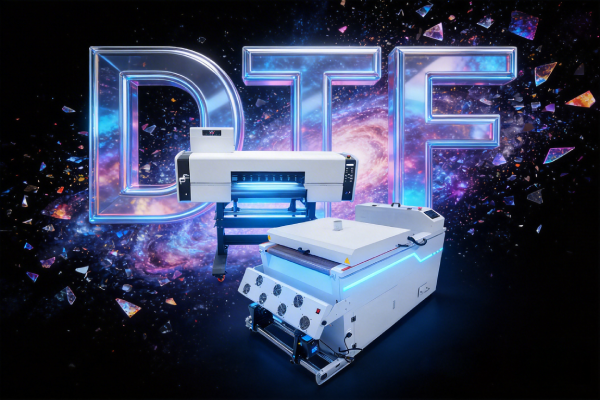
DTF is a newer process where the design is printed onto a special PET film, coated with a hot-melt adhesive powder, tuzaldi, and then heat-pressed onto the substrate.
Sanoat tadqiqotlariga ko'ra, the global digital textile printing market is expected to grow significantly, driven by e-commerce and on-demand production trends.GRAND VIEW RESEARCH
- Eng yaxshisi: Virtually any fabric—polyester, neylon, paxta, ipak, and synthetic blends.
- Vibrancy: DTF prints are known for their incredible color pop and opacity, even on dark synthetic materials where DTG struggles.
- Chidamlilik: The prints are plastic-like and highly elastic, making them resistant to cracking or peeling when stretched.
Key Comparison Matrix
| Xususiyat | To'g'ridan-to'g'ri kiyim (DTG) | To'g'ridan-to'g'ri filmga (DTF) |
|---|---|---|
| Mato mosligi | Primarily Cotton / High-Cotton Blends | Universal (Paxta, Poly, Neylon, va hokazo.) |
| Print Texture | Yumshoq, nafas oladigan, integrated | Slightly raised, silliq, “decal” feel |
| O'rnatish narxi | Baland (Industrial machines) | Moderate to Low |
| Ishlab chiqarish tezligi | Faster for single units | Faster for bulk “gang sheets” |
| Chidamlilik | Baland (fades slightly over many washes) | Extremely High (retains color & elasticity) |
| Xizmat | Baland (print head clogging risks) | Mo''tadil |
Deep Dive: Cost and Efficiency Analysis
When evaluating the ROI of these technologies, businesses must consider the cost per print. While DTG has a higher initial machine cost, the labor for single-off custom shirts is often lower. Conversely, DTF allows for “gang printing”—printing dozens of logos on a single roll of film to be applied later.
If we consider a simplified cost model for production: TotalCost=(Ink+Film/Pretreatment)+OutputLabor
In a high-volume environment, DTF often wins on cost-efficiency because the “transfer” can be stored and applied to any garment on demand, reducing the inventory risk of pre-printed shirts.
Which Should You Choose?
Tanlang DTG agar:
- You specialize in high-end, 100% cotton streetwear.
- Your customers prioritize breathability and a “vintage” soft feel.
- You handle many “one-off” custom orders with intricate, photographic details.
Tanlang DTF agar:
- You need to print on polyester, sport kiyimi, yoki reklama buyumlari (sumkalar, bosh kiyimlar).
- You want vibrant, durable colors that won’t crack on stretchy fabrics.
- You are looking for a more affordable entry point into the digital printing market.
The Verdict
Ichida 2026, the most successful print shops are no longer choosing one over the other; they are integrating both. DTG remains the king of premium cotton comfort, while DTF has unlocked the ability to brand almost any surface with ease. By leveraging the strengths of both technologies, businesses can maximize their market reach and provide the highest quality results for every unique customer request.