To'g'ri bosib chiqarish texnologiyasini tanlash foydali bosma biznesni yuritish uchun juda muhimdir. Talab bo'yicha chop etish o'sishda davom etmoqda, minglab korxonalar boshidanoq to'g'ri uskuna tanlash orqali katta daromad keltirmoqda.
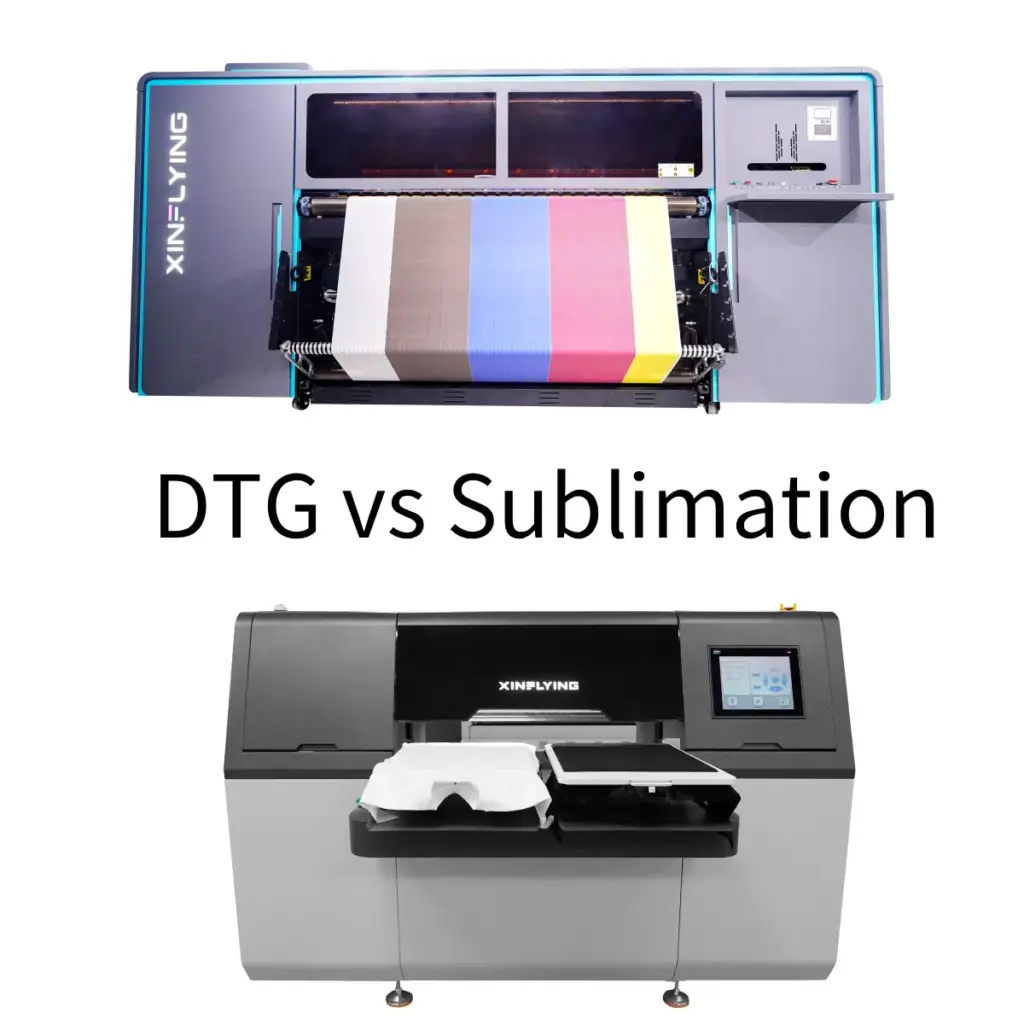
Eng ko'p muhokama qilinadigan texnologiyalar orasida sublimatsiya bosib chiqarish va DTG (to'g'ridan-to'g'ri kiyim) chop etish. Ikkalasi ham mukammal bosib chiqarish sifati bilan mashhur, lekin har biri turli materiallarga xizmat qiladi, ish oqimlari, va biznes ehtiyojlari. Shunday qilib, chop etish maqsadlaringiz uchun qaysi variant eng yaxshisidir?
Ushbu qo'llanma sublimatsiya va DTG bosib chiqarish sifati o'rtasidagi farqlarni buzadi, xarajat, muvofiqlik, chidamlilik, va boshqalar - shuning uchun siz uzoq muddatli qaror qabul qilishingiz mumkin.
Sublieatsion-ni bosib chiqarish nima?
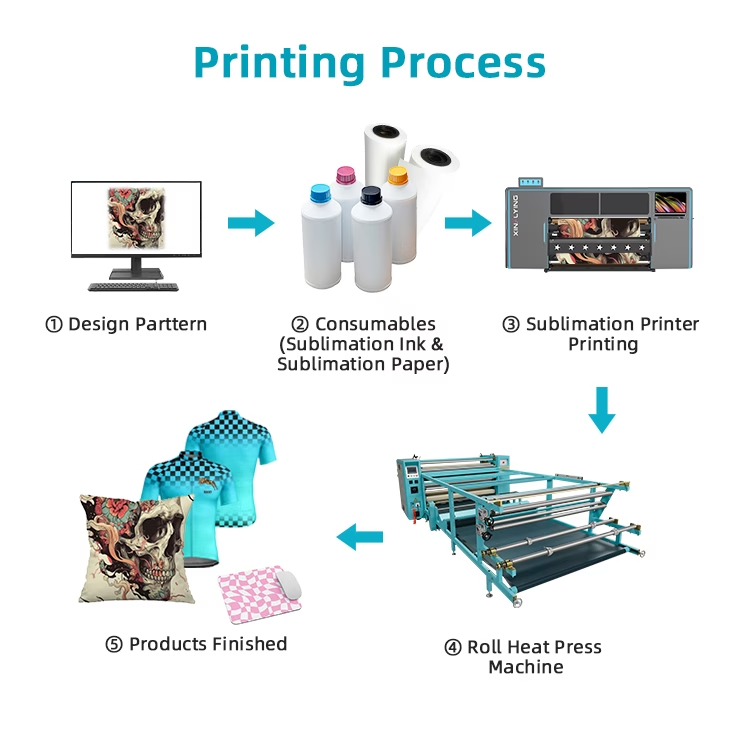
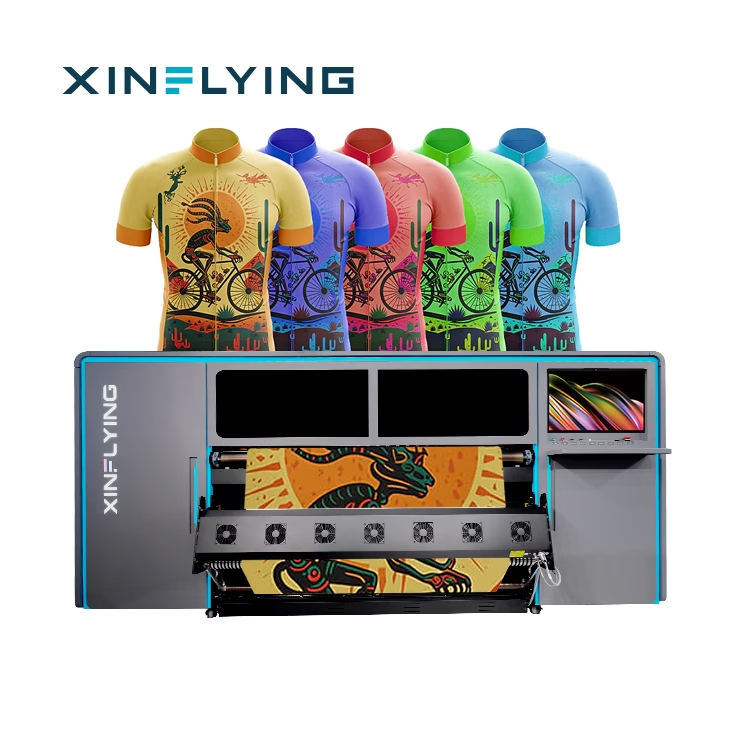
Sublimatsiya bosib chiqarish qattiq bo'yoqni gazga aylantirish uchun boshqariladigan issiqlik va bosimdan foydalanadi, uni to'g'ridan-to'g'ri polyester tolalar yoki polimer bilan qoplangan sirtlarga yopishtirish. Jarayon sublimatsiya siyoh yordamida dizaynlarni maxsus sublimatsiya qog'oziga bosib chiqaradigan sublimatsiya printeridan boshlanadi..
Chunki siyoh material bilan birlashadi, bosma matoning bir qismiga aylanadi - bu yorilib ketmaydi, qobiq, yoki so'roq. Sublimatsiya reklama mahsulotlari uchun ideal, sport kiyimi, va buyurtma bo'yicha bosma to'qimachilik.
Sublimatsiya bosib chiqarish qanday ishlaydi
- Dizaynni yarating grafik dizayn dasturidan foydalanish.
- Oynali san'at asarini chop eting sublimatsiya siyoh yordamida sublimatsiya qog'oziga.
- Qog'ozni joylashtiring mahsulotga qo'ying va uni issiqqa chidamli lenta bilan mahkamlang.
- Issiqlik va bosimni qo'llang issiqlik pressidan foydalanish - bu siyohni gazga aylantiradi va uni materialga doimiy ravishda bog'laydi.
- Mahsulotni sovutishga ruxsat bering, so'ngra doimiy ochish uchun qog'oz qobig'i, jonli chop etish.
Sublimatsiyaning afzalliklari
- Jonli hosil qiladi, uzoq muddatli ranglar
- Murakkab matoning bir qismiga aylanadi - yorilish yoki qobiq bo'lmaydi
- Silliq, ko'tarilgan teksturasiz choksiz tugatish
- Fotografik va to'liq rangli dizaynlar uchun juda yaxshi
- Ko'p mahsulotlarda ishlaydi: krujkalar, tirishqoq, libos, dekoratsiya, va boshqalar.
Sublimatsiyaning kamchiliklari
- Faqat polyester matolar yoki polimer bilan qoplangan buyumlar bilan mos keladi
- Ishlamaydi 100% paxta
- Yengil yoki oq materiallar bilan cheklangan
- Uskunalar va sarf materiallari qimmat bo'lishi mumkin
- Issiqlik uzatish bosqichlari tufayli ishlab chiqarish tezligi sekinlashishi mumkin
DTG Printing nima?
DTG (To'g'ridan-to'g'ri kiyim) inkjet printer kabi chop etish funksiyalari, lekin to'g'ridan-to'g'ri matoga chop etadi. Murakkab oldindan ishlov berilgan kiyim bilan bog'lanib, juda detallashtirilgan, yumshoq tazyiqlar. DTG murakkab dizaynlar uchun ideal, foto chop etish, va kichik partiyali buyurtmalar.
Sublimatsiyadan farqli o'laroq, DTG eng yaxshi tabiiy tolalar, ayniqsa paxta ustida ishlaydi.
DTG Printing qanday ishlaydi
- Kiyimni oldindan davolang siyohning to'g'ri ulanishini ta'minlash uchun.
- San'at asarini tayyorlang dizayn yoki RIP dasturidan foydalanish.
- To'g'ridan-to'g'ri kiyimga chop eting oq va rangli siyohlardan foydalanish.
- Murakkabni davolang issiqlik pressi yoki o'rnatilgan quritish moslamasi yordamida.
- Yakuniy mahsulot yumshoq bilan tayyor, batafsil chop etish.

DTG Printingning afzalliklari
- Paxta va tabiiy tolali matolar uchun juda yaxshi
- Yuqori darajada batafsil, rangli tazyiqlar - hatto qorong'i kiyimlarda ham
- Tez ishlab chiqarish va oddiy ish jarayoni
- Kichik miqdordagi yoki maxsus buyurtmalar uchun ideal
DTG Printingning kamchiliklari
- Bosimlar mato yuzasiga o'tirib, vaqt o'tishi bilan o'chib ketishi mumkin
- Matoga oldindan ishlov berishni talab qiladi
- Polyesterdagi sublimatsiyaga nisbatan kamroq bardoshli
- To'q rangli yoki qattiq teksturali matolarda ranglar kamroq jonli bo'lishi mumkin
DTG va boshqalar. Sublimatsiya: Asosiy farqlar
1. Mato mosligi
- Sublimatsiya: Polyester, poli aralashmalari, polimer bilan qoplangan mahsulotlar
- DTG: Paxta va paxta aralashmasi
2. Chop etish sifati
- Sublimatsiya: Ultra jonli, silliq, va doimiy ravishda materialga quyiladi
- DTG: Juda batafsil, lekin quyuq yoki teksturali kiyimlarda kamroq jonli ko'rinishi mumkin
3. O'rnatish xarajatlari
- DTG: Dastlabki investitsiyalar yuqori, ammo takroriy sarflanadigan xarajatlar kamroq
- Sublimatsiya: Uskunaning narxi past, lekin sublimatsiya siyohini talab qiladi & qog'oz uzoq muddatli
4. Ishlash xarajati
- DTG: $0.50– Rang va murakkablikka qarab chop etish uchun 3,50 dollar
- Sublimatsiya: Katta partiyalar va to'liq bosma nashrlar uchun tejamkorroq
5. Ishlab chiqarish tezligi
- DTG: Tayyor kiyimlar uchun tezroq, lekin oldindan davolashni talab qiladi
- Sublimatsiya: Tez chop etish, lekin to'liq mato dizaynlari uchun uzoqroq ish jarayoni
6. Chidamlilik
- Sublimatsiya: Juda bardoshli - matoning bir qismiga aylanadi
- DTG: Yaxshi sifat, lekin vaqt o'tishi bilan so'nishi yoki yorilishi mumkin
7. Atrof-muhitga ta'siri
- DTG: Suvga asoslangan siyohlardan foydalanadi, ekologik toza; oldingi muolajalar turlicha
- Sublimatsiya: Suvga asoslangan bo'yoqlar, lekin issiqlik bilan presslash uchun yuqori energiya talab qiladi
| Turkum | DTG bosib chiqarish | Sublimatsiya bosib chiqarish |
|---|---|---|
| Moddiy muvofiqlik | uchun eng yaxshisi 100% paxta & Tabiiy tolalar | Faqat polyester yoki polimer bilan qoplangan buyumlar ustida ishlaydi |
| Chop etish sifati | Yuqori tafsilot; murakkab dizaynlar uchun juda yaxshi | Juda jonli; polyesterda fotorealistik |
| O'rnatish narxi | Yuqori boshlang'ich investitsiyalar | Pastroq sozlash narxi |
| Ishlash xarajati | Bosib chiqarish narxi yuqori (siyoh + oldindan davolash) | Bosib chiqarish narxi past, ayniqsa ommaviy uchun |
| Ishlab chiqarish tezligi | Kichik buyurtmalar uchun tez; oldindan davolash talab qilinadi | Tez chop etish; to'liq mato ishlab chiqarish uchun sekinroq |
| Chidamlilik | Yaxshi, lekin vaqt o'tishi bilan so'nishi / so'nishi mumkin | Ajoyib; tolalarga birikkan, yorilib ketmaydi |
| Atrof-muhitga ta'siri | Suvga asoslangan siyohlar, lekin oldindan ishlov berish uchun kimyoviy moddalar | Ekologik toza siyohlar; issiqlik energiyasidan foydalanishga bog'liq |
| Eng yaxshisi | Kichik va o'rta buyurtmalar, paxta kiyimi, batafsil san'at asari | Katta buyurtmalar, polyester kiyimlar, sport kiyimi, reklama buyumlari |
DTG yoki Sublimatsiyani tanlash kerakmi??
Agar DTG ni tanlang:
- Siz bilan ishlaysiz 100% paxta
- Sizga kerak juda batafsil yoki rangli dizaynlar
- Siz boshqarasiz kichik yoki maxsus buyurtmalar
- Siz afzal ko'rasiz minimal sozlash va tez ishlab chiqarish
Agar sublimatsiyani tanlang:
- Siz chop etasiz polyester yoki sintetik matolar
- Sizga kerak bardoshli, doimiy, jonli natijalar
- Siz ishlab chiqarasiz ommaviy buyurtmalar
- Siz a ish boshlash kengaytiriladigan ishlab chiqarish ehtiyojlari bilan
Oxir oqibat, eng yaxshi tanlov sizning biznes modelingizga bog'liq, mahsulot assortimenti, va mijozlarga talab.
Xulosa
Sublimatsiya ham, DTG bosib chiqarish ham ajoyib natijalarni taqdim etadi, ammo turli maqsadlar uchun.
- DTG paxta kiyimlari uchun eng yaxshisidir, Nopok dizaynlar, va kichik va o'rta buyurtmalar.
- Sublimatsiya polyester materiallar uchun ideal, yorqin ranglar, va yuqori hajmli ishlab chiqarish.
Qaysi texnologiyani tanlamasligingizdan qat'iy nazar, Xinflying professional ta'minlaydi, ishonchli, va biznesingiz o'sishini qo'llab-quvvatlash uchun tejamkor bosma echimlar.
Bugun Xinflying bilan bog'laning ajoyib ishlashni ta'minlaydigan printerlarni o'rganish, ajoyib chidamlilik, va talab bo'yicha chop etish biznesingiz uchun beqiyos qiymat.