
The custom apparel industry has been transformed by the arrival of Direct-to-Film (DTF) tecnología. For years, decorators had to choose between the soft feel of screen printing (which requires high minimums) and the versatility of DTG (which requires complex pre-treatment). A impresora DTF offers the best of both worlds: the ability to print a single, high-quality shirt with the durability and color vibrancy of traditional industrial methods.
But what exactly is this process, and how does a professional DTF printing machine turn a digital image into a wearable piece of art? Abajo, we break down the science and the steps behind this revolutionary technology.
Understanding the DTF Concept
En su centro, DTF printing is a “transfer” proceso. Unlike Direct-to-Garment (DTG) where ink is jetted directly into the fabric fibers, a DTF printer prints the design onto a specialized Polyethylene Terephthalate (PET) película. This film acts as a temporary carrier for the ink until it is thermally bonded to the t-shirt.
The magic of DTF lies in its “universal” compatibilidad. Because the ink is bonded via an adhesive powder rather than a chemical reaction with the fabric, it works perfectly on 100% algodón, poliéster, nylon, e incluso cuero.
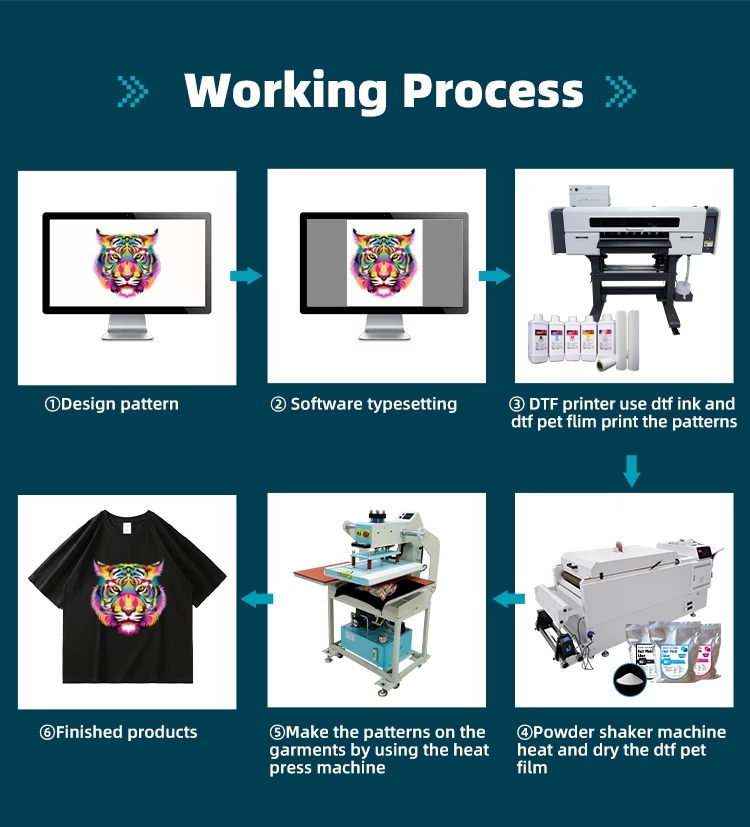
How a DTF Printing Machine Works: The 5-Step Process
A high-performance DTF printing machine from Xinflying Group automates a complex sequence of chemical and mechanical events. Here is the step-by-step workflow:
1. Digital Preparation and RIP Processing
The process begins in the RIP (Procesador de imágenes rasterizadas) software. The software takes your artwork and converts it into a language the DTF printer can understand. Crucially, the software creates two layers: a CMYK color layer and a “spot white” underbase. The white layer is vital because it provides the opacity needed for the design to show up on dark t-shirts.
2. Printing onto PET Film
The PET film is loaded into the printer, where it is held flat by a vacuum suction platform. The printheads—typically the industrial-grade Epson i3200-A1—deposit the CMYK ink first, immediately followed by a layer of white ink. Xinflying machines use Hoson mainboards to ensure that these two layers are perfectly “registered” (aligned), so no white ink peeks out from the edges of the colors.
3. Adhesive Powder Application
As the “wet” film exits the Máquina de impresión DTF, it enters the automated shaker unit. Aquí, a specialized TPU (Thermoplastic Polyurethane) adhesive powder is dusted over the wet ink. The machine then shakes the film at a high frequency to ensure the powder only sticks to the ink and not to the blank areas of the film.
4. Thermal Curing
The powdered film passes through a curing oven or under an infrared (IR) heater. This step melts the adhesive powder, fusing it with the pigment ink to create a flexible, durable “skin.” Una vez curado, the film can be used immediately or stored for months without losing quality.
5. The Heat Press Transfer
The final step is the actual “transfer” to the t-shirt. The cured film is placed on the garment and pressed at approximately 150°C – 160°C for 10 a 15 segundos. Once the film is peeled away (either hot or cold, depending on the film type), the design is permanently bonded to the fabric.
Key Hardware Components for Success
To achieve professional results, the quality of the DTF printing machine is paramount. Xinflying’s systems are built with industrial components that ensure this 5-step process is repeatable and reliable:
Circulación de tinta blanca: Prevents the heavy white pigments from settling and clogging the printheads.
THK Linear Guides: Ensure the carriage moves with micron-level precision for sharp image quality.
Precision Feed System: Controls the tension of the PET film to prevent banding and registration errors.
Why Choose DTF for T-Shirt Printing?
Businesses are increasingly shifting toward the DTF printer workflow for several reasons:
No Pre-treatment: Unlike DTG, you don’t need to spray and dry the shirt before printing.
Superior Durability: DTF prints are incredibly stretchy and can withstand 40+ industrial washes.
Rentabilidad: Consumable costs for DTF are significantly lower than DTG inks, especially when sourcing from a direct manufacturer like Xinflying.
Colores vibrantes: The white ink underbase ensures that colors “pop” on any fabric color, from bright white to pitch black.
Conclusión: The Future of Custom Apparel
DTF printing has democratized high-quality apparel decoration. By understanding how a DTF printing machine works, business owners can better maintain their equipment and produce superior products for their customers.
Xinflying Group continues to lead this sector by providing the industrial stability and technical support needed to master this workflow. Whether you are a small boutique or a high-volume factory, the precision and versatility of a professional DTF printer make it the ultimate tool for the modern garment decorator. By combining Epson’s world-class printheads with vuelo xin’s robust engineering, the transition from a digital design to a high-profit t-shirt has never been faster or more reliable.
