
In the competitive landscape of garment decoration and industrial textile manufacturing, choosing the right production method is critical for scalability and quality. For businesses looking to produce high-quality apparel, the debate often settles between two heavyweights: Digital Printing and Heat Transfer Vinyl (HTV). While both have their place in the workshop, understanding how a digital textile printer compares to traditional vinyl methods is essential for long-term growth.
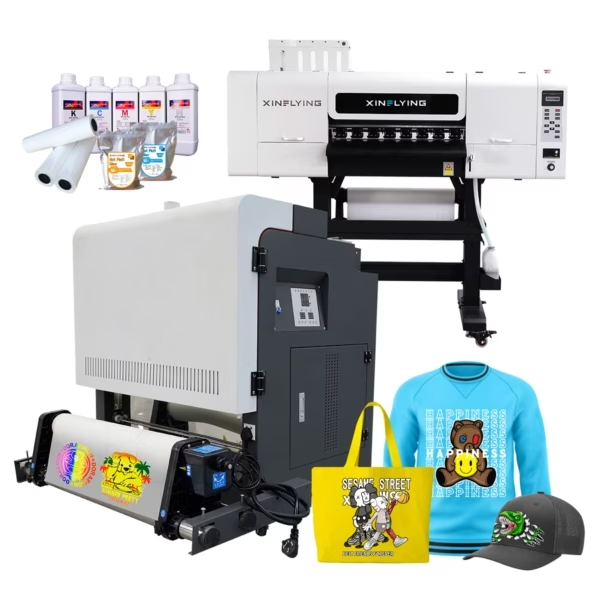
at Xinflying Group, we specialize in providing high-end industrial solutions that push the boundaries of what is possible on digital textile printing fabric. This guide explores the pros and cons of each method to help you determine which investment aligns with your production goals.
Understanding the Technology
What is Digital Textile Printing?
Digital textile printing encompasses several technologies, primarily Direct-to-Film (DTF) and Sublimation. A digital textile printer works much like an office inkjet but on a massive, industrial scale. It sprays specialized inks directly onto a film or paper, which is then transferred to the fabric. This process allows for unlimited colors, gradiensek, and intricate details that are impossible to achieve with manual cutting methods.
What is Heat Transfer Vinyl (HTV)?
HTV involves using a plotter or cutter to carve designs out of solid-colored sheets of vinyl. The excess material is “weeded” away by hand, and the remaining design is heat-pressed onto the garment. While durable, it is a mechanical process rather than a digital one.
The Advantages of Using a Digitális textilnyomtató
When we look at the B2B sector, efficiency and versatility are the primary drivers of profit. Here is why digital solutions often outshine vinyl:
1. Unlimited Detail and Color Complexity
The most significant advantage of digital printing is the ability to reproduce photographic quality. Whether you are printing a complex landscape or a brand logo with subtle shadows, a digital textile printer handles it effortlessly. HTV is limited to solid colors; if a design has five colors, you must layer five different sheets of vinyl, which adds thickness and labor time.
2. Superior “Hand Feel” on Digital Textile Printing Fabric
One of the biggest complaints with vinyl is the “műanyag” feel. Large HTV designs can feel heavy and stiff on the chest. Ezzel szemben, DTF and Sublimation technologies offered by Xinflying ensure that the digital textile printing fabric retains its softness. The ink bonds more naturally with the fibers, resulting in a breathable garment that athletes and high-end consumers prefer.
3. Scalability and Speed
For a B2B operation, az idő pénz. Weeding vinyl is a labor-intensive manual process. If you have an order for 500 ing, weeding could take days. With a Xinflying DTF printer, the machine handles the complexity. You simply print, por, and press.
Comparing the Cons: Where Each Method Struggles
While we advocate for digital excellence, it is important to look at the full picture:
HTV Cons: Extremely slow for bulk orders, limited to simple shapes, prone to peeling if not applied perfectly, and adds significant weight to the garment.
Digital Cons: Requires a higher initial investment in hardware and a consistent maintenance schedule to keep the printheads (like the Epson i3200) in top condition.
Precision Engineering: The Xinflying Advantage
To truly leverage the benefits of digital textile printing fabric, your hardware must be capable of industrial-grade output. Xinflying’s flagship machines, ranging from 30cm (12 hüvelyk) to 120cm (48 hüvelyk) models, are designed to bridge the gap between small-scale customization and mass production.
Based on our latest 60cm (24 hüvelyk) DTF Printing Systems, here is how we maximize your ROI:
Printhead Precision: Equipped with dual, triple, or even four Epson i3200-A1 / i1600-A1 heads, delivering a staggering 2400 DPI resolution for crystal-clear imagery.
Gyártási sebesség: Industrial models like the C602 or C604 are capable of producing 13m² to 22m² per hour, far exceeding the output of any vinyl cutting setup.
Advanced Stability: Featuring Hoson mainboards and integrated White Ink Circulation Systems to ensure consistent output without the maintenance headaches of entry-level machines.
Automated Workflow: Our systems include integrated high-efficiency powder shaking and infrared drying machines (like the C650H), removing the manual labor that makes HTV so costly for businesses.
Which Method is Right for Your Business?
Choose HTV if:
You are a hobbyist or a very small “mom and pop” shop.
You only work with single-color text or simple silhouettes.
You have a very limited budget and low volume requirements.
Choose a digital textile printer if:
You are a B2B supplier, a garment factory, or a growing clothing brand.
You need to print complex, multi-color graphics or photos.
You want to offer your clients a premium product with a soft touch.
You need to fulfill orders for hundreds or thousands of units quickly and efficiently.
Következtetés: The Future is Digital
While Heat Transfer Vinyl will always have a niche for simple, one-off personalized items, the industrial future belongs to digital technology. The ability to print on a wide variety of digital textile printing fabric with speed, pontosság, and vibrant color is what separates market leaders from the rest.
At Xinflying Group, we provide more than just a digital textile printer; we provide a complete production ecosystem. Végig 16 years of expertise and a focus on stable, high-efficiency machinery, we help businesses transition from manual labor to automated, digital success.
Looking to upgrade your production line? Visit Xinflying Group today to see our latest DTF and Sublimation solutions in action and discover how we can help you achieve professional results at scale.