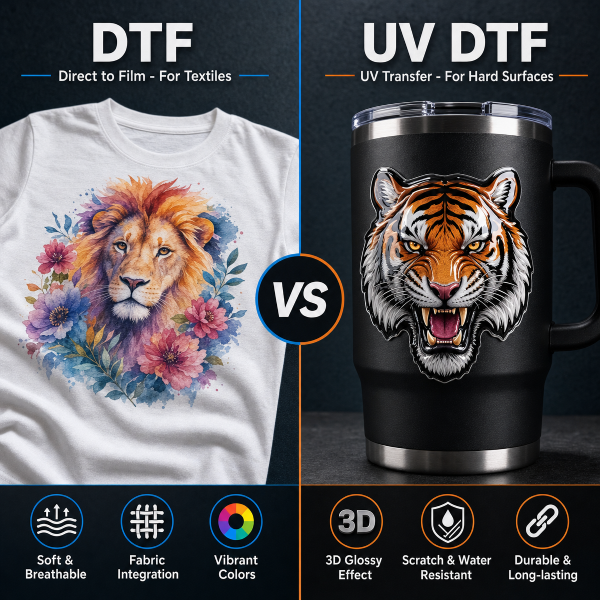
Se stai acquistando una soluzione di stampa, quasi sicuramente ti sei imbattuto in entrambi DTF E DTF UV - e se suonano come la stessa cosa con un nome leggermente diverso, non sei solo. Condividono parte del DNA, ma in pratica sono costruiti per applicazioni completamente diverse.
Scegliere quello sbagliato non influisce solo sulla qualità di stampa. Colpisce l'intera gamma di prodotti, il tuo investimento in attrezzature, e i mercati che puoi realisticamente servire. Questo confronto analizza tutto ciò che devi sapere per effettuare la chiamata giusta.
La risposta breve
- DTF (Diretto al cinema) = progettato per tessuti e indumenti
- DTF UV (Ultravioletto diretto su pellicola) = progettato per superfici dure e prodotti rigidi
Se il tuo business è incentrato sulle magliette, felpe con cappuccio, e tessile: DTF è il tuo strumento. Se stai decorando le custodie del telefono, bicchieri, acrilico, o beni durevoli: UV DTF è la scelta migliore. Molti negozi affermati gestiscono entrambi.
Come funziona ciascuna tecnologia
Stampa DTF standard
Il DTF standard stampa un disegno su un file ANIMALE DOMESTICO (poliestere) pellicola staccabile a caldo utilizzando inchiostri pigmentati a base acqua. Uno strato di polvere adesiva termofusibile viene applicato mentre l'inchiostro è ancora fresco, quindi la pellicola viene polimerizzata in un forno per legare la polvere all'inchiostro. Il trasferimento finito viene applicato al tessuto utilizzando a pressa di calore a temperatura e pressione controllate.
La termopressa attiva la polvere adesiva, legando permanentemente il disegno alle fibre del tessuto. Una volta raffreddato, la pellicola si stacca, lasciando un morbido, stampa flessibile.
Stampa DTF UV
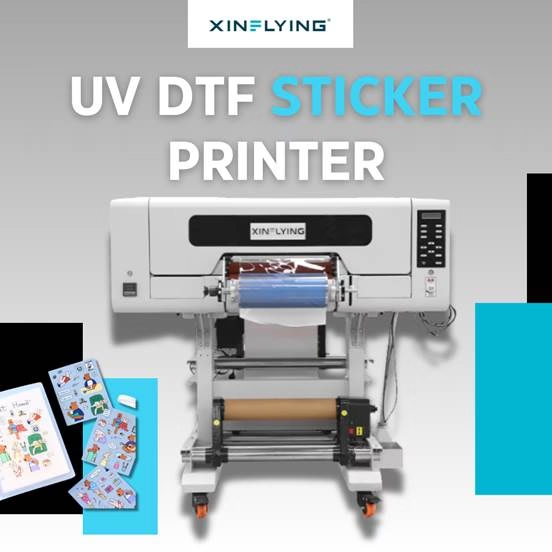
UV DTF viene stampato su a Pellicola A reattiva ai raggi UV utilizzando inchiostri essiccabili agli UV — CMYK, bianco, e vernice. Invece della polvere adesiva, Lampade LED UV integrate nella stampante asciugare immediatamente l'inchiostro non appena si deposita. La pellicola A polimerizzata viene laminata su una pellicola B trasparente utilizzando un laminatore a freddo, creando un trasferimento pronto per l'applicazione.
L'applicazione richiede solo pressione della mano — nessuna pressa di calore, niente polvere, nessuna polimerizzazione in forno. Il trasferimento si lega a superfici dure e lisce attraverso una combinazione di adesione polimerizzata con raggi UV e contatto superficiale.
Confronto affiancato
| Caratteristica | DTF standard | DTF UV |
|---|---|---|
| La migliore superficie | Tessuti & tessili | Beni duri & superfici rigide |
| Tipo di inchiostro | Pigmento a base d'acqua | Indurente ai raggi UV (CMYK + Bianco + Vernice) |
| Metodo di polimerizzazione | Forno + polvere adesiva | Lampade LED UV (integrato nella stampante) |
| Pressa di calore richiesta | ✅ Sì | ❌No |
| Polvere adesiva | ✅ Sì | ❌No |
| Inchiostro bianco | ✅ Sì | ✅ Sì |
| 3Effetto trama D | ❌No | ✅ Sì (con strato di vernice) |
| Funziona su superfici curve | Limitato | ✅ Sì |
| Durata del lavaggio (tessuto) | Eccellente | Non applicabile |
| Resistenza ai graffi (beni duri) | Non applicabile | Eccellente |
| minimo. Quantità dell'ordine | 1 pezzo | 1 pezzo |
| Velocità di produzione | Moderare | Moderare |
| Costo di avvio | Inferiore | Moderato–Alto |
Qualità di stampa a confronto
Vivacità del colore
Entrambi i metodi producono a colori, stampe di qualità fotografica. Sui rispettivi materiali di destinazione, entrambi si comportano eccezionalmente bene. Le stampe DTF UV tendono ad avere una resa cromatica leggermente superiore su superfici dure a causa della base dell'inchiostro bianco e della finitura lucida a polimerizzazione UV. Le stampe DTF su tessuto hanno una mano più morbida che si integra naturalmente con il tessuto.
Prestazioni dell'inchiostro bianco
L'inchiostro bianco è fondamentale in entrambi i metodi: fornisce lo strato di base opaco che rende visibili i colori su superfici scure o non bianche. In questo caso il DTF UV generalmente ha un vantaggio: L'inchiostro bianco essiccato ai raggi UV fissa più duramente e in modo più uniforme rispetto al bianco adesivo in polvere in DTF, riducendo il rischio di macchie semitrasparenti nelle aree bianche ad alta copertura.
Dettagli raffinati
Entrambe le tecnologie gestiscono bene le linee sottili e il testo piccolo. UV DTF ha un leggero vantaggio per lavori di dettaglio molto fini su beni duri grazie alla rigidità, natura non assorbente della pellicola di trasferimento. Il DTF sul tessuto è soggetto a una minore diffusione poiché l'inchiostro entra in contatto con le fibre tessili, sebbene questo sia raramente visibile ad occhio nudo sulla maggior parte dei modelli.
Compatibilità dei materiali
Il DTF standard funziona meglio su:
- 100% cotone e miscele di cotone
- Tessuti in poliestere e performance
- Denim
- Borse e borsoni in tela
- Nylon (con limitazioni)
Il DTF UV funziona meglio su:
- Custodie per telefoni (tutti i tipi di plastica e silicone)
- Bicchieri e bicchieri in acciaio inox e metallo
- Tazze e piastrelle in ceramica
- Acrilico e plexiglass
- Superfici in vetro
- Articoli in pelle e finta pelle
- Cartelli e targhe in legno
- Metallo verniciato e alluminio rivestito
Importante: Il DTF UV non funziona bene sul tessuto. Lo strato rigido di inchiostro essiccato ai raggi UV si rompe e si stacca sotto le ripetute flessioni e lavaggi subiti dagli indumenti. Se provi a utilizzare UV DTF su una maglietta, il trasferimento fallirà rapidamente.
Attrezzatura e installazione
Impostazione DTF standard
| Attrezzatura | Scopo |
|---|---|
| Stampante DTF | Stampa il disegno su pellicola PET |
| Agitatore per polvere | Distribuisce uniformemente la polvere adesiva hot-melt |
| Forno di polimerizzazione | Lega la polvere all'inchiostro |
| Pressa di calore | Trasferisce il disegno sul tessuto |
| Software RIP | Gestisce i profili di stampa |
Impostazione DTF UV
| Attrezzatura | Scopo |
|---|---|
| Stampante DTF UV | Il design viene stampato e polimerizzato mediante polimerizzazione UV su pellicola A |
| Laminatore a freddo | Unisce insieme un film e un film B |
| Software RIP | Gestisce i canali dell'inchiostro UV e lo strato bianco |
UV DTF ha un costo iniziale più elevato ma a flusso di lavoro più semplice – meno macchine, nessun pasticcio di polvere, nessuna gestione della pressa a caldo.
Complessità del flusso di lavoro
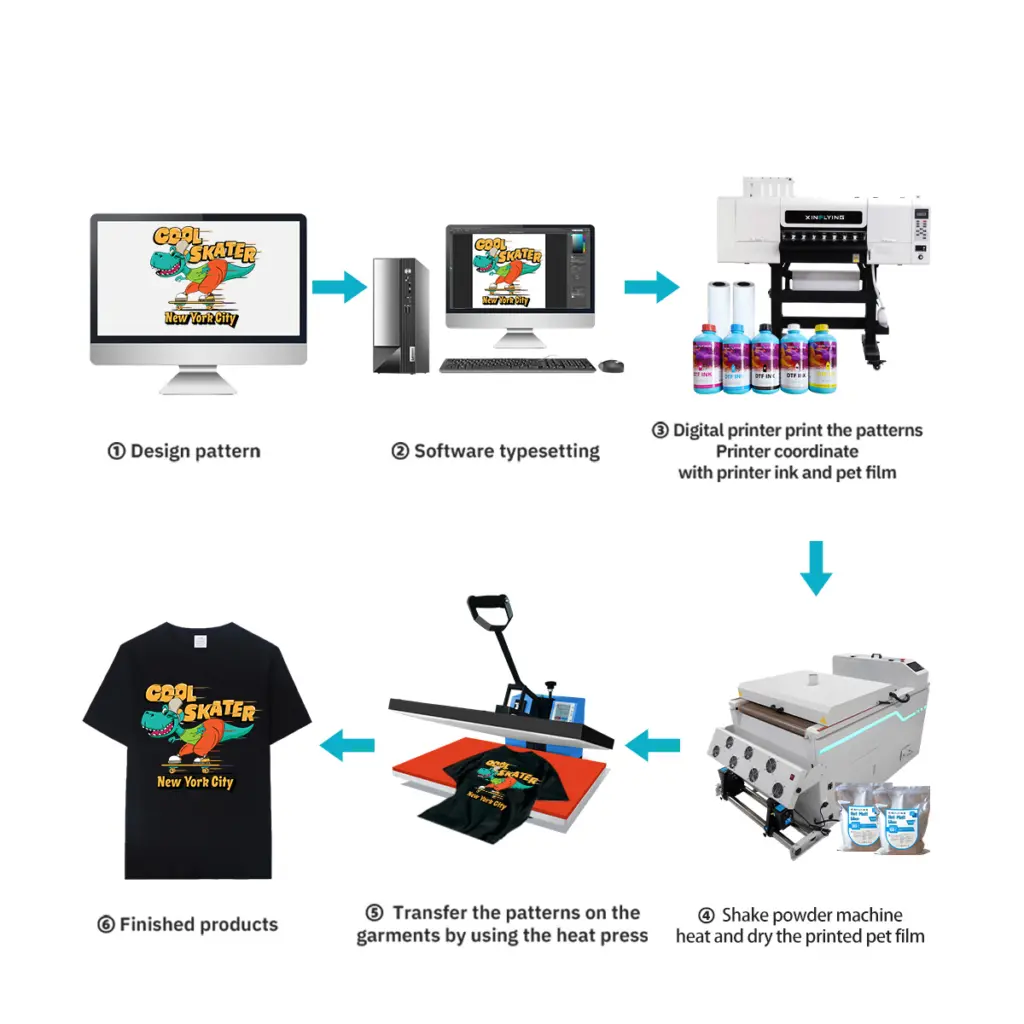
Flusso di lavoro DTF (5 passi)
- Preparare il progetto nel software RIP
- Stampa su pellicola PET
- Applicare polvere adesiva (agitatore manuale o automatico)
- Polimerizzare la polvere in forno (160–170°C, 2–3 minuti)
- Pressa a caldo sull'indumento (160°C, 6–10 secondi)
Punti dolenti: Consistenza dell'applicazione della polvere, gestione della temperatura del forno, le impostazioni della termopressa variano in base al tipo di tessuto.
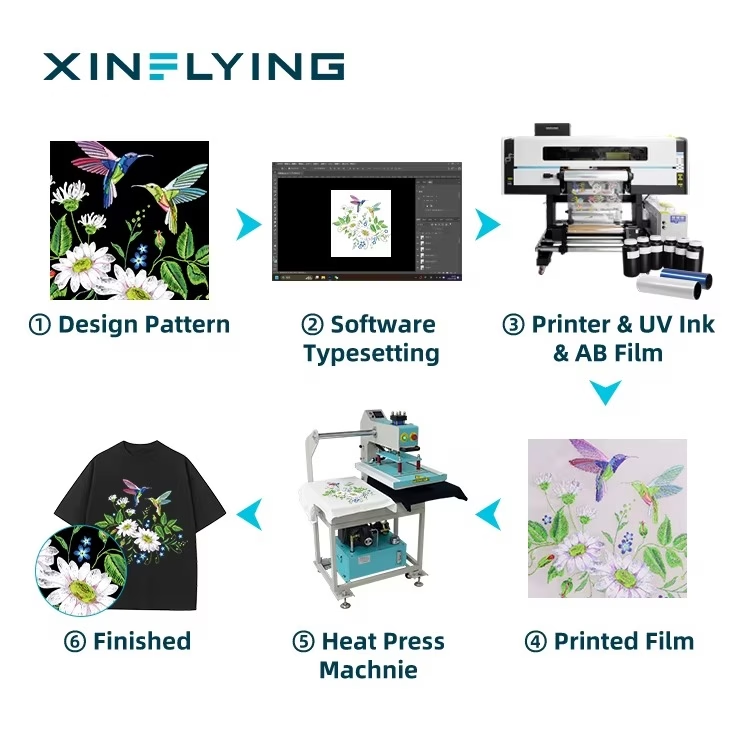
Flusso di lavoro DTF UV (4 passi)
- Preparare il progetto nel software RIP
- Stampa su pellicola A (La polimerizzazione UV avviene automaticamente in macchina)
- Laminato a freddo film A con film B
- Trasferire con la pressione manuale sul prodotto e sbucciare
Punti dolenti: Preparazione della superficie (deve essere pulito e liscio), Allineamento della pellicola B nel laminatore.
UV DTF vince in termini di semplicità del flusso di lavoro, soprattutto per gli operatori che desiderano un prodotto pulito, processo produttivo veloce senza gestire la temperatura del forno o l’applicazione della polvere.
Che è più redditizio?
Entrambi i metodi sono redditizi: la risposta dipende dal mercato di riferimento.
Margini DTF sono forti per i decoratori di indumenti, soprattutto negozi di magliette personalizzate. Il basso costo di ingresso significa un ROI più rapido, e la domanda di abbigliamento personalizzato è enorme.
Margini DTF UV tendono ad essere più alti per articolo perché i beni durevoli come bicchieri personalizzati e custodie per telefoni richiedono prezzi al dettaglio premium ($20–$50+), mentre il costo per stampa è solo leggermente superiore a DTF. Un negozio UV DTF che si concentra su bicchieri o prodotti da regalo di alta qualità può raggiungere margini lordi del 60-80% sui singoli articoli.
Puoi eseguirli entrambi nello stesso negozio?
Sì, e molte tipografie in crescita fanno esattamente questo.
Una configurazione comune:
- Stampante DTF per ordini di abbigliamento (Magliette, felpe con cappuccio, borse della spesa)
- Stampante DTF UV (come il XF-600s) per beni durevoli (bicchieri, casi di telefono, prodotti acrilici)
Questa combinazione ti consente di soddisfare quasi tutte le richieste di stampa personalizzata senza respingere gli ordini. I due flussi di lavoro sono sufficientemente indipendenti da non interferire tra loro, e l'investimento in attrezzature è graduale: puoi iniziare con uno e aggiungere l'altro man mano che la tua base clienti cresce.
Riepilogo: Quale dovresti scegliere?
| La tua situazione | Scelta consigliata |
|---|---|
| Principalmente decorazione di indumenti e tessuti | DTF standard |
| Decorare principalmente beni durevoli e prodotti rigidi | DTF UV |
| Vuoi offrire effetti in rilievo/ricamo 3D | DTF UV |
| Costo di avvio più basso possibile | DTF standard |
| Il più pulito, flusso di lavoro di produzione più semplice | DTF UV |
| Serve sia il mercato dei tessuti che quello dei beni durevoli | Entrambi |
Non esiste universalmente “Meglio” opzione: solo l'opzione migliore per quello che stai stampando. Se non sei ancora sicuro, inizia mappando gli ordini dei clienti attuali o target: cosa stanno effettivamente comprando? Lascia che questa risposta guidi la decisione sull'attrezzatura.
Domande frequenti
Q: Posso utilizzare una stampante UV DTF per stampare su magliette?
UN: Non raccomandato. L'inchiostro essiccato ai raggi UV è rigido e si screpola e si sbuccia sul tessuto con normale usura e lavaggio. Per la stampa su tessuto, il DTF standard è il metodo corretto.
Q: Il DTF UV è più costoso del DTF?
UN: Le stampanti DTF UV generalmente costano di più in anticipo, e i costi per stampa sono leggermente più alti. Tuttavia, i prodotti su cui è utilizzato (bicchieri, casi di telefono) imporre prezzi al dettaglio più alti, quindi i margini di profitto rimangono forti.
Q: Entrambi i metodi richiedono il software RIP?
UN: SÌ. Sia DTF che UV DTF richiedono il software RIP per gestire i canali dell'inchiostro, profili colore, e impostazioni del livello bianco. Le opzioni comuni includono Maintop e Photoprint.
Q: Quale metodo ha una migliore durata del lavaggio?
UN: Per applicazioni su tessuto, Il DTF standard ha un'eccellente durata del lavaggio (valutato 40–50+ lavaggi in condizioni normali). UV DTF non è progettato per il lavaggio dei tessuti e non deve essere confrontato con questo parametro: è progettato per la durabilità dei beni durevoli, dove si comporta molto bene.
Q: I trasferimenti DTF UV possono essere archiviati prima dell'uso?
UN: SÌ. I trasferimenti DTF UV stampati e laminati possono essere conservati in piano, lontano da fonti di calore e luce diretta, per diverse settimane o mesi prima dell'applicazione senza un degrado significativo.