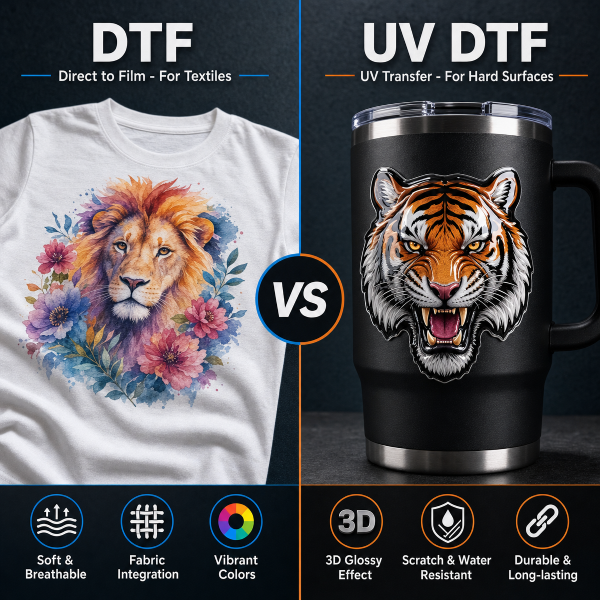
Agar siz chop etish yechimini xarid qilgan bo'lsangiz, siz deyarli ikkalasiga ham duch keldingiz DTF va UV DTF - va agar ular bir oz boshqacha nom bilan bir xil narsaga o'xshasa, siz yolg'iz emassiz. Ular bir nechta DNKni baham ko'rishadi, lekin amalda ular butunlay boshqa ilovalar uchun qurilgan.
Noto'g'ri tanlash faqat bosib chiqarish sifatiga ta'sir qilmaydi. Bu butun mahsulot qatoriga ta'sir qiladi, sizning uskunangizga investitsiya, va real xizmat ko'rsatishingiz mumkin bo'lgan bozorlar. Ushbu taqqoslash to'g'ri qo'ng'iroq qilish uchun bilishingiz kerak bo'lgan hamma narsani buzadi.
Qisqa javob
- DTF (Kino uchun to'g'ridan-to'g'ri) = uchun mo'ljallangan mato va kiyim-kechak
- UV DTF (To'g'ridan-to'g'ri kino uchun ultrabinafsha) = uchun mo'ljallangan qattiq yuzalar va qattiq mahsulotlar
Agar sizning biznesingiz futbolkalarda bo'lsa, qalpoqchalar, va to'qimachilik - DTF sizning vositangizdir. Agar siz telefon qutilarini bezab turgan bo'lsangiz, ichimlik idishlari, akril, yoki qattiq mahsulotlar - UV DTF eng yaxshi tanlovdir. Ko'pgina tashkil etilgan do'konlar ikkalasini ham ishlaydi.
Har bir texnologiya qanday ishlaydi
Standart DTF bosib chiqarish
Standart DTF a-ga dizaynni chop etadi PET (poliester) issiq peel plyonkasi suvga asoslangan pigmentli siyohlardan foydalanish. Bir qatlam issiq eriydigan yopishtiruvchi kukun siyoh hali ho'l bo'lganda qo'llaniladi, keyin plyonka kukunni siyoh bilan bog'lash uchun pechda davolanadi. Tayyor transfer matoga a yordamida qo'llaniladi Issiqlik matbuoti nazorat qilinadigan harorat va bosimda.
Issiqlik pressi yopishtiruvchi kukunni faollashtiradi, dizaynni mato tolalari bilan doimiy ravishda bog'lash. Soviganida, plyonka tozalanadi, yumshoq qoldirish, moslashuvchan bosma.
UV DTF bosib chiqarish
UV DTF a ga chop etadi UV-reaktiv plyonka UV-davolay oladigan siyohlardan foydalanish - CMYK, oq, va lak. Yopishtiruvchi kukun o'rniga, Printerga o'rnatilgan UV LED lampalar siyohni yotqizish bilan bir zumda davolang. Qattiqlashtirilgan A plyonkasi sovuq laminator yordamida shaffof B plyonkasiga laminatlanadi, qo'llashga tayyor transferni yaratish.
Ilova faqat talab qiladi qo'l bosimi - issiqlik bosimi yo'q, kukun yo'q, pechda quritish yo'q. O'tkazgich ultrabinafsha nurlari bilan ishlangan yopishqoqlik va sirt bilan aloqa qilish orqali silliq qattiq yuzalarga bog'lanadi.
Yonma-yon taqqoslash
| Xususiyat | Standart DTF | UV DTF |
|---|---|---|
| Eng yaxshi sirt | Matolar & to'qimachilik | Qattiq buyumlar & qattiq yuzalar |
| Murakkab turi | Suvga asoslangan pigment | UV nurlari bilan davolash mumkin (CMYK + Oq + Lak) |
| Quritish usuli | Pech + yopishtiruvchi kukun | UV LED lampalar (printerga o'rnatilgan) |
| Issiqlik bosimi kerak | ✅ Ha | ❌ Yo'q |
| Yopishtiruvchi kukun | ✅ Ha | ❌ Yo'q |
| Oq siyoh | ✅ Ha | ✅ Ha |
| 3D Tekstura effekti | ❌ Yo'q | ✅ Ha (lak qatlami bilan) |
| Egri sirtlarda ishlaydi | Cheklangan | ✅ Ha |
| Yuvish chidamliligi (mato) | Ajoyib | Qo'llanilmaydigan, qo'llab bo'lmaydigan |
| Chizish chidamliligi (qattiq buyumlar) | Qo'llanilmaydigan, qo'llab bo'lmaydigan | Ajoyib |
| Min. Buyurtma miqdori | 1 bo'lak | 1 bo'lak |
| Ishlab chiqarish tezligi | Mo''tadil | Mo''tadil |
| Ishga tushirish narxi | Pastroq | O'rtacha - yuqori |
Chop etish sifati solishtirildi
Rang jonliligi
Ikkala usul ham ishlab chiqaradi to'liq rangli, Fotosuratlar sifatli bosma nashrlar. Ularning tegishli maqsadli materiallari bo'yicha, ikkalasi ham juda yaxshi ishlaydi. UV DTF nashrlari oq siyoh asosi va UV nurlari bilan qoplangan yaltiroq qoplama tufayli qattiq yuzalarda biroz yuqoriroq rangga ega bo'ladi.. Matodagi DTF nashrlari to'qimachilik bilan tabiiy ravishda birlashtirilgan yumshoqroq qo'l tuyg'usiga ega.
Oq siyoh ishlashi
Oq siyoh ikkala usulda ham muhim ahamiyatga ega - u qorong'u yoki oq bo'lmagan yuzalarda ranglarni ko'rinadigan shaffof bo'lmagan asosiy qatlamni ta'minlaydi.. UV DTF odatda bu erda afzalliklarga ega: UV nurlari bilan davolangan oq siyoh DTF dagi chang yopishtiruvchi oq rangga qaraganda qattiqroq va bir tekisda o'rnatiladi, yuqori qoplamali oq joylarda yarim shaffof yamaqlar xavfini kamaytirish.
Nozik tafsilot
Ikkala texnologiya ham nozik chiziqlar va kichik matnlarni yaxshi boshqaradi. UV DTF qattiqligi tufayli qattiq buyumlar ustida juda nozik detallar bilan ishlash uchun engil chekkaga ega, transfer plyonkasining changni yutish xususiyati. Matodagi DTF ozgina tarqaladi, chunki siyoh to'qimachilik tolalari bilan aloqa qiladi, Garchi bu ko'pchilik dizaynlarda yalang'och ko'z bilan kamdan-kam ko'rinadi.
Moddiy muvofiqlik
Standart DTF eng yaxshi ishlaydi:
- 100% paxta va paxta aralashmalari
- Polyester va ishlash matolari
- Daniy
- Kanvas sumkalar va sumkalar
- Neylon (cheklovlar bilan)
UV DTF eng yaxshi ishlaydi:
- Telefon holatlari (barcha plastik va silikon turlari)
- Zanglamaydigan po'latdan yasalgan va metall idishlar va ichimliklar
- Seramika krujkalar va plitkalar
- Akril va pleksiglas
- Shisha yuzalar
- Teri va sun'iy charm buyumlar
- Yog'ochdan yasalgan belgilar va plitalar
- Bo'yalgan metall va qoplangan alyuminiy
Muhim: UV DTF matoda yaxshi ishlamaydi. Qattiq ultrabinafsha nurlari bilan davolangan siyoh qatlami kiyimlarni qayta-qayta bukish va yuvishda yorilib, tozalanadi.. Agar siz futbolkada UV DTF dan foydalanmoqchi bo'lsangiz, transfer tezda muvaffaqiyatsiz bo'ladi.
Uskunalar va sozlash
Standart DTF sozlamalari
| Uskunalar | Maqsad |
|---|---|
| DTF printer | Dizaynni PET plyonkasiga bosib chiqaradi |
| Shakar kukuni | Issiq eritilgan yopishtiruvchi kukunni teng ravishda taqsimlaydi |
| Pechni davolash | Kukunni siyoh bilan bog'laydi |
| Issiqlik matbuoti | Dizaynni matoga o'tkazadi |
| RIP dasturiy ta'minot | Chop etish profillarini boshqaradi |
UV DTF sozlamalari
| Uskunalar | Maqsad |
|---|---|
| UV DTF printer | A plyonkaga dizaynni bosib chiqaradi va UV-davolaydi |
| Sovuq laminator | A filmi va B filmini birlashtiradi |
| RIP dasturiy ta'minot | UV siyoh kanallari va oq qatlamni boshqaradi |
UV DTF yuqori boshlang'ich narxiga ega, ammo a oddiyroq ish jarayoni - kamroq mashinalar, hech qanday kukun yo'q, issiqlik bosimini boshqarish yo'q.
Ish jarayonining murakkabligi
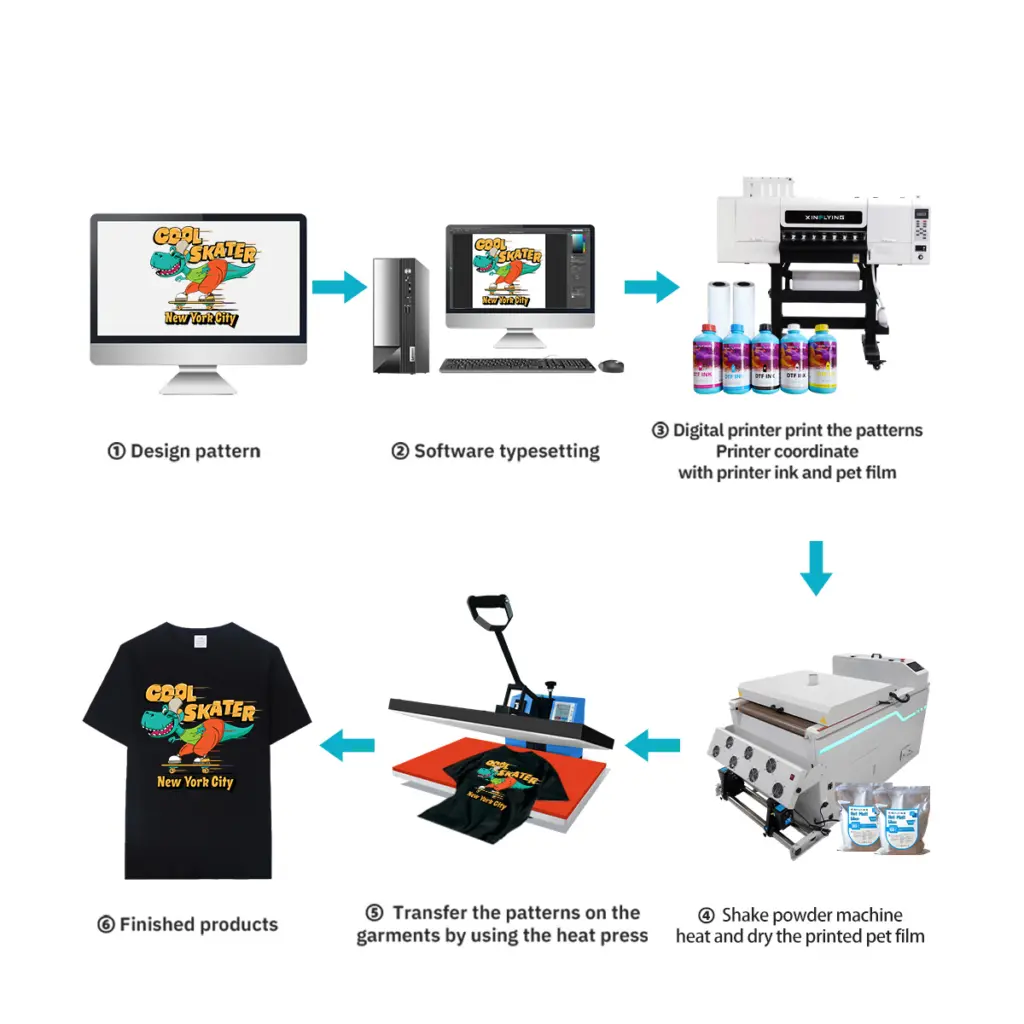
DTF ish jarayoni (5 qadamlar)
- Dizaynni RIP dasturida tayyorlang
- PET filmiga chop eting
- Yopishqoq kukunni qo'llang (qo'lda yoki avtomatik silkitgich)
- Pechda quritilgan kukun (160-170 ° S, 2-3 daqiqa)
- Kiyimga issiqlik bilan bosing (160° C, 6-10 soniya)
Og'riq nuqtalari: Kukunni qo'llashning mustahkamligi, pechning haroratini boshqarish, issiqlik bosimi sozlamalari mato turiga qarab farq qiladi.
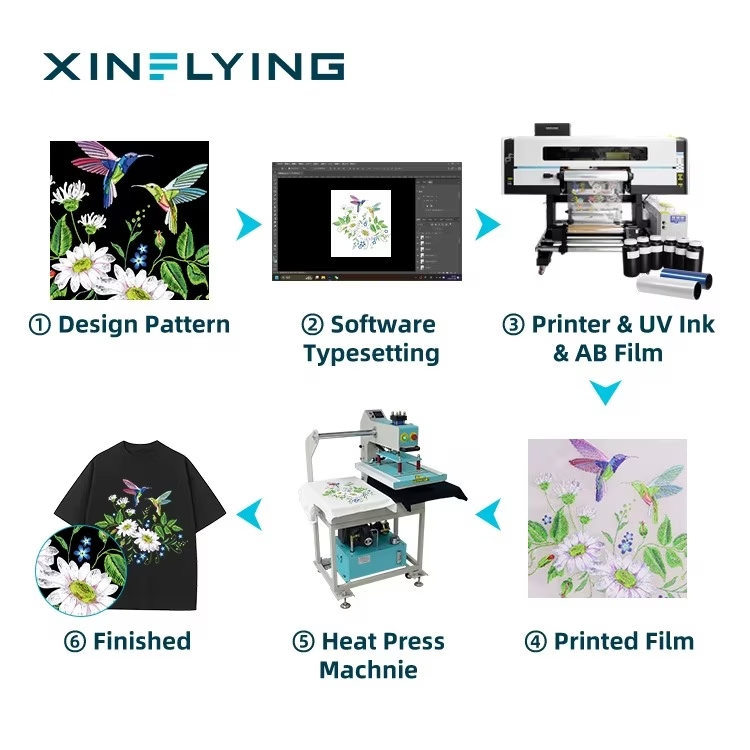
UV DTF ish jarayoni (4 qadamlar)
- Dizaynni RIP dasturida tayyorlang
- Filmga chop etish (UV nurlanishi avtomatik ravishda mashinada sodir bo'ladi)
- Sovuq laminat B plyonkali film
- Mahsulotga qo'l bilan bosing va tozalang
Og'riq nuqtalari: Sirtni tayyorlash (toza va silliq bo'lishi kerak), B plyonkani laminatorda tekislash.
UV DTF ish jarayonining soddaligi bo'yicha g'alaba qozonadi - ayniqsa tozalikni xohlaydigan operatorlar uchun, pechning haroratini yoki kukunni qo'llamasdan tez ishlab chiqarish jarayoni.
Qaysi biri foydaliroq?
Ikkala usul ham foydalidir - javob sizning maqsadli bozoringizga bog'liq.
DTF chegaralari kiyim bezaklari uchun kuchli, ayniqsa, maxsus futbolkalar do'konlari. Kirish narxining pastligi tezroq ROIni anglatadi, va maxsus kiyimlarga talab katta.
UV DTF chegaralari Odatda har bir mahsulot narxi yuqoriroq bo'ladi, chunki maxsus stakan va telefon qutilari kabi qattiq mahsulotlar yuqori darajadagi chakana narxlarni talab qiladi ($20- $50+), Bosib chiqarish narxi esa DTF dan biroz yuqoriroq. Yuqori sifatli ichimliklar yoki sovg'a mahsulotlariga yo'naltirilgan UV DTF do'koni alohida mahsulotlardan 60-80% yalpi foyda olishi mumkin..
Ikkalasini ham bitta do'konda ishlay olasizmi??
Ha - va ko'plab o'sib borayotgan bosmaxonalar aynan shunday qilishadi.
Umumiy sozlash:
- DTF printer kiyim buyurtmalari uchun (futbolkalar, qalpoqchalar, Tote sumkalari)
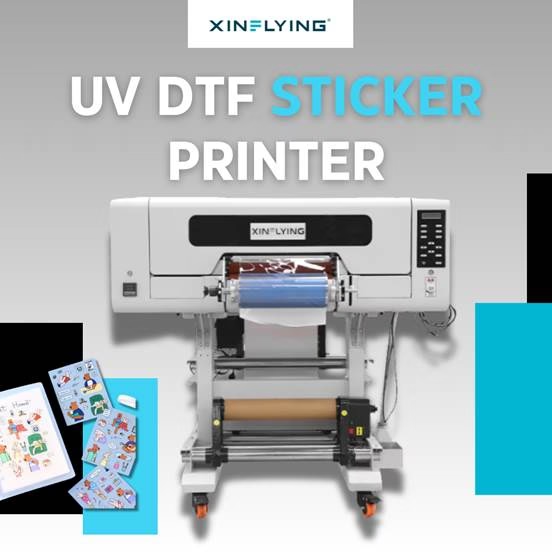
- UV DTF printer (kabi XF-600S) qattiq buyumlar uchun (tirishqoq, telefon qutilari, akril mahsulotlar)
Bu kombinatsiya buyurtmalarni bekor qilmasdan deyarli har qanday maxsus chop etish so'roviga xizmat ko'rsatish imkonini beradi. Ikki ish jarayoni bir-biriga aralashmaydigan darajada mustaqildir, va asbob-uskuna sarmoyasi bosqichma-bosqich amalga oshiriladi - siz biridan boshlashingiz va mijozlar bazangiz o'sishi bilan ikkinchisini qo'shishingiz mumkin.
Xulosa: Qaysi birini tanlash kerak?
| Sizning holatingiz | Tavsiya etilgan tanlov |
|---|---|
| Birinchi navbatda kiyim va matolarni bezash | Standart DTF |
| Birinchi navbatda qattiq buyumlar va qattiq mahsulotlarni bezash | UV DTF |
| 3D naqshli/kashta effektlarini taklif qilmoqchimisiz | UV DTF |
| Boshlash uchun mumkin bo'lgan eng past narx | Standart DTF |
| Eng toza, eng oddiy ishlab chiqarish jarayoni | UV DTF |
| Mato va qattiq mahsulotlar bozorlariga xizmat ko'rsatish | Ikkalasi ham |
Umumjahon yo'q “yaxshiroq” variant — faqat yaxshiroq variant chop etayotganingiz uchun. Agar siz hali ham ishonchingiz komil bo'lmasa, joriy yoki maqsadli mijozlar buyurtmalarini xaritalashdan boshlang: ular aslida nimani sotib olishadi? Bu javob uskuna qaroriga rahbarlik qilsin.
Tez-tez so'raladigan savollar
Q: Futbolkalarda chop etish uchun UV DTF printeridan foydalanishim mumkinmi??
A: Tavsiya etilmaydi. UV nuriga chidamli siyoh qattiq bo'lib, odatdagi eskirish va yuvishda matoda yorilib, tozalanadi. Mato chop etish uchun, standart DTF to'g'ri usul.
Q: UV DTF DTF dan qimmatroqmi??
A: UV DTF printerlari odatda oldindan qimmatroq turadi, va har bir chop etish narxi biroz yuqoriroq. Biroq, u ishlatiladigan mahsulotlar (ichimlik idishlari, telefon qutilari) yuqori chakana narxlarni buyuradi, shuning uchun foyda marjasi kuchli bo'lib qoladi.
Q: Ikkala usul ham RIP dasturini talab qiladi?
A: Ha. DTF ham, UV DTF ham siyoh kanallarini boshqarish uchun RIP dasturini talab qiladi, rangli profillar, va oq qatlam sozlamalari. Umumiy variantlarga Maintop va Photoprint kiradi.
Q: Qaysi usul yaxshiroq yuvish chidamliligiga ega?
A: Mato ilovalari uchun, standart DTF mukammal yuvish chidamliligiga ega (normal sharoitda 40-50+ yuviladi). UV DTF matolarni yuvish uchun mo'ljallanmagan va bu ko'rsatkich bo'yicha taqqoslanmasligi kerak - u qattiq mahsulotlarning chidamliligi uchun mo'ljallangan., qaerda u juda yaxshi ishlaydi.
Q: UV DTF o'tkazmalarini ishlatishdan oldin saqlash mumkinmi??
A: Ha. Chop etilgan va laminatlangan UV DTF o'tkazmalari tekis saqlanishi mumkin, issiqlik va to'g'ridan-to'g'ri yorug'likdan uzoqroq, qo'llashdan oldin bir necha haftadan bir necha oygacha sezilarli darajada buzilishsiz.