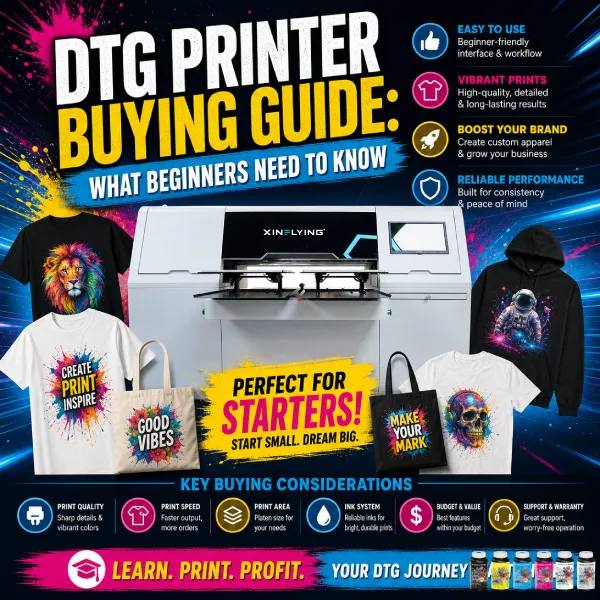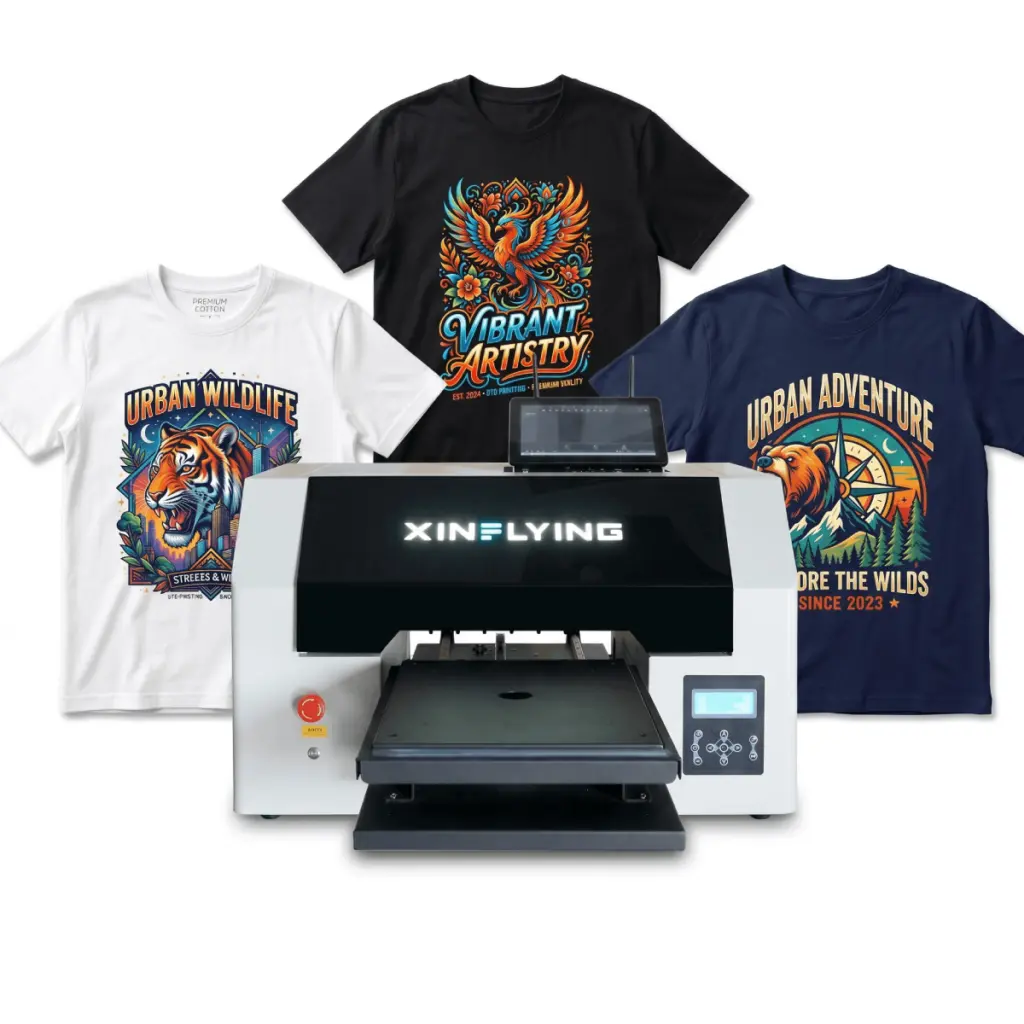
에이 DTG machine (short for Direct-to-Garment) is a specialized printer that applies full-color designs directly onto fabric, using the same basic principle as an inkjet printer — except instead of paper, the “page” is a t-shirt, hoodie, or tote bag loaded onto a flat tray called a platen.
If you’ve ever wondered how custom t-shirt shops produce single, one-off designs with photo-quality detail and no minimum order requirements, a DTG machine is almost always the answer. This guide breaks down how the machine actually works, what it costs, and how it compares to the other common printing methods.
How a DTG Machine Works
A DTG machine follows three core stages every time it prints a garment:
1. 전처리
인쇄하기 전에, the garment — especially dark or 100% cotton fabric — is coated with a pre-treatment solution. This step is essential when using white ink, since it keeps the ink sitting on top of the fibers instead of soaking through and disappearing. Pre-treatment can be applied with a handheld sprayer or an automated pre-treat machine for higher-volume shops. White t-shirts that don’t require white ink can often skip this step entirely.

2. 인쇄
The garment is loaded flat onto the platen, and the design — prepared in RIP (래스터 이미지 처리) software — is sent to the printer. The machine first lays down a layer of white ink as a base (if needed), then prints the full-color design directly on top using specialized water-based textile inks. Print time is typically between 2 그리고 5 minutes per garment, depending on design complexity and size.
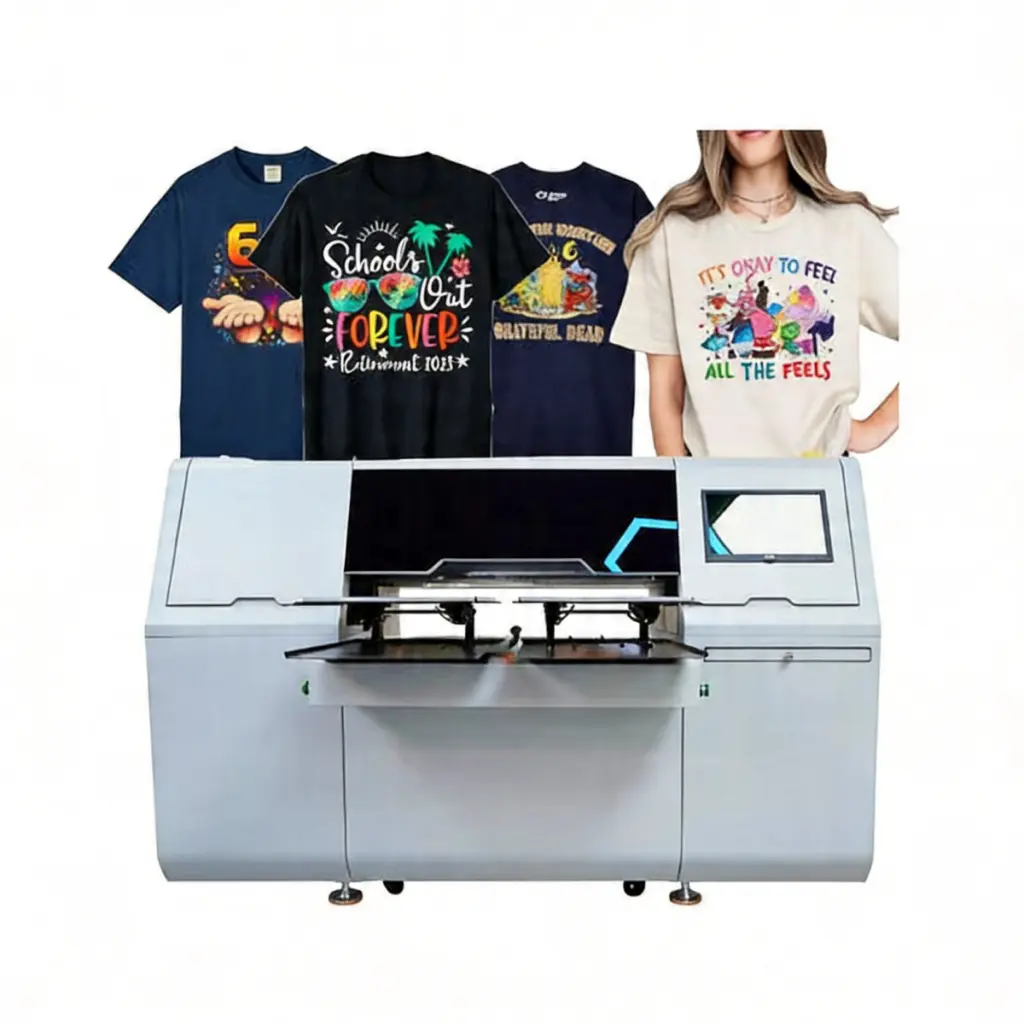
3. 경화
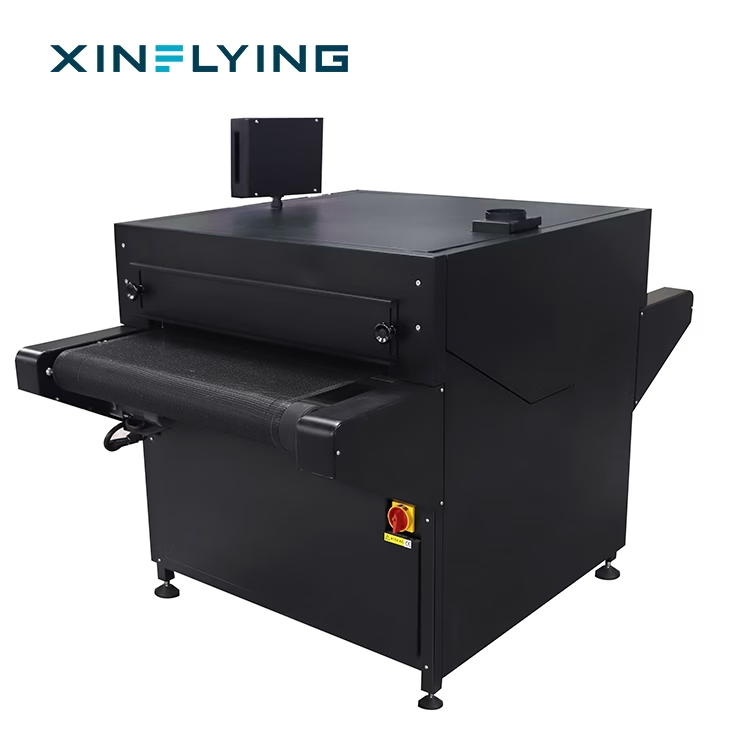
Once printed, the ink needs to be cured with heat — usually through a heat press or a conveyor dryer — to permanently bond it to the fabric fibers. This step typically takes around 60 seconds and is what gives DTG prints their durability, preventing the design from cracking or washing out.
What Materials Work With a DTG Machine?
DTG machines work best on natural fibers, with cotton being the gold standard. General compatibility breaks down as follows:
- 100% cotton — ideal substrate, produces the softest and most durable prints
- Cotton-polyester blends — generally compatible, though very high polyester content can affect ink absorption
- 100% polyester — possible with specialized inks, but results are less consistent than on cotton
- Dark and light garments — both work, but dark garments require pre-treatment and a white ink base layer
DTG 대. Other Printing Methods
DTG is one of several ways to put a design on a garment. Here’s how it stacks up against the other major methods:
| 방법 | 최고의 대상 | 설치 비용 | 패브릭 호환성 | 내구성 |
| DTG | Small batches, full-color/photo designs | No per-design setup cost | 면 (best), 블렌드 | High — soft hand feel, no cracking |
| 스크린 인쇄 | Large batches, 1–4 color designs | High — new screen per color | 면, 블렌드, 폴리에스테르 | High — industry standard for durability |
| 승화 | Polyester products, 머그잔, panels | Low per-design cost | 폴리에스테르 / polymer-coated only | Very high — dye becomes part of fiber |
| DTF (직접 영화) | Mixed fabric types, small-to-mid batches | Low per-design cost | 면, 폴리에스테르, 블렌드, 나일론 | High — 40+ wash cycles typical |
| 열 전달 비닐 | Simple designs, names/numbers | Low — vinyl cutter only | 면, 블렌드 | Medium — can crack over time |
The short version: choose DTG when you need full-color detail on small orders of cotton garments. Choose screen printing for large bulk orders of simple designs. Choose sublimation or DTF when polyester or mixed fabrics are involved.
How Much Does a DTG Machine Cost?
DTG machine pricing varies significantly based on production scale:
- Entry-level / desktop DTG printers: roughly $3,000–$8,000 — suited for small businesses and startups testing print-on-demand models
- Mid-range commercial DTG printers: roughly $10,000–$25,000 — faster print speeds, larger platens, dual-platen options for continuous production
- Industrial DTG systems: $30,000+ — often paired with automated pre-treatment and conveyor curing for high-volume operations
Beyond the machine itself, ongoing costs include ink, pre-treatment solution, platens for different garment sizes, and routine maintenance such as printhead cleaning.
Is a DTG Machine Hard to Operate?
Operating a DTG machine is relatively straightforward once you understand the basic workflow, but achieving consistent, professional results takes practice. Common challenges for beginners include:
- Proper fabric pre-treatment — too much or too little affects how well white ink sits on the fabric
- Print settings calibration — different fabrics and designs require different ink density and resolution settings
- Printhead maintenance — DTG inks can clog nozzles if the machine isn’t used or cleaned regularly
- Color matching — getting on-screen colors to match the final printed result requires color profile calibration
Most operators become comfortable with the basics within the first few dozen prints, though refining quality control is an ongoing process.
Who Uses DTG Machines?
DTG technology is used across a wide range of business types:
- Print-on-demand businesses — fulfilling single, custom orders as they come in without holding inventory
- Screen printing shops — accepting small or rush jobs that wouldn’t be cost-effective with traditional screens
- Promotional product companies — producing branded merchandise in varying small quantities
- Online retailers and marketplaces — large platforms use fleets of DTG printers to fulfill personalized orders at scale
자주 묻는 질문
Can a DTG machine print on polyester?
예, but with caveats. Standard DTG inks are optimized for cotton, and results on 100% polyester can be less vibrant or prone to dye migration (where polyester dyes bleed into the print over time, especially under heat). Some specialized ink formulations address this, but cotton and cotton-blends remain the most reliable substrate.
How long do DTG prints last?
적절한 경화로, DTG prints typically withstand 50+ wash cycles without significant cracking, 필링, 아니면 페이딩, provided the garment is washed inside-out in cold water and not exposed to high-heat drying.
Is DTG cheaper than screen printing?
It depends on order size. DTG has no per-design setup cost, making it cheaper for small orders (1–20 pieces). Screen printing becomes more cost-effective as order volume increases, since the upfront screen cost gets spread across more units.
Do I need special software for a DTG machine?
예. DTG machines require RIP (래스터 이미지 처리) software to convert your artwork into a format the printer can read, control ink density, and manage color separation for white ink underbase layers. Most DTG manufacturers include RIP software with the machine.
Choosing the Right DTG Machine
If you’re evaluating DTG machines for your business, the right choice depends on your expected order volume, garment types, 그리고 예산. Xinflying’s DTG printer lineup covers options from entry-level desktop models to higher-volume commercial systems — you can compare current models and specifications on our DTG printer page.