If you’ve been searching for a 3D DTF printer and keep landing on pages about UV-DTF printing, you’re not confused — they’re the same thing. “3D DTF printer” is simply a popular alternative name for UV-DTF printers, widely used in the printing community.
Ushbu qo'llanmada, we’ll explain exactly what a 3D DTF printer is, how the technology works, how it compares to regular DTF printing, and what to look for when choosing one for your business.
3D DTF printer nima?
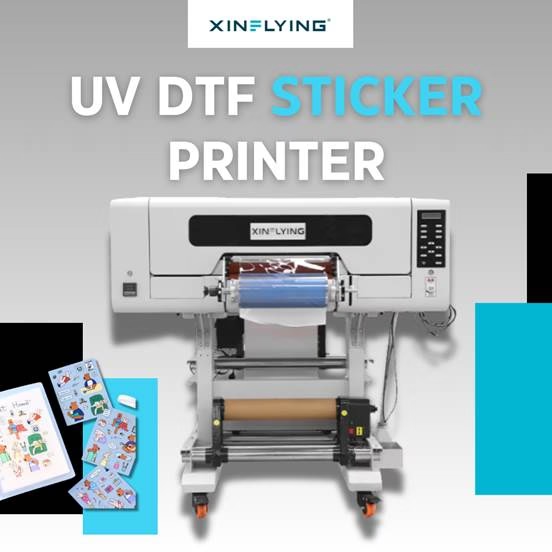
A 3D DTF printer (also called a UV-DTF printer) is a flatbed or roll-to-roll printer that uses UV-curable ink to print directly onto a special film. That film is then transferred onto hard surfaces — glass, metall, akril, teri, keramika, va boshqalar.
The “3Dum” in the name refers to the raised, textured finish that UV ink creates when cured. Unlike standard DTF printing, which produces a flat transfer onto fabric, a 3D DTF printer creates transfers with a tactile, three-dimensional feel that you can actually touch and feel on the surface.
This makes 3D DTF printing popular for:
- Custom phone cases
- Branded drinkware and mugs
- Personalized glass and acrylic decorations
- Corporate gifts and promotional items
- Product labels and packaging
3D DTF Printer vs Regular DTF Printer: Farqi nimada?
Many people searching for a 3D DTF printer already have experience with standard DTF printing. Here’s a clear breakdown of how they differ:
| Xususiyat | Regular DTF printer | 3D DTF Printer (UV-DTF) |
|---|---|---|
| Ink type | Water-based DTF ink | UV nuriga chidamli siyoh |
| Transfer surface | Mato / textiles only | Hard surfaces (stakan, metall, akril, va hokazo.) |
| Finish | Flat, silliq | Raised, teksturali (3D effect) |
| Chidamlilik | Wash-resistant on fabric | Scratch-resistant, suv o'tkazmaydigan; suvga chidamli |
| Film type | PET heat transfer film | UV-DTF crystal film (AB film) |
| Application method | Heat press required | No heat press needed — press by hand |
| uchun eng yaxshisi | futbolkalar, qalpoqchalar, sumkalar | Qattiq buyumlar, reklama mahsulotlari, sovg'alar |
The key advantage of a 3D DTF printer is that it opens up an entirely different product category. If you currently run a garment printing business, adding a 3D DTF printer lets you expand into hard goods without replacing any of your existing equipment.
How Does a 3D DTF Printer Work?
The printing process for a 3D DTF printer involves four simple steps:
Qadam 1: Design preparation
Create or import your artwork in your preferred design software (Adobe Illustrator, CorelDRAW, or the RIP software that comes with your printer). Mirror the design if required by your workflow.
Qadam 2: Print onto UV-DTF film
The printer applies UV-curable CMYK ink directly onto the A-side of a two-layer crystal film. A UV lamp inside the printer cures the ink instantly as it prints, creating that signature raised, glossy finish.
Qadam 3: Laminate the transfer
The printed A-film is pressed together with the B-film (the adhesive backing layer). This sandwiches the design between the two film layers, protecting it and activating the adhesive.
Qadam 4: Apply to the surface
Peel back the B-film to expose the adhesive side, press the transfer firmly onto your target surface by hand, then peel away the A-film. No heat press, no special equipment — just hand pressure.
The entire process from file to finished product takes under five minutes per transfer, which makes 3D DTF printers extremely efficient for small-batch and on-demand production.

What Surfaces Can a 3D DTF Printer Work On?
One of the biggest selling points of a 3D DTF printer is the sheer range of compatible surfaces. Because the transfer uses pressure-sensitive adhesive rather than heat, it bonds to almost any smooth, hard surface, shu jumladan:
- Shisha — wine glasses, tirishqoq, oynalar, windows
- Metall — stainless steel bottles, Alyuminiy panellar, trophies
- Acrylic and plastic — phone cases, kalit zanjirlar, tabel
- Seramika — mugs, plitkalar, plitalar
- Teri — wallets, sumkalar, notebook covers
- Yog'och — plaques, Foto ramkalar, cutting boards
The transfer is not recommended for soft, cho'ziluvchan, or highly textured surfaces — that’s where regular DTF printing is better suited.
.avif)
Key Features to Look for in a 3D DTF Printer
Not all 3D DTF printers are built the same. Here’s what matters when choosing one:
Print head quality
The print head is the heart of any 3D DTF printer. Epson XP600 and i3200 print heads are the industry standard — they offer fine dot placement, yuqori aniqlik, and long service life. Avoid machines with unknown or off-brand heads.
UV lamp power and type
Look for LED UV lamps over traditional mercury lamps. LED lamps cure faster, last longer (10,000+ soat), consume less power, and produce less heat — which matters when printing on heat-sensitive materials.
Print width
Most entry-level 3D DTF printers handle A4 (8.3″) yoki A3 (11.7″) widths. For higher-volume production, consider a printer that handles 30cm (12″) or wider rolls.
RIP software compatibility
Good RIP software gives you precise control over ink density, white ink layering, and color profiles. Make sure your printer comes with a supported RIP solution or is compatible with popular options like AccuRIP or PhotoPrint.
Oq siyoh aylanish tizimi
White ink settles and clogs easily. A printer with an automatic white ink circulation system will save you significant maintenance time and reduce waste.
3D DTF Printer vs DTG Printer: Which is Right for You?
If you’re also considering a direct-to-garment (DTG) printer, here’s a quick comparison:
| VS | 3D DTF Printer | DTG printeri |
|---|---|---|
| Target surface | Qattiq buyumlar | Fabric only |
| Setup cost | Pastroq | Yuqori |
| Pre-treatment required | Yo'q | Ha (for dark fabrics) |
| Chop etish tezligi | Tez | Mo''tadil |
| Best product | Gifts, reklama buyumlari | futbolkalar, libos |
The two technologies are complementary rather than competitive. Many print businesses run both.
Frequently Asked Questions About 3D DTF Printers
Is a 3D DTF printer the same as a UV-DTF printer?
Ha. “3D DTF printer” va “UV-DTF printer” refer to the same technology. The “3Dum” name comes from the raised, textured finish that UV ink creates on the transfer. Both terms describe printers that use UV-curable ink on crystal AB film to create transfers for hard surfaces.
Do I need a heat press for a 3D DTF printer?
Yo'q. That’s one of the main advantages over regular DTF printing. 3D DTF transfers are applied with hand pressure only — no heat press required. This significantly lowers your equipment costs and simplifies the workflow.
What’s the difference between 3D DTF film and regular DTF film?
Regular DTF film is a single-layer PET film designed for heat transfer onto fabric. 3D DTF film (UV-DTF crystal film) is a two-layer AB film — the A layer holds the UV-printed design, and the B layer is an adhesive backing for application to hard surfaces.
How long do 3D DTF transfers last?
When applied correctly to a smooth, clean surface, UV-DTF transfers are highly durable. They resist water, scratches, and normal handling. Avoid applying to surfaces that flex significantly, as the transfer may crack over time.
Can a 3D DTF printer print white?
Ha. Most 3D DTF printers include a white ink channel, which is essential for printing vibrant colors on dark or transparent surfaces. The white ink acts as an underbase, similar to how it’s used in standard DTF and DTG printing.
Ready to Find the Right 3D DTF Printer?
If you’re ready to add hard goods printing to your business, explore our full range of UV-DTF printers — from compact A4 desktop models to wide-format production machines. Each printer is tested and configured for UV-DTF crystal film transfers, with full technical support included.
Not sure which model is right for your production volume? Contact our team and we’ll help you choose.