
In the world of custom apparel, the choice between direct-to-garment (ДТГ) printers and direct-to-film (ДТФ) printers can significantly shape your production process. Both technologies have unique strengths and weaknesses, making it essential to understand their capabilities to maximize your investment in quality printing. На Ксинфлиинг-у, we advocate for informed decisions based on your specific business needs. This article explores the nuances of DTG garment printers compared to DTF solutions, focusing on their applications, бенефиције, and suitability for various projects.
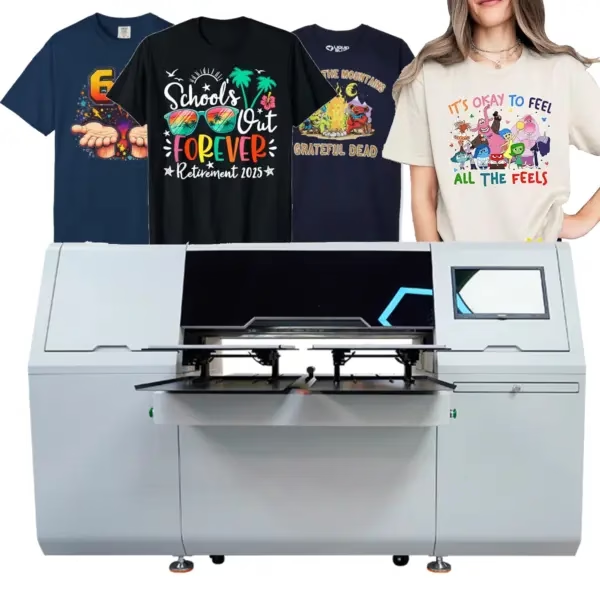
Understanding DTG Printing Technology
The DTG printer provides a revolutionary way to print on textiles by directly applying ink to the fabric. It excels in producing high-quality designs with vibrant colors and intricate details. The print formats often available with devices like the XF-DTG-20 I3200 A1 are optimized for various fabric types, enabling custom designs up to 40cm x 50cm in size. This capability is especially valuable for businesses that cater to unique customer requests and low-volume orders.
Because DTG garment printers utilize water-based inks, they are eco-friendly and well-suited for a range of fabric compositions, including cotton and cotton blends. The maximum thickness of media accepted by the XF-DTG-20 is 20mm, making it versatile for different apparel items, ensuring that intricately designed prints maintain quality without compromise.
Comparing the Printing Processes and Outputs
While DTG printers focus on printing directly on the garment, DTF printers utilize a different technique that involves printing onto a special film, which is then transferred to the fabric. This method allows for vibrant colors and details, similar to DTG, but with enhanced versatility regarding fabric types. DTF can apply well on non-cotton fabrics, making it advantageous for projects that require a wider variety of materials.
The capability of our XF-DTG-20 I3200 A1 model shines through in speed and efficiency during the printing process. Насупрот томе, DTF printing generally comprises several steps, which may increase production time. На тај начин, businesses that prioritize quick turnaround times and high-quality prints on cotton-based garments may find DTG garment printers more aligned with their operational goals.
Cost-Effectiveness and Production Scalability
Choosing between DTG and DTF also raises questions of cost-effectiveness and scalability. DTG printers like those offered by Xinflying are often more suitable for on-demand printing, allowing businesses to mitigate inventory expenses and reduce waste. Додатно, the ability to print full colors without the need for multiple screen changes makes DTG an attractive option for short runs and personalized orders.
С друге стране, while DTF printing may have a higher initial setup cost due to the need for special films and transfer processes, it can be beneficial for larger batches, where the economies of scale can mitigate costs. Businesses that frequently produce bulk quantities should carefully evaluate the financial implications of each technology.
Закључак
Укратко, both ДТГ штампачи and DTF printing technology offer valuable features that cater to specific market demands. На Ксинфлиинг-у, we recognize that the ideal choice depends largely on the business model, production requirements, and target audience. For custom, high-quality prints on cotton or cotton blends, DTG garment printers like the XF-DTG-20 I3200 A1 present compelling advantages, particularly for businesses focusing on personalized apparel. Alternatively, those that seek flexibility in fabric applications may find DTF printing to be a viable alternative. Коначно, understanding the strengths and limitations of each can lead to an effective printing strategy that meets both operational needs and customer expectations.