
The world of Direct to Film (ดีทีเอฟ) printing continues to gain traction among businesses looking to optimize their textile production processes. An important question many companies face is whether DTF film can be reused. Understanding the capabilities and limitations of ฟิล์มดีทีเอฟ, including the widely-used DTF PET film, is crucial for businesses aiming to enhance efficiency and reduce costs.
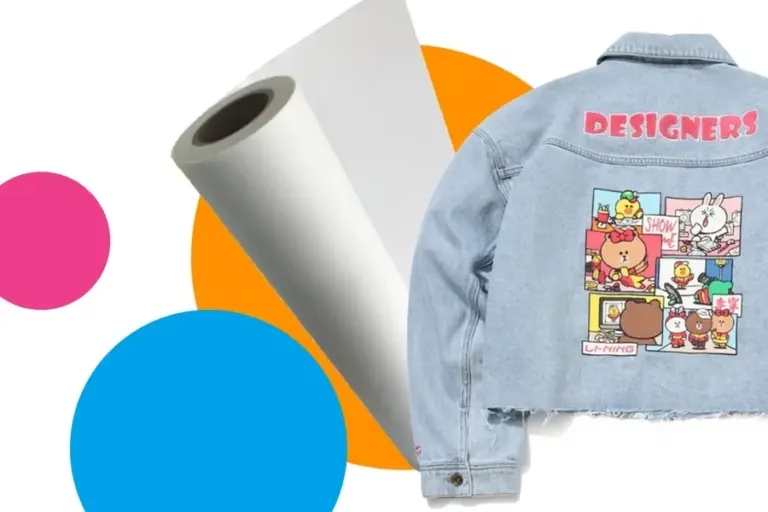
Understanding DTF Film and Its Properties
ฟิล์มดีทีเอฟ, particularly DTF PET film, is engineered for optimum performance across various printing applications. Its compatibility with both hot-peel and cold-peel methods makes it versatile for different DTF printers. This flexibility allows businesses to adapt to various textile types while ensuring quality prints.
อย่างไรก็ตาม, one must consider that DTF film is primarily designed for single-use applications. Once an image is transferred to a textile, the integrity of the film is compromised. The adhesive layer may no longer be effective for subsequent uses, leading to potential failures in adhesion during the transfer process. While DTF film can potentially be reused in very limited contexts—such as trial applications or when prints have not been fully executed—its efficacy decreases significantly with each use.
The Environmental Aspect of DTF PET Film
ฟิล์ม PET DTF also plays an essential role in sustainability. As a business, using eco-friendly materials not only aligns with international environmental standards but also appeals to a growing conscientious market. When sourcing DTF film, companies should prioritize films that are crafted from sustainable materials without sacrificing performance.
Many DTF film manufacturers are now producing heat transfer sheets that meet these eco-friendly standards. By choosing high-quality DTF PET film, businesses can contribute to sustainability while maintaining the integrity needed for effective printing applications. This becomes increasingly important as clients seek partners committed to environmental responsibility.
Strategies for Optimal Film Usage
To maximize efficiency, businesses can implement strategies that allow them to make the most of their DTF film. Preparing prints in batches can reduce wasted film, ensuring each piece is used effectively. นอกจากนี้, ensuring that the printer settings are optimized for each specific type of DTF film will lead to superior results and minimize the risk of errors that could compromise the film’s usability.
ที่ซินฟลายอิ้ง, we are dedicated to guiding our clients in making informed choices regarding DTF printing materials. Our high-quality DTF PET film is tailored for diverse applications and meets the highest environmental standards.
We believe that while DTF film is primarily a one-time-use product, understanding its application and leveraging our eco-friendly materials will help your business thrive. Together, we can elevate your textile production while staying committed to sustainability and excellence in the printing industry. Choose Xinflying as your trusted partner in DTF printing solutions.