Directement sur le vêtement (DTG) impression a transformé l'industrie du vêtement sur mesure. Avec la capacité de produire en couleur, des tirages photo-réalistes sans minimum, c'est une solution incontournable pour les vendeurs de commerce électronique, entreprises d'impression à la demande, et les propriétaires de marques.
Mais DTG n’est pas une solution universelle. La qualité de votre impression dépend fortement du support sur lequel vous imprimez. Dans ce guide, nous couvrons exactement quels tissus et produits sont idéaux pour le DTG — et lesquels éviter.
| Dans cet article: Comment fonctionne l'impression DTG • Meilleurs tissus pour le DTG • Produits qui excellent avec le DTG • Tissus et produits à éviter • Conseils de pro pour de meilleurs résultats DTG • FAQ |
Comment fonctionne l'impression DTG (Aperçu rapide)
L'impression DTG fonctionne comme une imprimante à jet d'encre de haute précision, mais à la place du papier, il imprime directement sur le tissu à l'aide d'encres textiles à base d'eau. Pour les vêtements sombres, une sous-base d'encre blanche est appliquée en premier pour garantir la précision et le dynamisme des couleurs.
La clé d’un excellent résultat DTG réside dans la capacité du tissu à absorber l’encre.. Les fibres naturelles, en particulier le coton, absorbent bien mieux les encres à base d'eau que les matériaux synthétiques., c'est pourquoi le choix du tissu est si critique.
Meilleurs tissus pour l'impression DTG
1. 100% Coton – L’étalon-or
Si vous voulez les meilleurs résultats DTG absolus, 100% le coton est ta réponse. Les fibres naturelles du coton absorbent les encres à base d'eau en profondeur et uniformément, produire des couleurs vibrantes, détail net, et une sensation de douceur au toucher. Le coton filé à l'anneau donne une douceur particulièrement, des résultats d'aspect professionnel.
- Coton blanc et clair: un dynamisme époustouflant, aucune sous-couche blanche n'est nécessaire.
- Coton foncé: excellents résultats avec un prétraitement de base blanche.
- Des vêtements idéaux: T-shirts, sweats à capuche, sacs fourre-tout, combinaisons, t-shirts à manches longues.
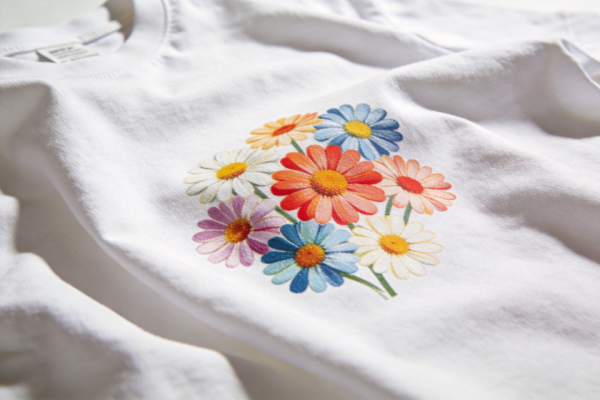
2. Mélanges coton/polyester
Les tissus mélangés fonctionnent bien avec DTG, surtout ceux à forte teneur en coton (65% ou plus). Les fibres de coton absorbent l'encre, tandis que le polyester ajoute de la durabilité et de la structure. Plus le pourcentage de polyester est élevé, plus l'imprimé peut paraître atténué ou chiné.
- 50/50 mélange: bons résultats, saturation des couleurs légèrement plus douce.
- 65/35 coton/polyester: presque équivalent à 100% performance du coton.
- Tri-mélange (coton/poly/rayonne): populaire dans les t-shirts de mode; produit un millésime, impression douce au toucher.
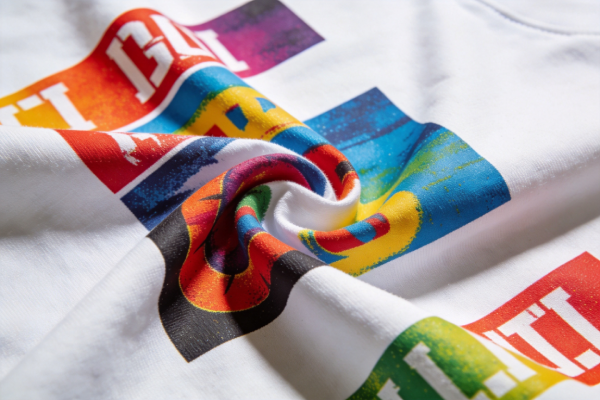
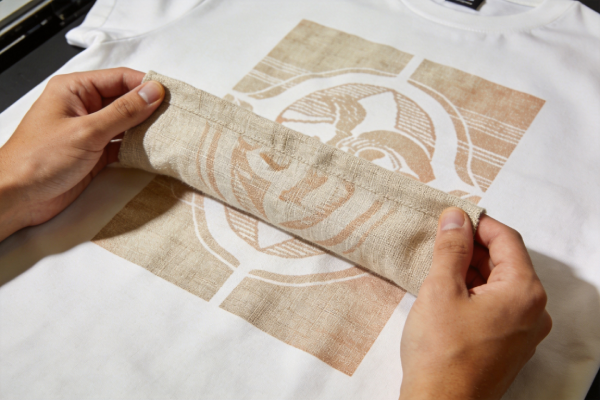
3. Lin et Chanvre
Les fibres naturelles végétales comme le lin et le chanvre sont d'excellents candidats pour le DTG. Leur poreux, la structure absorbante retient bien l'encre. Le lin a une surface légèrement texturée, ce qui donne aux imprimés un aspect naturel, esthétique artisanale - intentionnelle pour de nombreuses identités de marque.
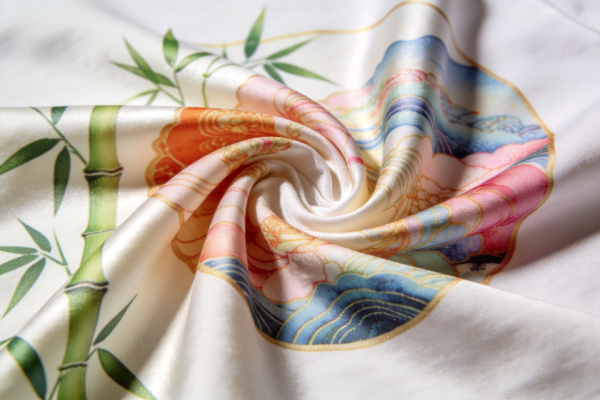
4. Bambou et Modal
Tissus en bambou et modal (tous deux semi-synthétiques à partir de sources naturelles) peut produire de belles impressions DTG, surtout sur les couleurs plus claires. Ils sont populaires dans les lignes de vêtements haut de gamme pour leur douceur. Un prétraitement peut être nécessaire pour les vêtements foncés.
Compatibilité des tissus DTG en un coup d'œil
| Tissu | Compatibilité DTG | Éclat des couleurs | Remarques |
| 100% Coton | ✅Excellent | ⭐⭐⭐⭐⭐ | Meilleurs résultats; étalon-or pour le DTG |
| Mélange coton/polyester | ✅Bien | ⭐⭐⭐⭐ | 65%+ coton recommandé |
| 100% Polyester | ⚠️ Limité | ⭐⭐ | Nécessite un prétraitement; meilleure sublimation |
| Lin / Chanvre | ✅Bien | ⭐⭐⭐⭐ | Les fibres naturelles absorbent bien l'encre |
| Bambou / Modal | ✅Bien | ⭐⭐⭐⭐ | Sensation de main douce; fonctionne avec prétraitement |
| Nylon / Rayonne | ❌ Non recommandé | ⭐ | Mauvaise absorption de l'encre; éviter |
Meilleurs produits pour l’impression DTG
T-shirts
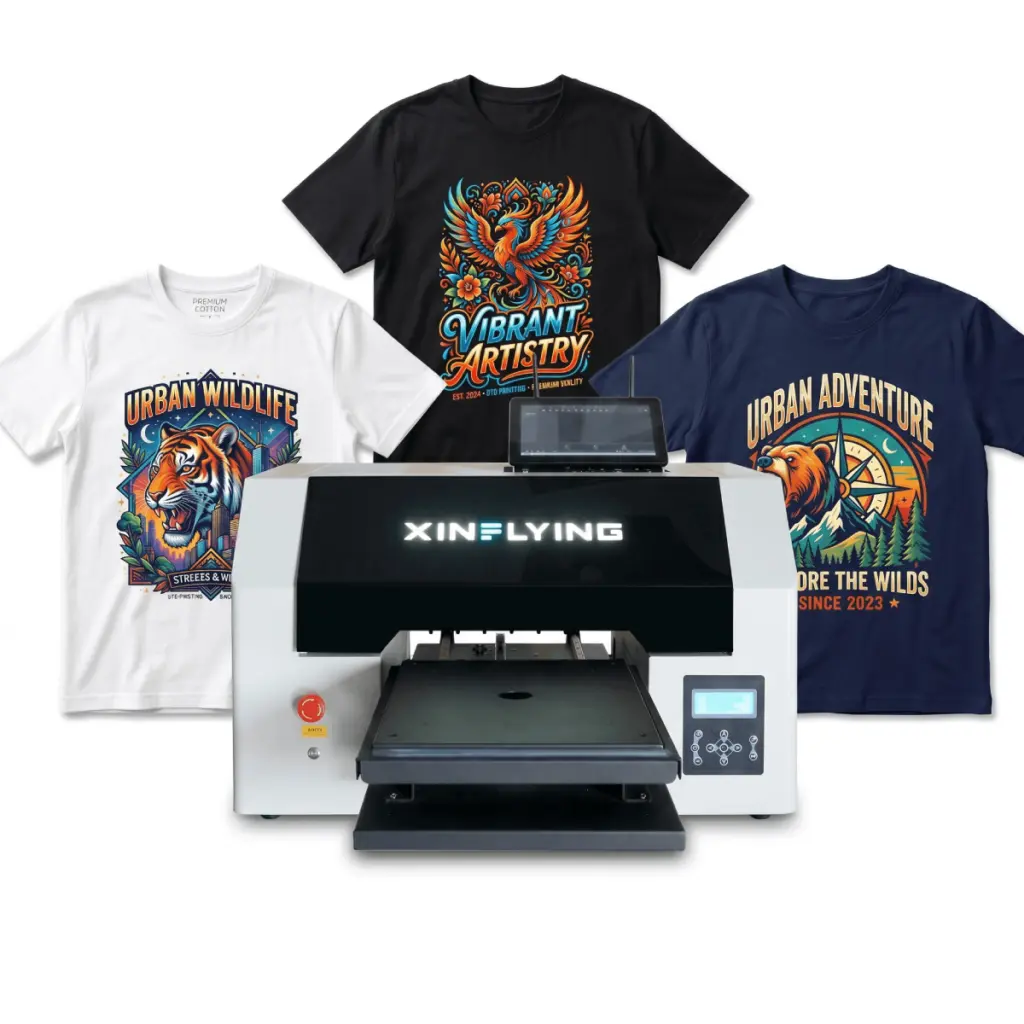
Le classique produit DTG. Les cols ronds en coton et les cols en V de toutes les couleurs sont parfaitement adaptés au DTG. Marques populaires comme Bella+Canvas 3001, Niveau suivant 3600, et Gildan 64000 sont les favoris de l'industrie pour la sortie DTG.
Sweats à capuche et sweat-shirts
Les sweats à capuche en coton épais et en mélange de coton sont excellents pour le DTG. La zone d'impression plus grande est idéale pour les graphiques audacieux et le placement de style intégral. Notez que la zone d'impression sur la poitrine doit être lisse et plate lors de l'impression..
Sacs fourre-tout
Les sacs fourre-tout en toile et en coton conviennent naturellement au DTG. Ils sont populaires pour les marchandises au détail, cadeaux d'événements, et produits promotionnels de marque.
Bébé et enfants’ Vêtements
Les encres à base d'eau de DTG sont conformes à la norme CPSIA et sans danger pour la peau., ce qui en fait un excellent choix pour les combinaisons, t-shirts pour tout-petits, et vêtements pour enfants. Aucune fissure ni pelage signifie un port plus sûr pour les peaux sensibles.
Taies d'oreiller et textiles de maison
Taies d'oreiller en coton, tabliers, et les torchons s'impriment tous magnifiquement avec DTG. Celles-ci sont devenues des gammes de produits populaires auprès des vendeurs Etsy et des marques d'articles pour la maison..
| ✅ Excellents produits DTG: T-shirts • Sweats à capuche • Sacs fourre-tout • Grenouillères pour bébé • Taies d'oreiller • Tabliers • T-shirts à manches longues • Débardeurs • Pantalons de survêtement (coton) |
Ce qu'il ne faut PAS imprimer avec DTG
Comprendre les limites de DTG vous évite des erreurs coûteuses. Évitez ce qui suit:
- 100% polyester: Une mauvaise absorption de l'encre conduit à un résultat terne, résultats fanés. Utilisez plutôt la sublimation ou le DTF.
- Nylon et élasthanne: Ces synthétiques n’absorbent pas du tout les encres à base d’eau.
- Tissus imperméables ou traités: Les revêtements bloquent entièrement la pénétration de l’encre.
- Tissus très texturés ou côtelés: Les surfaces inégales entraînent une couverture d'encre incohérente.
- Mélanges de polyester foncés (ci-dessous 50% coton): L'impression peut paraître délavée même avec une sous-couche.
| ⚠️ À éviter pour le DTG: 100% polyester • Nylon • Spandex/Lycra • Vêtements d'extérieur imperméables • Tricots très texturés • Tissus enduits ou traités |
Conseils de pro pour de meilleurs résultats DTG
- Prétraitez toujours les vêtements sombres: Une solution de prétraitement appropriée garantit que la sous-couche blanche adhère correctement et que les couleurs éclatent..
- Pré-laver les nouveaux vêtements: Élimine les résidus de fabrication pouvant interférer avec l’absorption de l’encre.
- Utilisez du coton filé à l'anneau: Surface de fibre plus lisse = détails d'impression plus nets.
- Réchauffer correctement: Appuyez à la bonne température et au bon temps de séjour (généralement 320°F / 160°C pour 90 secondes) pour retenir l'encre.
- Conception à 300 PPP minimum: DTG peut reproduire des détails fins – assurez-vous que votre illustration est en haute résolution.
- Évitez les designs sombres sur sombres: Même avec une sous-couche blanche, les couleurs très sombres sur les chemises sombres peuvent perdre en contraste.
Questions fréquemment posées
Le DTG peut-il imprimer sur 100% chemises en polyester?
Techniquement oui, mais les résultats sont médiocres. Le polyester repousse les encres à base d'eau, produire terne, couleurs fanées. Pour les vêtements en polyester, impression par sublimation ou DTF (directement au cinéma) les transferts sont de bien meilleures options.
La couleur du tissu affecte-t-elle la qualité d'impression DTG?
Oui. Sur les vêtements blancs et clairs, Les encres DTG vont directement sur le tissu pour des résultats éclatants. Sur des vêtements sombres, une couche d'encre de base blanche est imprimée en premier — cela ajoute une étape mais produit toujours une excellente qualité lorsqu'elle est effectuée correctement.
Comment entretenir les vêtements imprimés DTG?
Laver à l’envers à l’eau froide sur cycle délicat. Évitez l'eau de Javel et le séchage à haute température. Le séchage à l'air ou au sèche-linge à basse température prolonge considérablement la durée de vie de l'impression. Les impressions DTG bien entretenues peuvent durer 50+ cycles de lavage.
L'impression DTG est-elle adaptée aux tissus épais ou lourds?
DTG fonctionne bien sur les vêtements plus lourds (jusqu'à ~ 14 onces / 400 GSM) à condition que le tissu soit à base de coton et que la platine puisse maintenir le vêtement à plat. Les articles très épais ou structurés peuvent nécessiter des plateaux spéciaux.
Réflexions finales
L'impression DTG offre des résultats exceptionnels sur les bons matériaux, en particulier 100% coton et mélanges à haute teneur en coton. Choisir le bon tissu est le facteur le plus important dans la qualité d’impression, durabilité, et la satisfaction du client.
Chez Xinflying, nous aidons les marques de vêtements nord-américaines, imprimeries, et les vendeurs de commerce électronique tirent le meilleur parti de DTG. Que vous imprimiez 1 chemise ou 1,000, nous avons l'expertise et l'équipement nécessaires pour fournir des résultats professionnels à chaque fois.
| Obtenez un devis DTG: Contact Xinflying pour les services d'impression DTG personnalisés. Délai d'exécution rapide, du minimum, et correspondance experte des couleurs garantie. |