Si vous recherchez la meilleure façon de personnaliser vos vêtements, produits promotionnels, ou des marchandises de marque, il y a de fortes chances que vous ayez rencontré deux méthodes populaires: impression par sublimation et impression par transfert thermique. Les deux peuvent produire du dynamisme, dessins en couleur – mais ils fonctionnent très différemment et excellent dans différentes situations.
Dans ce guide, nous décomposons exactement le fonctionnement de chaque méthode, où chacun brille, et lequel correspond le mieux à vos besoins spécifiques.
| Dans cet article: Comment fonctionne l'impression par sublimation • Comment fonctionne l'impression par transfert thermique • Comparaison côte à côte • Avantages & inconvénients de chacun • Quelle méthode choisir • FAQ |
Qu'est-ce que Impression par sublimation?
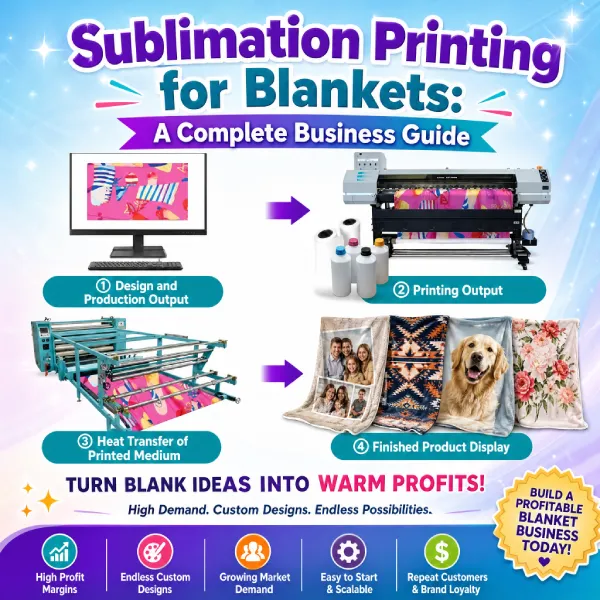
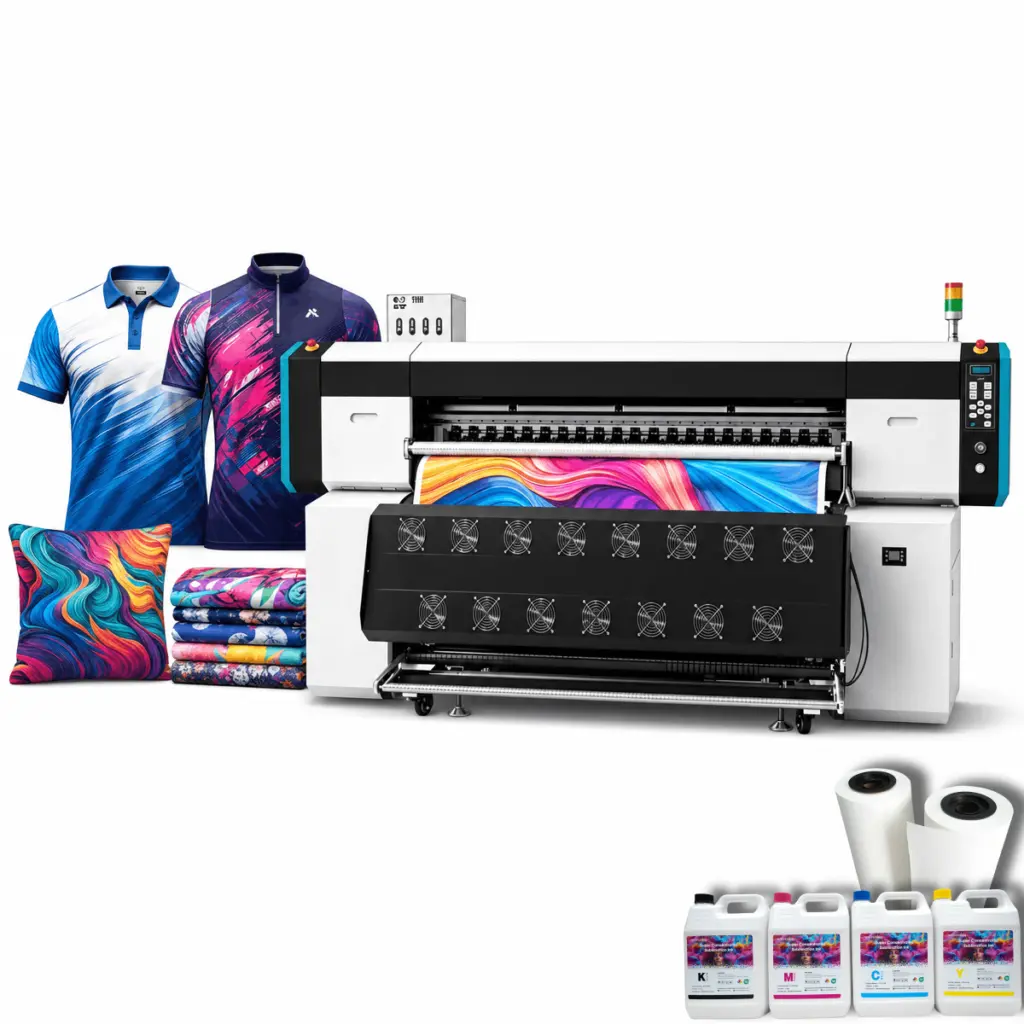
Impression par sublimation (également appelé sublimation thermique) est un processus dans lequel la chaleur et la pression convertissent le colorant solide directement en gaz, qui se lie ensuite aux fibres d'un substrat en polyester. Le résultat est un permanent, impression en couleur qui devient une partie du matériau lui-même – et non une couche posée sur le dessus.
Comment ça marche
- Un dessin est imprimé sur du papier de transfert par sublimation spécial à l'aide d'encres de sublimation.
- Le papier transfert est posé face vers le bas sur le support (Par exemple, une chemise en polyester ou une tasse en céramique).
- Une presse à chaud applique une chaleur élevée (environ 375-428°F / 190–220°C) et la pression pour 20 secondes.
- Le colorant se vaporise et se lie de manière permanente aux fibres ou au revêtement du produit..
| ✅ Idéal pour: Vêtements de sport en polyester, vêtements de sport, vêtements entièrement imprimés, tasses, Coque de téléphone, tapis de souris, sacs fourre-tout (polyester), panneaux métalliques, et articles promotionnels avec surfaces enduites. |
Qu'est-ce que Impression par transfert thermique?
L'impression par transfert thermique est une vaste catégorie qui couvre tout processus par lequel un dessin pré-imprimé est transféré sur un substrat en utilisant de la chaleur et de la pression.. Cela inclut le VTH (vinyle de transfert de chaleur), transferts de plastisol, et transferts de toner blanc, entre autres.
Comment ça marche
- Un dessin est imprimé, couper, ou préparé sur un film ou papier de transfert spécial.
- Le transfert est posé sur le vêtement ou le support.
- Une presse à chaud active la couche adhésive, coller le motif à la surface.
- Le support est décollé, laissant le motif collé au tissu.
| ✅ Idéal pour: T-shirts en coton, sweats à capuche, tissus de couleur foncée, Small Print Runs, uniformes d'équipe, cadeaux promotionnels, et situations nécessitant un délai d’exécution rapide avec des minimums faibles. |

Impression par sublimation vs transfert de chaleur: Comparaison côte à côte
| Fonctionnalité | Impression par sublimation | Transfert de chaleur | Gagnant |
| Éclat des couleurs | Exceptionnel, qualité photo | Bon à excellent | Sublimation |
| Exigence de tissu | Polyester / mélange de poly uniquement | La plupart des tissus y compris. coton | Transfert de chaleur |
| Durabilité | Permanent, ne se fissurera pas/ne se décollera pas | Peut se fissurer ou se décoller avec le temps | Sublimation |
| Prise en charge du tissu sombre | Tissus clairs/blancs uniquement | Oui, avec sous-couche blanche | Transfert de chaleur |
| Coût par unité | Faible pour les conceptions à couverture complète | Varie; plus élevé pour les grandes séries | Sublimation |
| Coût d'installation | Modéré (imprimante + encre de sublimation) | Faible à modéré | Cravate |
| Niveau de détail | Détail extrêmement fin | Bon détail | Sublimation |
| Résistance au lavage | Excellent (couleur dans la fibre) | Bien (adhérence superficielle) | Sublimation |
| Produits idéaux | Vêtements de sport, tasses, Coque de téléphone | T-shirts, sweats à capuche, articles en coton | Cela dépend de l'utilisation |
Avantages et inconvénients de l'impression par sublimation
Avantages
- Des couleurs éclatantes et des détails photoréalistes inégalés.
- Extrêmement durable : l'impression ne se fissurera jamais, peler, ou s'estomper.
- Aucune sensation de main; l'impression est douce au toucher car incrustée dans les fibres.
- Excellent pour les designs all-over (impression bord à bord sans bordure).
- Rentable à grande échelle pour les conceptions à couverture complète.
Les inconvénients
- Fonctionne uniquement sur des supports blancs ou de couleur très claire.
- Nécessite un contenu en polyester (minimum 65%, idéalement 100% polyester).
- Ne convient pas au coton, lin, ou la plupart des tissus naturels.
- Nécessite une imprimante à sublimation dédiée et des encres.
Avantages et inconvénients de l'impression par transfert thermique
Avantages
- Fonctionne sur pratiquement tous les tissus – coton, polyester, mélanges, et plus.
- Compatible avec les substrats foncés et colorés.
- Faibles coûts d’installation et aucune quantité minimum de commande.
- Délai d'exécution rapide; idéal pour la production à la demande et en petites séries.
- Grande variété de finitions: mat, brillant, métallique, paillettes, et plus.
Les inconvénients
- Les imprimés reposent sur le tissu, qui peut sembler rigide ou lourd sur les grands modèles.
- Moins durable que la sublimation – les impressions peuvent se fissurer, peler, ou se décolorent après des lavages répétés.
- L'éclat des couleurs peut être légèrement inférieur à celui de la sublimation sur des modèles comparables.
- Une sous-couche blanche est souvent requise pour l'impression sur des tissus foncés, coût supplémentaire.
Quelle méthode choisir?
Le bon choix dépend des exigences spécifiques de votre projet. Voici un guide de décision rapide:
| Choisissez la sublimation si: Vous imprimez sur des produits en polyester (en particulier les vêtements de sport ou de performance), vous avez besoin de motifs imprimés sur toute la surface, vous accordez la priorité à une durabilité de lavage longue durée, ou vous produisez de grands volumes de produits de marque sur des substrats blancs/clairs. |
| Choisissez le transfert de chaleur si: Vous travaillez avec des vêtements en coton ou de couleur foncée, vous avez besoin de petites quantités avec un délai d'exécution rapide, vous voulez des finitions spéciales comme des paillettes ou du métallisé, ou votre budget favorise un investissement initial inférieur. |
Pouvez-vous combiner les deux méthodes?
Absolument. De nombreuses imprimeries professionnelles, y compris Xinflying, utilisent à la fois l'impression par sublimation et par transfert thermique en fonction du travail à effectuer.. L'utilisation des deux méthodes en interne vous donne la flexibilité nécessaire pour prendre en charge un éventail beaucoup plus large de commandes clients sans interrompre le travail..
Par exemple, un client commandant des maillots en polyester reçoit une sublimation; une autre commande de sweats à capuche en coton reçoit du vinyle ou du plastisol à transfert thermique. Les deux fournissent un résultat de haute qualité lorsque la bonne méthode est adaptée au bon substrat..
Questions fréquemment posées
L'impression par sublimation est-elle plus chère que le transfert thermique?
Pas nécessairement. Pour les conceptions à grand volume ou à couverture complète sur des produits en polyester, la sublimation est souvent plus rentable. Le transfert de chaleur a tendance à être plus économique pour les petits tirages ou les conceptions simples en une seule couleur..
L'impression par sublimation peut-elle fonctionner sur des chemises sombres?
Non. La sublimation s'appuie sur le fond blanc ou clair du substrat pour afficher des couleurs précises. Sur tissus foncés, les couleurs n'apparaîtront pas correctement. Pour les vêtements sombres, le transfert de chaleur avec une sous-couche blanche est la meilleure solution.
Combien de lavages dure l'impression par transfert thermique?
Avec une application et des soins appropriés (lavage à froid, se retourner, pas de sèche-linge), les impressions par transfert thermique de qualité peuvent durer 50+ lavages. Impressions par sublimation, cependant, sont essentiellement permanents et peuvent durer toute la durée de vie du vêtement.
La sublimation fonctionne-t-elle sur 50/50 mélanges coton-polyester?
Ça peut, mais avec des limites. Sur un 50/50 mélange, le colorant de sublimation se lie uniquement aux fibres de polyester, créer un « vintage »’ ou " chiné’ effet plutôt qu'un solide, impression vibrante. Pour un vrai dynamisme, utiliser 100% polyester ou au moins 85 à 95 % de tissu en polyester.
Réflexions finales
L'impression par sublimation et le transfert thermique ont fait leurs preuves, des méthodes de qualité professionnelle avec des atouts évidents. Comprendre les différences vous aide à choisir la bonne technique pour vos produits spécifiques, tissus, et les objectifs commerciaux.
Chez Xinflying, nous sommes spécialisés dans les deux méthodes et pouvons vous aider à sélectionner la meilleure approche d'impression pour vos besoins en vêtements personnalisés en Amérique du Nord.. Que vous équipiez une équipe sportive, lancer une ligne de marchandises, ou développer votre activité d'impression, nous avons l’équipement et l’expertise pour fournir des résultats exceptionnels.
| Prêt à commencer? Contactez Xinflying dès aujourd'hui pour un devis personnalisé sur les services d'impression par sublimation ou par transfert thermique. Nous servons des clients à travers les États-Unis. et au Canada avec un délai d'exécution rapide et une production de qualité professionnelle. |