If you’ve been searching for the best way to customize apparel, produk promosi, or branded merchandise, chances are you’ve come across two popular methods: pencetakan sublimasi dan pencetakan perpindahan panas. Keduanya bisa menghasilkan semangat, full-color designs — but they work very differently and excel in different situations.
Dalam panduan ini, we break down exactly how each method works, where each shines, and which one makes the most sense for your specific needs.
| In This Article: How sublimation printing works • How heat transfer printing works • Side-by-side comparison • Pros & cons of each • Which method to choose • FAQs |
Apa Pencetakan Sublimasi?
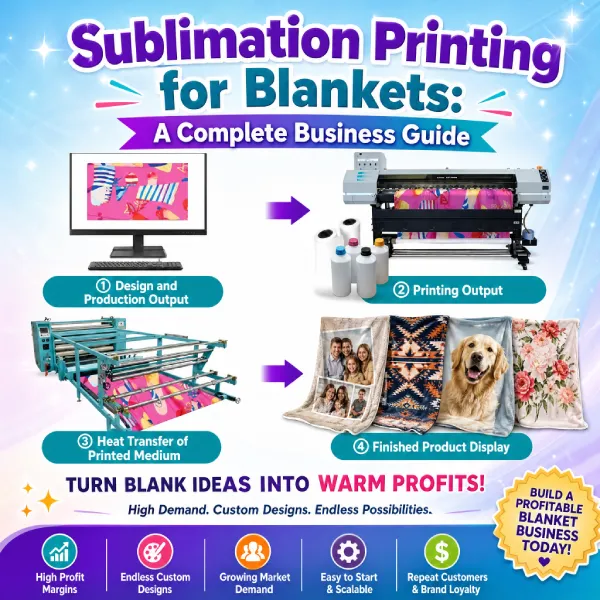
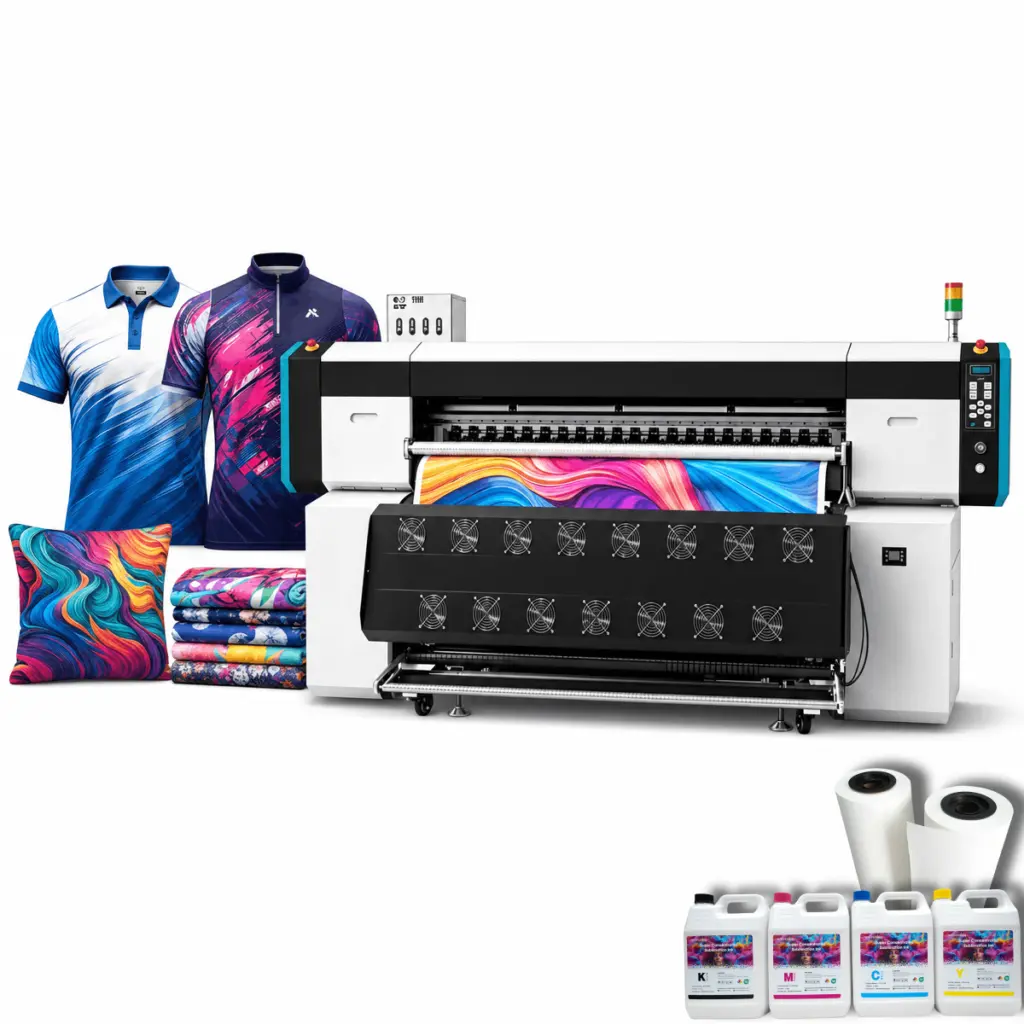
Pencetakan sublimasi (also called dye-sublimation) is a process where heat and pressure convert solid dye directly into gas, which then bonds with the fibers of a polyester substrate. The result is a permanent, full-color print that becomes part of the material itself — not a layer sitting on top.
Cara kerjanya
- A design is printed onto special sublimation transfer paper using sublimation inks.
- The transfer paper is placed face-down on the substrate (MISALNYA., a polyester shirt or ceramic mug).
- A heat press applies high heat (around 375–428°F / 190–220°C) and pressure for 20 detik.
- The dye vaporizes and permanently bonds into the fibers or coating of the product.
| ✅ Best For: Polyester sportswear, pakaian aktif, all-over print garments, mug, kasus telepon, alas mouse, tas gendong (poliester), panel logam, and promotional items with coated surfaces. |
Apa Pencetakan Perpindahan Panas?
Heat transfer printing is a broad category that covers any process where a pre-printed design is transferred onto a substrate using heat and pressure. This includes HTV (heat transfer vinyl), plastisol transfers, and white-toner transfers, among others.
Cara kerjanya
- A design is printed, cut, or prepared on a special transfer film or paper.
- The transfer is placed on the garment or substrate.
- A heat press activates the adhesive layer, bonding the design to the surface.
- The backing is peeled away, leaving the design adhered to the fabric.
| ✅ Best For: Kaos katun, hoodie, kain berwarna gelap, cetakan kecil berjalan, seragam tim, promotional giveaways, and situations requiring a quick turnaround with low minimums. |

Pencetakan Sublimasi vs Perpindahan Panas: Perbandingan Berdampingan
| Fitur | Pencetakan Sublimasi | Perpindahan panas | Winner |
| Kecerahan Warna | Exceptional, photo-quality | Good to excellent | Sublimasi |
| Fabric Requirement | Poliester / poly-blend only | Most fabrics incl. kapas | Perpindahan panas |
| Daya tahan | Permanent, won’t crack/peel | May crack or peel over time | Sublimasi |
| Dark Fabric Support | Light/white fabrics only | Ya, with white underbase | Perpindahan panas |
| Cost per Unit | Low for full-coverage designs | Varies; higher for large runs | Sublimasi |
| Biaya Pengaturan | Sedang (pencetak + tinta sublimasi) | Low to moderate | Tie |
| Detail Level | Extremely fine detail | Good detail | Sublimasi |
| Tahan Luntur Cuci | Bagus sekali (color in fiber) | Bagus (surface adhesion) | Sublimasi |
| Ideal Products | Pakaian olahraga, mug, kasus telepon | kaos oblong, hoodie, cotton items | Depends on use |
Pro dan Kontra Pencetakan Sublimasi
Kelebihan
- Unmatched color vibrancy and photo-realistic detail.
- Extremely durable — the print will never crack, mengupas, atau memudar.
- No hand feel; the print is smooth to the touch since it’s embedded in the fibers.
- Excellent for all-over designs (edge-to-edge printing with no borders).
- Cost-effective at scale for full-coverage designs.
Kontra
- Only works on white or very light-colored substrates.
- Requires polyester content (minimum 65%, ideally 100% poliester).
- Not suitable for cotton, linen, or most natural fabrics.
- Requires a dedicated sublimation printer and inks.
Pros and Cons of Heat Transfer Printing
Kelebihan
- Works on virtually any fabric — cotton, poliester, campuran, dan banyak lagi.
- Compatible with dark and colored substrates.
- Low setup costs and no minimum order quantity.
- Quick turnaround; ideal for on-demand and small-run production.
- Wide variety of finishes: matte, kilap, metallic, glitter, dan banyak lagi.
Kontra
- Prints sit on top of the fabric, which can feel stiff or heavy on large designs.
- Less durable than sublimation — prints may crack, mengupas, or fade after repeated washing.
- Color vibrancy can be slightly lower than sublimation on comparable designs.
- A white underbase is often required for printing on dark fabrics, adding cost.
Which Method Should You Choose?
The right choice depends on your specific project requirements. Here’s a quick decision guide:
| Choose Sublimation If: You’re printing on polyester products (especially sportswear or performance wear), you need all-over print designs, you prioritize long-lasting wash durability, or you’re producing high volumes of branded merchandise on white/light substrates. |
| Choose Heat Transfer If: You’re working with cotton or dark-colored garments, you need small quantities with fast turnaround, you want specialty finishes like glitter or metallic, or your budget favors a lower upfront investment. |
Can You Combine Both Methods?
Sangat. Many professional print shops — including Xinflying — use both sublimation and heat transfer printing depending on the job. Running both methods in-house gives you the flexibility to take on a much wider range of customer orders without turning work away.
Misalnya, a customer ordering polyester jerseys gets sublimation; another ordering cotton hoodies gets heat transfer vinyl or plastisol. Both deliver a high-quality result when the right method is matched to the right substrate.
Pertanyaan yang Sering Diajukan
Is sublimation printing more expensive than heat transfer?
Not necessarily. For high-volume or full-coverage designs on polyester products, sublimation is often more cost-effective. Heat transfer tends to be more economical for small runs or simple single-color designs.
Can sublimation printing work on dark shirts?
TIDAK. Sublimation relies on the white or light background of the substrate to show accurate colors. On dark fabrics, the colors will not appear correctly. For dark garments, heat transfer with a white underbase is the better solution.
How many washes does heat transfer printing last?
With proper application and care (cold wash, turn inside out, no tumble dry), quality heat transfer prints can last 50+ mencuci. Cetakan sublimasi, Namun, are essentially permanent and can last the lifetime of the garment.
Does sublimation work on 50/50 cotton-polyester blends?
It can, but with limitations. On a 50/50 blend, the sublimation dye bonds only with the polyester fibers, creating a ‘vintage’ or ‘heathered’ effect rather than a solid, cetakan yang hidup. For true vibrancy, use 100% polyester or at least 85–95% polyester fabric.
Pikiran Terakhir
Both sublimation printing and heat transfer are proven, professional-grade methods with clear strengths. Understanding the differences helps you choose the right technique for your specific products, kain, and business goals.
Di Xinflying, we specialize in both methods and can help you select the best printing approach for your North American custom apparel needs. Whether you’re outfitting a sports team, launching a merchandise line, or scaling up your print business, we have the equipment and expertise to deliver outstanding results.
| Ready to Get Started? Contact Xinflying today for a custom quote on sublimation or heat transfer printing services. We serve customers across the U.S. and Canada with fast turnaround and professional-grade output. |