Si ha estado buscando la mejor manera de personalizar la ropa, productos promocionales, o mercancía de marca, es probable que hayas encontrado dos métodos populares: Impresión por sublimación e impresión por transferencia de calor.. Ambos pueden producir vibrantes, diseños a todo color, pero funcionan de manera muy diferente y destacan en diferentes situaciones.
En esta guía, desglosamos exactamente cómo funciona cada método, donde cada uno brilla, y cuál tiene más sentido para sus necesidades específicas.
| En este artículo: Cómo funciona la impresión por sublimación • Cómo funciona la impresión por transferencia de calor • Comparación lado a lado • Ventajas & desventajas de cada uno • Qué método elegir • Preguntas frecuentes |
Qué es Impresión por sublimación?
Impresión por sublimación (También llamado sublimación de tinta.) Es un proceso en el que el calor y la presión convierten el tinte sólido directamente en gas., que luego se une con las fibras de un sustrato de poliéster. El resultado es permanente., Impresión a todo color que se convierte en parte del material en sí, no en una capa encima..
Cómo funciona
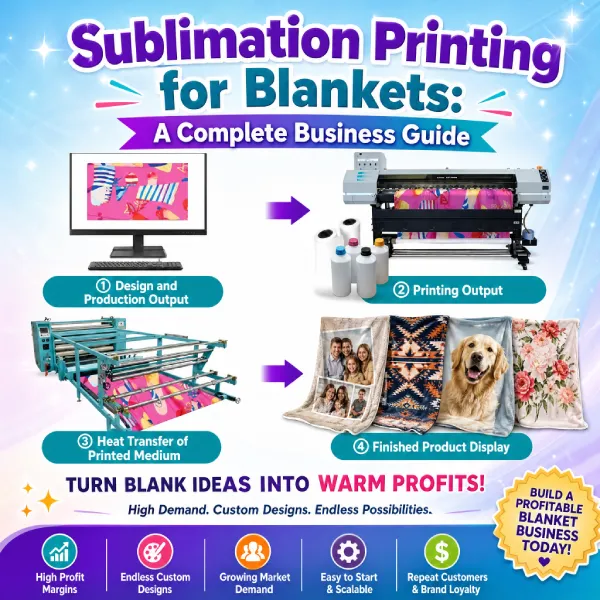
- Un diseño se imprime en papel de transferencia de sublimación especial utilizando tintas de sublimación..
- El papel de transferencia se coloca boca abajo sobre el sustrato. (P.EJ., una camisa de poliéster o una taza de cerámica).
- Una prensa de calor aplica calor alto. (alrededor de 375 a 428 °F / 190–220°C) y presión para 20 segundos.
- El tinte se vaporiza y se adhiere permanentemente a las fibras o al revestimiento del producto..
| ✅ Mejor para: Ropa deportiva de poliéster, ropa activa, prendas con estampado integral, tazas, cajas del teléfono, alfombrilla para ratón, bolsas de mano (poliéster), paneles metálicos, y artículos promocionales con superficies recubiertas. |
Qué es Impresión por transferencia de calor?
La impresión por transferencia de calor es una categoría amplia que cubre cualquier proceso en el que un diseño preimpreso se transfiere a un sustrato mediante calor y presión.. Esto incluye HTV (vinilo de transferencia de calor), transferencias de plastisol, y transferencias de tóner blanco, entre otros.
Cómo funciona
- Se imprime un diseño, cortar, o preparado en una película o papel de transferencia especial.
- El transfer se coloca sobre la prenda o sustrato.
- Una prensa térmica activa la capa adhesiva., unir el diseño a la superficie.
- El respaldo está despegado, dejando el diseño adherido a la tela.
| ✅ Mejor para: Camisetas de algodón, sudaderas con capucha, telas de colores oscuros, tiradas pequeñas, uniformes del equipo, obsequios promocionales, y situaciones que requieren una respuesta rápida con mínimos bajos. |

Impresión por sublimación versus transferencia de calor: Comparación lado a lado
| Característica | Impresión por sublimación | Transferencia de calor | Ganador |
| Vibrancia del color | Excepcional, calidad fotográfica | Bueno a excelente | Sublimación |
| Requisito de tela | Poliéster / solo mezcla de poli | La mayoría de las telas incluyen. algodón | Transferencia de calor |
| Durabilidad | Permanente, no se agrietará ni se pelará | Puede agrietarse o pelarse con el tiempo | Sublimación |
| Soporte de tela oscura | Sólo telas claras/blancas | Sí, con base blanca | Transferencia de calor |
| Costo por unidad | Bajo para diseños de cobertura total | Varía; más alto para tiradas grandes | Sublimación |
| Costo de instalación | Moderado (impresora + tinta de sublimación) | Bajo a moderado | Atar |
| Nivel de detalle | Detalle extremadamente fino | Buen detalle | Sublimación |
| Solidez al lavado | Excelente (color en fibra) | Bien (adherencia superficial) | Sublimación |
| Productos ideales | Ropa de deporte, tazas, cajas del teléfono | camisetas, sudaderas con capucha, artículos de algodón | Depende del uso |
Pros y contras de la impresión por sublimación
ventajas
- Intensidad de color inigualable y detalles fotorrealistas.
- Extremadamente duradero: la impresión nunca se agrietará, cáscara, o desvanecerse.
- Sin sensación en la mano; la impresión es suave al tacto ya que está incrustada en las fibras.
- Excelente para diseños completos (Impresión de borde a borde sin bordes.).
- Rentable a escala para diseños de cobertura total.
Contras
- Sólo funciona sobre sustratos blancos o de colores muy claros..
- Requiere contenido de poliéster (mínimo 65%, idealmente 100% poliéster).
- No apto para algodón., lino, o la mayoría de los tejidos naturales.
- Requiere una impresora de sublimación y tintas dedicadas..
Pros y contras de la impresión por transferencia de calor
ventajas
- Funciona prácticamente en cualquier tejido: algodón., poliéster, mezclas, y más.
- Compatible con sustratos oscuros y de colores..
- Bajos costos de instalación y sin cantidad mínima de pedido.
- Respuesta rápida; ideal para producción bajo demanda y tiradas pequeñas.
- Amplia variedad de acabados: mate, brillo, metálico, resplandecer, y más.
Contras
- Los estampados se asientan encima de la tela., que puede resultar rígido o pesado en diseños grandes.
- Menos duradero que la sublimación: las impresiones pueden agrietarse, cáscara, o se desvanecen después de lavados repetidos.
- La intensidad del color puede ser ligeramente inferior a la de la sublimación en diseños comparables..
- A menudo se requiere una base blanca para imprimir sobre telas oscuras., agregar costo.
¿Qué método debería elegir??
La elección correcta depende de los requisitos específicos de su proyecto.. Aquí tienes una guía de decisión rápida.:
| Elija sublimación si: Estás imprimiendo en productos de poliéster. (especialmente ropa deportiva o de alto rendimiento), necesitas diseños de impresión total, usted prioriza la durabilidad del lavado duradero, o está produciendo grandes volúmenes de productos de marca en sustratos blancos/claros. |
| Elija transferencia de calor si: Estás trabajando con prendas de algodón o de colores oscuros., necesita pequeñas cantidades con entrega rápida, Quieres acabados especiales como brillo o metalizado., o su presupuesto favorece una inversión inicial más baja. |
¿Puedes combinar ambos métodos??
Absolutamente. Muchas imprentas profesionales, incluida Xinflying, utilizan tanto la impresión por sublimación como la transferencia de calor según el trabajo.. Ejecutar ambos métodos internamente le brinda la flexibilidad de aceptar una gama mucho más amplia de pedidos de clientes sin tener que abandonar el trabajo..
Por ejemplo, un cliente que pide camisetas de poliéster recibe sublimación; otro pedido de sudaderas con capucha de algodón recibe vinilo de transferencia de calor o plastisol. Ambos ofrecen un resultado de alta calidad cuando se combina el método correcto con el sustrato correcto.
Preguntas frecuentes
¿Es la impresión por sublimación más cara que la transferencia de calor??
No necesariamente. Para diseños de gran volumen o de cobertura total en productos de poliéster, la sublimación suele ser más rentable. La transferencia de calor tiende a ser más económica para tiradas pequeñas o diseños simples de un solo color..
¿Puede la impresión por sublimación funcionar en camisas oscuras??
No. La sublimación se basa en el fondo blanco o claro del sustrato para mostrar colores precisos.. En telas oscuras, los colores no aparecerán correctamente. Para prendas oscuras, la transferencia de calor con una base blanca es la mejor solución.
¿Cuántos lavados dura la impresión por transferencia de calor??
Con la aplicación y el cuidado adecuados (lavado en frio, voltearse del revés, no secar en secadora), Las impresiones de transferencia de calor de calidad pueden durar 50+ lava. Impresiones por sublimación, sin embargo, Son esencialmente permanentes y pueden durar toda la vida útil de la prenda..
¿Funciona la sublimación? 50/50 mezclas de algodón y poliéster?
Puede, pero con limitaciones. en un 50/50 mezcla, El tinte de sublimación se une solo a las fibras de poliéster., creando un 'vintage'’ o 'brezo’ efecto en lugar de un sólido, impresión vibrante. Para una verdadera vitalidad, usar 100% poliéster o al menos 85-95% tejido de poliéster.
Pensamientos finales
Tanto la impresión por sublimación como la transferencia de calor están probadas., Métodos de nivel profesional con fortalezas claras.. Comprender las diferencias le ayuda a elegir la técnica adecuada para sus productos específicos., telas, y objetivos comerciales.
En Xinflying, Nos especializamos en ambos métodos y podemos ayudarlo a seleccionar el mejor enfoque de impresión para sus necesidades de prendas personalizadas en América del Norte.. Ya sea que estés equipando un equipo deportivo, lanzando una línea de mercancías, o ampliar su negocio de impresión, Contamos con el equipo y la experiencia para ofrecer resultados sobresalientes..
| Listo para empezar? Póngase en contacto con Xinflying hoy para obtener una cotización personalizada sobre servicios de impresión por sublimación o transferencia de calor.. Servimos a clientes en todo EE. UU.. y Canadá con entrega rápida y producción de nivel profesional. |