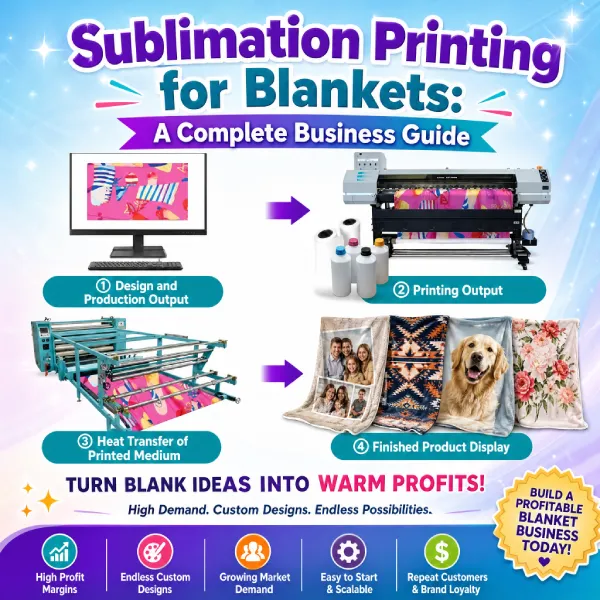
Niestandardowe koce ze zdjęciami i wzorami niezmiennie cieszą się dobrą opinią na rynku prezentów i artykułów dekoracyjnych do domu, a sublimacja to metoda drukowania stosowana w prawie wszystkich z nich. Oto jak działa druk sublimacyjny na kocach, jakiej tkaniny i sprzętu potrzebujesz, i co wziąć pod uwagę przed dodaniem koców do swojej linii produktów.
Co to jest druk sublimacyjny na koce?

Druk sublimacyjny na kocach wykorzystuje ten sam podstawowy proces, co ogólnie w przypadku sublimacji tkanin: projekt drukowany jest na papierze transferowym sublimacyjnym, następnie dociśnięty do poliestrowego polaru lub pluszowego koca za pomocą ciepła i ciśnienia. Atrament pod wpływem ciepła zamienia się w gaz i wiąże się bezpośrednio z włóknami poliestrowymi, produkując miękkie, wibrujący, wzór na całej powierzchni, który staje się częścią koca, a nie warstwą wydrukowaną na nim.
Dlaczego wybór materiału ma większe znaczenie w przypadku koców
Koce ocenia się zarówno na podstawie dotyku, jak i wyglądu, dlatego wybór materiału ma tutaj jeszcze większe znaczenie niż w przypadku odzieży. Polar poliestrowy i tkaniny pluszowe są standardowym wyborem, ponieważ łączą w sobie wysoką zawartość poliestru (potrzebne do prawidłowego związania atramentu) z miękkim, klienci oczekują od koca przytulnego, przyjemnego w dotyku dotyku. Tkaniny niższej jakości lub mieszane mogą dość dobrze trzymać nadruk, ale tracą pluszową fakturę, która sprawia, że koc wydaje się luksusowy.
Sprzęt potrzebny do koców sublimacyjnych
- A drukarka sublimacyjna z szerokością druku odpowiednią do rozmiaru koca — szersze formaty zmniejszają lub eliminują potrzebę łączenia wielu drukowanych paneli.
- Atrament sublimacyjny I papier transferowy dopasowany do drukarki i typowych wymiarów koca.
- Wielkoformatowy ciśnienie ciepłalub prasę rotacyjną/kalandrową zdolną do przykrycia całego koca, ponieważ standardowe prasy do rozmiaru odzieży są zwykle za małe.
- Papier żaroodporny lub folia ochronna zapobiegająca przypaleniu i utrzymująca nacisk na powierzchnię koca podczas prasowania.
Proces sublimacji koca, Krok po kroku
- 1. Przygotuj projekt: utwórz lub dostosuj grafikę do wymiarów koca, uwzględniając wszelkie spady i obramowania wymagane w projekcie.
- 2. Drukuj na papierze transferowym: wydrukuj projekt tuszem sublimacyjnym, zwymiarowane i w razie potrzeby ułożone kafelkami, aby dopasować je do szerokości drukarki w stosunku do koca.
- 3. Pozycja na kocu: połóż zadrukowany papier transferowy stroną z nadrukiem do dołu na polarze lub pluszu, ostrożnie go wyrównując, ponieważ po rozpoczęciu prasowania trudniej jest zmienić położenie koca.
- 4. Naciskać: zastosować ciepło i równomierny nacisk na całej powierzchni koca, w jednym przebiegu lub w sekcjach, w zależności od rozmiaru prasy, zgodnie z ustawieniami czasu i temperatury dla konkretnej tkaniny i atramentu.
- 5. Ochłodź i sprawdź: poczekaj, aż koc ostygnie przed użyciem, następnie sprawdź całą powierzchnię pod kątem wyblakłych fragmentów, co zwykle wskazuje na nierównomierny nacisk podczas prasowania.

Typowe wyzwania związane z sublimacją koców
- Równomierny nacisk na dużą powierzchnię: koce są znacznie większe niż typowa płyta dociskowa do prasy termicznej, dlatego nierównomierny nacisk — szczególnie na krawędziach — jest jednym z najczęstszych źródeł wyblakłych lub niejednolitych fragmentów.
- Kurczenie się lub przesuwanie tkaniny: niektóre tkaniny polarowe przesuwają się nieznacznie pod wpływem ciepła, dlatego zabezpieczenie papieru transferowego na miejscu przed dociśnięciem pomaga zapobiegać źle wyrównanym lub rozmazanym projektom.
- Dopasowanie szerokości drukarki do rozmiaru koca: drukarki węższe niż koc wymagają złożenia zadrukowanych paneli, co dodaje widoczny szew, chyba że zostanie starannie zaplanowany w projekcie.
Czy sublimacja koców jest dobrym dodatkiem do Twojej linii produktów??
Koce zazwyczaj dobrze sprzedają się jako spersonalizowane prezenty – zwłaszcza z okazji świąt i na pamiątki ze zdjęciami – i mają wyższą cenę niż mniejsze przedmioty, takie jak kubki czy etui na telefony, co może uczynić z nich produkt o dużej marży, po uwzględnieniu kosztów tkaniny i czasu prasowania.
Często zadawane pytania
Najlepiej sprawdzą się polary poliestrowe i pluszowe tkaniny poliestrowe, ponieważ atrament sublimacyjny wymaga dużej zawartości poliestru, aby zapewnić prawidłowe wiązanie. Koce wykonane z bawełny lub wełny nie będą dobrze trzymać sublimowanego wzoru, niezależnie od używanej drukarki i jakości atramentu.
Prawidłowo sublimowane koce na odpowiedniej tkaninie poliestrowej zazwyczaj dobrze zachowują kolor nawet po wielokrotnym praniu, ponieważ atrament jest wprowadzany we włókna, a nie osadza się na powierzchni – przestrzeganie instrukcji prania zalecanych dla tkaniny pomaga zachować żywotność przez długi czas.
Pełnowymiarowe koce do rzucania zazwyczaj wymagają wielkoformatowej płaskiej prasy termicznej dopasowanej do rozmiaru koca, lub prasa rotacyjna/kalandrowa, która przepuszcza tkaninę w sposób ciągły — standardowa prasa termiczna wielkości koszulki zwykle nie jest w stanie pokryć całego koca w jednym przejściu.
Sublimacja wspiera jedno i drugie — na całej powierzchni, wzór od krawędzi do krawędzi na całym kocu, lub wyśrodkowane zdjęcie/projekt z gładkim lub obramowanym tłem, w zależności od preferencji klienta i szerokości drukarki w stosunku do rozmiaru obciągu.
Rzuć koce (około 50×60 cale) to najczęstszy rozmiar spersonalizowanych koców ze zdjęciami i prezentami, chociaż sprzedawcy oferują również mniejsze rozmiary okrążeń i większe rozmiary typu queen-size/king-size, w zależności od zapotrzebowania i wydajności drukarki/prasy.
Powiązane zasoby
• Do czego służy wielkoformatowa drukarka sublimacyjna
• 9+ Najlepsze pomysły na sublimację dla początkujących
• Przeglądaj wszystkie drukarki sublimacyjne
Odniesienie zewnętrzne — Poliester (Wikipedia)