Print shops and garment factories evaluating digital decoration equipment usually land on the same question: DTF or DTG? Both are inkjet-based processes that put full-color graphics on fabric, and both have a place in commercial production. They differ in how the ink reaches the garment, which fabrics they handle well, and how they slot into a production line. For a B2B buyer, the decision comes down to garment mix, run size, і праці, not just print quality. This guide explains what each process does, how the output compares, and which machine earns its place on your floor first.
Що таке друк DTF?
DTF, short for Direct-to-Film or Film-to-Garment, prints the design onto a transfer film first, then presses that film onto the garment. The film carries the image, a white underbase, and a heat-activated adhesive. This extra step is what makes DTF different from DTG, and it is the reason DTF handles such a wide range of fabrics.
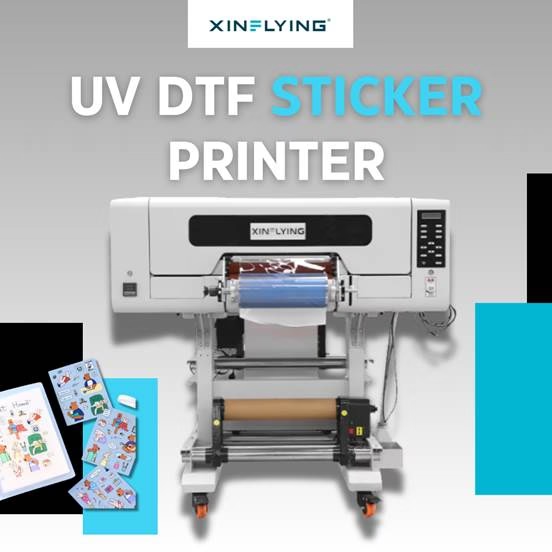
The workflow runs in stages. The printer lays color ink onto the film, then prints a white layer on top of the color. That white layer becomes the base when the film is flipped and pressed, keeping the colors bright regardless of the garment color underneath. А Клейовий порошок DTF is applied over the wet ink and melted to cure it, then the film is heat pressed onto the garment and peeled. On dedicated DTF -принтери, the powder application is built into the machine program, so the operator does not apply it by hand.
The key operational fact: DTF needs no garment pretreatment. Because the design is printed on film and bonded with a heat-melting adhesive, you are not limited by how a specific fabric accepts water-based ink. DTF works on cotton, поліестер, суміші, and synthetics, and it can also decorate items like caps, сумки, and rigid surfaces. Multiple designs can be printed on a single sheet or roll of film, which cuts material waste and lets a shop stock pre-printed transfers for later pressing.
Що таке друк DTG?
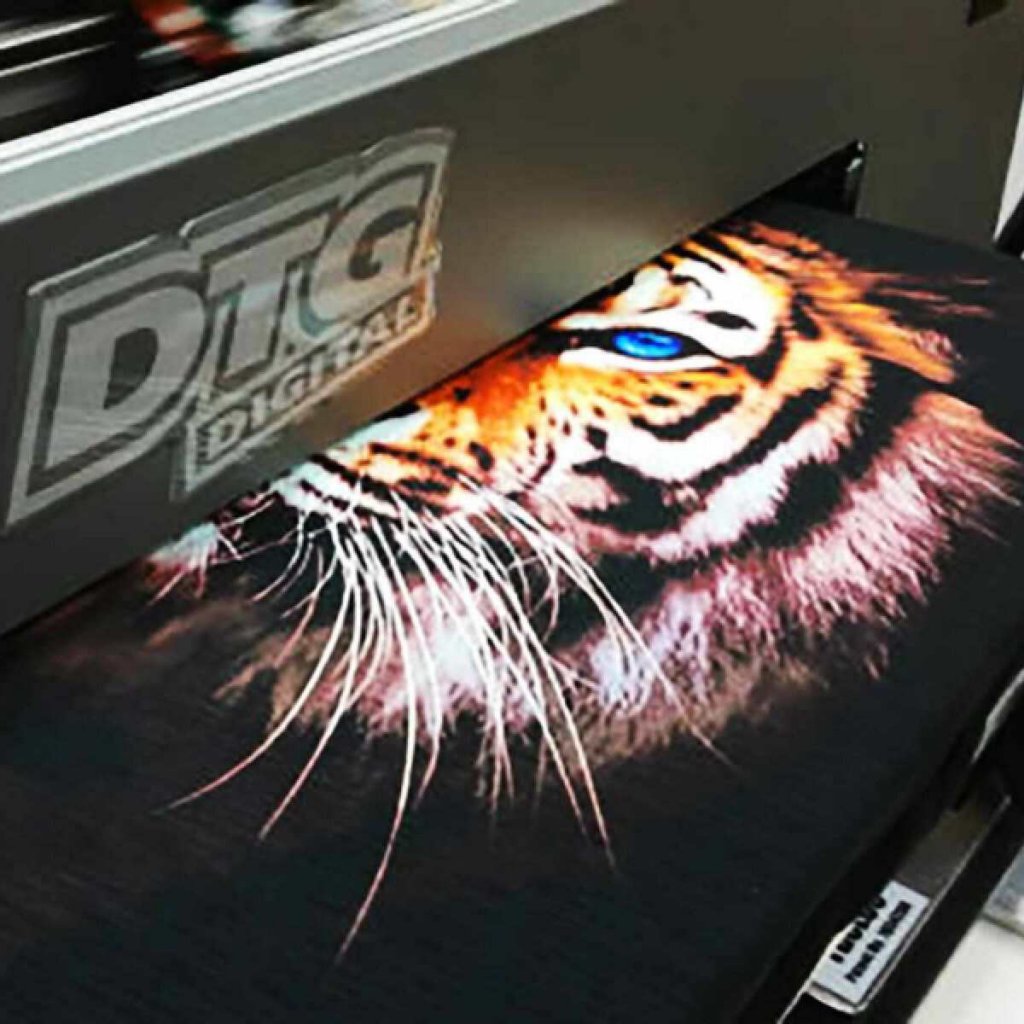
DTG, or Direct-to-Garment, prints ink directly onto the fabric. The design is digitized and run through RIP software, which converts it into print instructions. The garment is loaded onto the platen and the print head applies ink straight to the cloth, so there is no film and no transfer step in between.
The process depends on pretreatment. Cotton and linen must be treated with a bonding solution before printing so the water-based ink fixes to the fibers instead of bleeding through. The pretreated garment is heated to activate that solution, then printed. A white underbase is applied first when printing on dark or colored garments, so the colors do not blend into the base. Після друку, a final heat press cures the ink. That means DTG involves two heat stages: one before printing and one after.
DTG is strongest on natural fibers. It bonds well with cotton, органічна бавовна, чесана бавовна, і білизна, where the water-based ink integrates into the fabric and keeps the garment breathable with a soft hand. It struggles on polyester and coated fabrics, where the ink has nothing to absorb into. A commercial Принтер DTG is built around that cotton-first role, and it shows in the output: colors that sit into the fibers rather than on top of them.
DTF проти DTG: Side by Side
| Factor | DTF | DTG |
|---|---|---|
| Works on dark fabrics | Так, with a printed white underbase on the film | Так, but needs pretreatment and heavier white ink |
| Працює на 100% бавовна | Так | Так, its strongest substrate |
| Print feel / hand | Slightly raised, rubbery feel from the adhesive powder | М'які; ink bonds into the fibers |
| Стійкість до прання | Good when the adhesive is cured correctly; holds on blends and synthetics | Good on cotton when pretreated and cured correctly |
| Cost per print | Consistent regardless of garment color | Varies; higher on dark garments due to white ink and pretreatment |
| Швидкість виробництва | High film throughput; transfers can be pre-printed and stored | Slower per garment; prints line by line on the platen |
| Upfront investment | Нижній; film and powder workflow | Вища; machine plus pretreatment equipment |
| Найкраще для | Mixed fabrics, темний одяг, on-demand transfer stock | 100% бавовна, soft-hand premium cotton garments |
Which Is Right for Your Business?
The right answer is not one machine for everyone. It is the machine that matches the orders already coming through your door. Four factors decide it.
Garment mix
If your production is almost entirely cotton tees and hoodies, DTG plays to its strength. The ink bonds into natural fibers, the hand is soft, and the result is a premium cotton garment. If your orders span polyester, суміші, synthetics, and non-apparel items, DTF is the more flexible option. It prints the same design onto nearly any substrate because the film and adhesive do the bonding work, not the fabric itself.
Run size and volume
DTG prints directly on the garment, one platen at a time, and every job needs pretreatment first. That makes it slower per unit and better suited to smaller, customized runs where quality on cotton matters more than raw throughput. DTF separates printing from pressing: you can print a full sheet of transfers, powder and cure them, then press them onto garments on demand or days later. That decoupling suits batch work, repeat orders, and shops that want to hold transfer inventory.
Labor and floor space
DTG adds a pretreatment station and a curing press to the line, and someone has to run them. DTF adds a powder shaker and a heat press, but it removes the pretreatment step entirely. For a shop adding a second or third process, the labor profile matters as much as the machine price. A team that already runs heat presses will pick up DTF quickly; a team focused on cotton decoration may find DTG more familiar.
Hand feel and finish
Where the customer can feel the print, DTG wins on cotton. The ink sits in the fibers, so the garment stays soft and breathable. DTF carries a slightly raised, rubbery surface from the adhesive layer, and the graphic sits on top of the fabric rather than in it. For premium cotton retail, that soft hand is often the deciding factor. For promotional, спецодяг, and mixed-fabric orders, durability and color consistency usually outweigh hand feel.
Making the call
Start from the order book. A shop whose volume is cotton-first and premium-hand should lead with DTG. A shop or distributor whose orders run across fabrics, темний одяг, and hard goods should lead with DTF, then add DTG later if cotton volume justifies it. Many production shops run both, using DTG for the cotton premium lines and DTF for everything else. If your current workflow already includes sublimation, note that DTF and sublimation are separate processes, and a sublimation printer cannot double as a DTF machine. We cover that distinction in can you use a sublimation printer for DTF transfers.
DTF vs DTG FAQ
For production flexibility, так. DTF prints a white underbase onto the film, so colors stay bright on dark garments without pretreatment. DTG can also print dark garments, but it needs a pretreatment pass and heavier white ink, which adds time and cost per unit. On dark cotton where a soft hand matters, DTG is still a strong choice; on dark blends and synthetics, DTF is the practical option.
DTF cost per print stays consistent because ink usage does not change with garment color. DTG cost varies: light garments use little white ink, while dark garments use more, plus a pretreatment step. Exact figures depend on your ink, плівка, порошок, and labor rates, so request a quote from your supplier for a realistic per-unit calculation on your actual order mix.
On cotton, так. DTG ink bonds into the fibers, so the print stays soft and the fabric stays breathable. DTF leaves a thin adhesive layer on the surface, which gives a slightly raised, rubbery feel. The difference matters most for premium cotton retail. For mixed-fabric and workwear orders, the durability and color consistency of DTF usually matter more than hand feel.
Lead with the machine that matches your order book. If your volume is cotton-first and the customer pays for a soft hand, start with DTG. If your orders span dark garments, суміші, synthetics, and non-apparel items, start with DTF, then add DTG when cotton volume justifies it. Many production shops run both, splitting cotton premium lines from everything else.
Висновок
DTF and DTG are not competing for the same job; they solve different parts of a production schedule. DTF brings fabric flexibility and a consistent cost per print through the film-and-adhesive workflow. DTG brings a soft, premium finish on cotton through direct ink bonding. The decision is a capacity question, not a quality contest. Match the machine to the garments and run sizes you already sell. For a direct comparison of equipment and running costs on your specific order mix, request a quote from our team on the Діапазон принтерів DTF or the DTG printer range.