Jika Anda telah menjelajahi opsi pencetakan khusus untuk pakaian, mug, atau produk promosi, Anda mungkin pernah menemukannya pencetakan sublimasi. Tapi apa sebenarnya itu, bagaimana cara kerjanya, dan apakah itu pilihan yang tepat untuk bisnis Anda?
Panduan ini mencakup segala hal yang perlu Anda ketahui — mulai dari sains di balik proses hingga perbandingan praktis dengan pencetakan DTG dan DTF — sehingga Anda dapat mengambil keputusan yang tepat..
Apa Itu Pencetakan Sublimasi?
Pencetakan sublimasi adalah proses pencetakan digital yang menggunakan panas untuk mentransfer pewarna langsung ke serat suatu bahan, daripada duduk di atas permukaan seperti tinta tradisional. Hasilnya adalah cetakan yang menjadi bagian dari kain itu sendiri — cerah, lembut saat disentuh, dan sangat tahan lama.
Kata “sublimasi” mengacu pada proses ilmiah di mana suatu zat bertransisi langsung dari wujud padat menjadi gas, melewatkan fase cair seluruhnya. Dalam pencetakan sublimasi, partikel pewarna padat dipanaskan hingga sekitar 220°C, berubah menjadi gas dan berikatan secara permanen dengan serat polimer bahan.
Karena pewarna terikat pada tingkat molekuler, cetakan sublimasi tidak akan retak, mengupas, atau memudar seperti hasil sablon atau perpindahan panas seiring berjalannya waktu.
Bagaimana Cara Kerja Pencetakan Sublimasi?
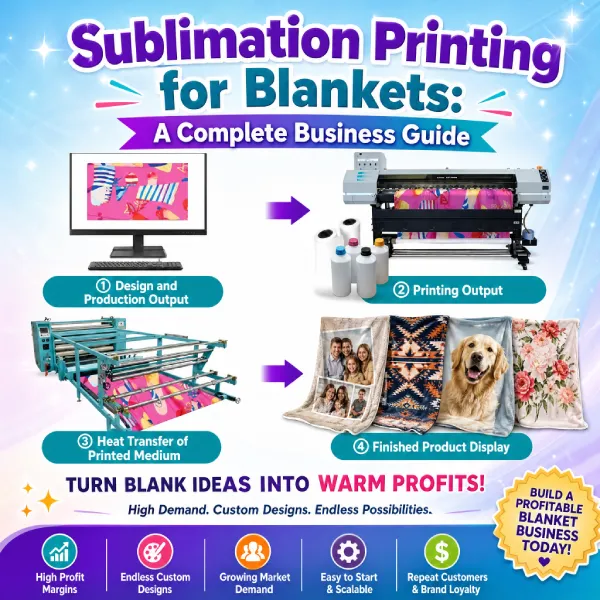
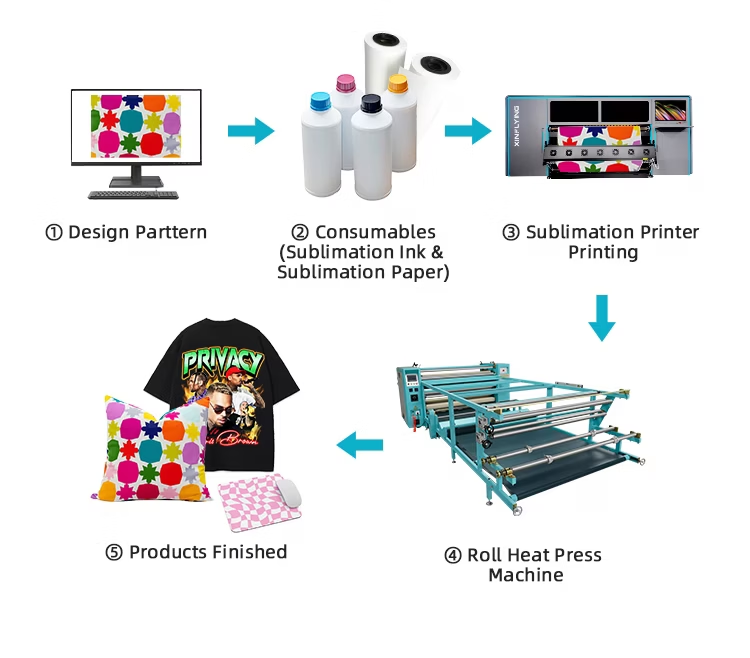
Proses pencetakan sublimasi melibatkan empat langkah:
Melangkah 1: Penciptaan Desain Buat karya seni Anda secara digital menggunakan perangkat lunak seperti Adobe Illustrator, CorelDRAW, atau program desain apa pun yang mengekspor file resolusi tinggi. Desainnya kemudian dicerminkan (membalik secara horizontal) sebelum mencetak, karena akan ditransfer menghadap ke bawah ke media.
Melangkah 2: Cetak ke Kertas Transfer Sublimasi Desain cermin dicetak pada kertas transfer sublimasi khusus menggunakan printer sublimasi yang diisi dengan tinta sublimasi. Pada tahap ini, tinta tampak kusam dan tidak bersuara — hanya menjadi cerah setelah panas diterapkan.
Melangkah 3: Perpindahan panas Kertas transfer yang dicetak ditempatkan menghadap ke bawah pada media (kain, cangkir, kasus telepon, dll.) dan ditekan menggunakan heat press pada suhu dan tekanan yang tepat. Panas menyebabkan partikel tinta padat menyublim menjadi gas, yang menembus permukaan material.
Melangkah 4: Pendinginan dan Penyelesaian Setelah siklus pengepresan panas selesai (khas 20 detik), kertas transfer terkelupas. Saat media mendingin, gas kembali menjadi padat — sekarang tertanam secara permanen di dalam material. Hasilnya sangat jelas, cetakan penuh warna tanpa tepi atau tekstur menonjol.
Bahan Apa Yang Dapat Dicetak Sublimasi?
Ini adalah salah satu hal terpenting untuk dipahami tentang pencetakan sublimasi: ini hanya berfungsi pada bahan berbahan dasar poliester atau berlapis polimer.
Karena pewarna berikatan dengan molekul polimer selama fase gas, itu tidak bisa menembus serat alami seperti 100% kapas. Semakin tinggi kandungan poliester pada kain, semakin cerah dan tahan lama hasil cetakan sublimasinya.
Bahan yang kompatibel meliputi:
- Kain poliester (100% atau campuran tinggi) — pakaian olahraga, pakaian aktif, kaus
- Barang keras berlapis polimer — mug, kasus telepon, gantungan kunci, gelas
- Panel logam berlapis poliester — penghargaan, plak, rambu
- Keramik dengan lapisan polimer — pelat, ubin, ornamen
- Nilon dan kain sintetis lainnya
Tidak kompatibel:
- 100% kapas
- Serat alami (linen, sutra, wol)
- Kain berwarna gelap (tinta sublimasi transparan; itu tidak dapat menutupi warna dasar yang gelap)
- Logam yang tidak dilapisi, kaca, atau kayu
Produk Apa yang Terbaik untuk Pencetakan Sublimasi?
Pencetakan sublimasi digunakan di berbagai industri dan kategori produk:
Pakaian
- Kaus olahraga dan seragam tim
- Pakaian aktif dan pakaian olahraga
- Pakaian renang dan celana pendek
- Hoodie dan zip-up khusus (campuran poliester)
- T-shirt dengan cetakan menyeluruh
Produk Promosi dan Korporasi
- Mug dan cangkir kopi khusus
- Botol air dan gelas
- Alas mouse
- Lanyard dan pemegang ID
- Tas jinjing bermerek (poliester)
Dekorasi Rumah
- Bantal dan sarung bantal
- Selimut dan permadani
- Panel foto dan seni dinding
- Tatakan gelas dan alas piring
Penghargaan dan Signage
- Plakat dan piala logam
- Penghargaan akrilik
- Panel komposit aluminium
Pencetakan Sublimasi vs Percetakan DTG: Apa bedanya?
Baik sublimasi maupun DTG (Langsung ke Garmen) pencetakan adalah metode pencetakan digital, namun cara kerjanya sangat berbeda dan sesuai dengan kasus penggunaan yang berbeda.
| Fitur | Pencetakan Sublimasi | Percetakan DTG |
|---|---|---|
| Bagaimana tinta diterapkan | Tinta menjadi gas dan berikatan dengan serat polimer | Tinta disemprotkan langsung ke permukaan kain |
| Kain yang kompatibel | Hanya bahan poliester dan berlapis polimer | Campuran katun dan katun tinggi |
| Warna pada kain gelap | Tidak cocok — tinta transparan | Bekerja pada kain gelap dengan dasar tinta putih |
| Nuansa cetak | Benar-benar lembut — tanpa tekstur | Tekstur sedikit dari lapisan tinta |
| Daya tahan | Sangat tahan lama, tidak akan retak atau terkelupas | Sangat tahan lama dengan proses curing yang tepat |
| Biaya pengaturan | Sedang | Sedang hingga tinggi |
| Diperlukan perawatan awal | TIDAK | Ya, untuk pakaian berwarna gelap |
| Terbaik untuk | Pakaian poliester, pakaian olahraga, barang keras | Kaos katun, Pencetakan sesuai permintaan |
Jawaban singkatnya: Jika Anda mencetak pada bahan poliester, pakaian olahraga, atau barang keras, pencetakan sublimasi adalah pilihan yang lebih baik. Jika Anda mencetak kaos katun dalam jumlah kecil, DTG lebih cocok.
Pencetakan Sublimasi vs Pencetakan DTF: Mana yang Harus Anda Pilih?
DTF (Langsung ke Film) pencetakan telah berkembang pesat sebagai alternatif sublimasi dan DTG. Berikut perbandingan keduanya:
| Fitur | Pencetakan Sublimasi | Pencetakan DTF |
|---|---|---|
| Kompatibilitas kain | Hanya poliester | Bekerja pada hampir semua kain |
| Pencetakan barang keras | Ya (dengan lapisan polimer) | TIDAK |
| Warna pada kain gelap | Tidak cocok | Ya — kecerahan luar biasa pada kain berwarna gelap |
| Tekstur cetak | Tidak ada — tertanam sepenuhnya | Sedikit terasa terangkat |
| Daya tahan | Bagus sekali | Bagus sekali |
| Pra-perawatan | Tidak diperlukan | Tidak diperlukan |
| Fleksibilitas produksi | Kurang fleksibel | Sangat fleksibel |
| Terbaik untuk | Pakaian poliester, pakaian olahraga, barang keras bermerek | Jenis kain beragam, pakaian berwarna gelap, pesanan campuran |
Jawaban singkatnya: Pencetakan sublimasi unggul pada poliester dan barang keras. Pencetakan DTF menawarkan lebih banyak fleksibilitas dalam berbagai jenis dan warna kain — terutama untuk bisnis yang menangani pesanan campuran atau sering mencetak pada pakaian berwarna gelap.
Banyak bisnis percetakan menjalankan sublimasi dan DTF untuk memenuhi seluruh kebutuhan pelanggan.
Keuntungan Pencetakan Sublimasi
1. Kualitas cetak luar biasa Sublimasi menghasilkan cetakan foto-realistis dengan gradien halus, detail yang tajam, dan warna cerah — terutama pada poliester putih atau terang. Kualitas cetaknya sulit ditandingi dengan metode lain dengan harga yang sama.
2. Sangat tahan lama Karena pewarna tertanam di dalam bahan, bukan di atasnya, cetakan sublimasi tidak retak, mengupas, memudar, atau mencuci. Produk yang disublimasikan dengan benar akan mempertahankan penampilannya bahkan setelah ratusan siklus pencucian.
3. Tidak ada tekstur atau rasa tangan Berbeda dengan sablon, DTG, or heat transfer vinyl, sublimation prints are completely invisible to the touch. The fabric retains its original softness, which is particularly important for activewear and performance garments.
4. No pre-treatment required Berbeda dengan pencetakan DTG, sublimation does not require any pre-treatment of the garment before printing. This simplifies the workflow and reduces per-unit costs.
5. Full-color printing with no color limits Sublimation supports unlimited colors, photographic gradients, and complex artwork without any additional cost per color — unlike screen printing, where each additional color increases cost.
6. All-over printing capability Sublimation is ideal for all-over print designs that cover the entire garment from seam to seam, including sleeves and panels — something difficult or expensive to achieve with other methods.
Keterbatasan Pencetakan Sublimasi
1. Polyester requirement Sublimasi hanya bekerja efektif pada poliester (atau dilapisi polimer) bahan. Untuk lini produk berbahan kapas, Pencetakan DTG atau DTF lebih cocok.
2. Hanya kain berwarna terang Karena tinta sublimasi bersifat transparan, itu tidak dapat menghasilkan warna-warna cerah pada kain gelap atau hitam. Pewarnanya menyatu dengan warna dasar bahan — mencetak warna kuning pada pakaian berwarna biru tua tidak akan menghasilkan warna kuning bersih.
3. Tinta putih tidak dimungkinkan Pencetakan sublimasi tidak dapat menghasilkan warna putih — itu “putih” dalam sebuah desain hanyalah area media yang belum dicetak. Inilah sebabnya mengapa diperlukan substrat poliester berwarna putih atau terang.
4. Akurasi warna tergantung pada media Desain yang sama dapat terlihat sedikit berbeda jika dicetak pada campuran atau media poliester yang berbeda. Pembuatan profil warna dan pengujian media yang konsisten penting untuk menjaga kualitas di seluruh lini produk.
Peralatan Apa yang Anda Butuhkan untuk Pencetakan Sublimasi?
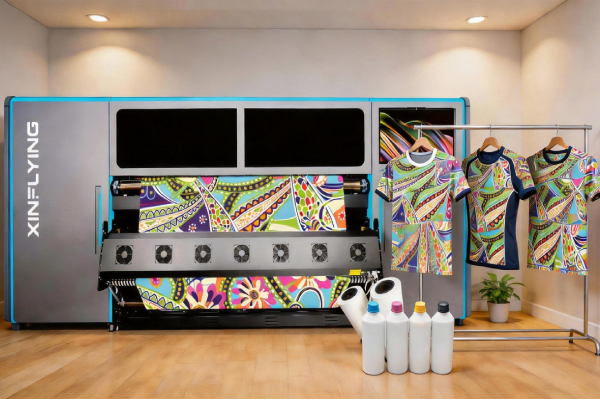
Memulai operasi pencetakan sublimasi memerlukan empat peralatan inti:
1. Pencetak Sublimasi Printer format lebar atau desktop yang dikonversi atau dirancang untuk tinta sublimasi. Lebar cetak umum berkisar dari A3 (11.7″) untuk pekerjaan format kecil hingga 64″ (162cm) untuk produksi format lebar. Carilah model dengan kepala cetak Epson i3200 atau DX5 untuk hasil yang andal.
2. Tinta Sublimasi Diperlukan tinta sublimasi khusus — tinta inkjet standar tidak akan menyublim. Kualitas tinta secara langsung mempengaruhi kecerahan dan gamut warna. Tinta sublimasi berkualitas tinggi menghasilkan lebih kaya, warna yang lebih akurat dan hasil yang lebih tahan lama.
3. Kertas Transfer Sublimasi Kertas sublimasi yang dibuat khusus dilapisi untuk menampung tinta hingga transfer selesai. Menggunakan kertas yang tepat untuk merek tinta dan printer Anda penting untuk mencegah pendarahan dan memastikan pelepasan warna yang bersih.
4. Tekan Panas Mesin press panas datar digunakan untuk kain dan barang keras yang rata. Untuk benda berbentuk silinder (mug, botol), diperlukan alat press mug. Untuk topi, diperlukan lampiran cap press. Keakuratan suhu dan tekanan pelat yang merata sangat penting untuk hasil yang konsisten.
Apakah Percetakan Sublimasi Tepat untuk Bisnis Anda?
Pencetakan sublimasi adalah pilihan yang sangat baik jika:
- Produk utama Anda adalah pakaian poliester, pakaian olahraga, atau pakaian aktif
- Anda memproduksi barang keras yang disesuaikan seperti mug, gelas, atau casing telepon
- Anda memerlukan kemampuan cetak menyeluruh untuk desain pakaian dengan cakupan penuh
- Anda ingin bersemangat, cetakan tahan lama tanpa tekstur atau sentuhan tangan
- Anda mencetak pada media putih atau berwarna terang
Pertimbangkan pencetakan DTF atau DTG jika:
- Pelanggan Anda terutama memesan kaos katun atau hoodies
- Anda sering mencetak pada pakaian berwarna gelap atau hitam
- Anda memerlukan fleksibilitas media maksimum di seluruh jenis kain campuran
Pertanyaan Yang Sering Diajukan Tentang Pencetakan Sublimasi
Q: Untuk apa pencetakan sublimasi digunakan?
A: Pencetakan sublimasi digunakan untuk memproduksi pakaian khusus (kaus, pakaian aktif, kaos bermotif menyeluruh), barang keras promosi (mug, kasus telepon, gelas), dekorasi rumah (bantal, selimut, seni dinding), dan penghargaan atau tanda pada substrat berlapis polimer.
Q: Apakah pencetakan sublimasi dapat dilakukan pada kapas?
A: TIDAK. Tinta sublimasi terikat dengan molekul polimer dan tidak dapat menembus serat alami seperti kapas. Untuk pencetakan kapas, Pencetakan DTG atau DTF adalah teknologi tepat guna. Minimal 65% kandungan poliester direkomendasikan untuk hasil sublimasi yang dapat diterima; 100% poliester menghasilkan keluaran paling cemerlang.
Q: Berapa lama hasil cetakan sublimasi bertahan?
A: Jika diproduksi dengan benar pada bahan yang kompatibel, cetakan sublimasi sangat tahan lama. Mereka tidak retak, mengupas, atau memudar secara signifikan bahkan setelah ratusan siklus pencucian. Cetakannya tertanam di dalam serat, tidak duduk di atasnya, yang membuatnya lebih tahan luntur dibandingkan metode pencetakan lainnya.
Q: Apakah pencetakan sublimasi sama dengan pencetakan perpindahan panas?
A: TIDAK, meski sama-sama menggunakan heat press. Dalam pencetakan perpindahan panas, desain yang dicetak pada kertas transfer ditekan ke permukaan bahan dan tetap berada di atas sebagai lapisan. Dalam pencetakan sublimasi, tinta berubah menjadi gas dan terikat secara permanen di dalam material — tidak ada lapisan permukaan dan tidak ada tekstur.
Q: Apakah pencetakan sublimasi bisa dilakukan di rumah?
A: Ya. Pengaturan sublimasi tingkat awal menggunakan printer desktop A3, alat press panas dasar, dan kertas sublimasi tersedia untuk di bawah $1,000 dan umumnya digunakan oleh usaha kecil dan penghobi.
Q: Apa perbedaan antara pencetakan sublimasi dan sablon?
A: Sablon mengaplikasikan tinta di atas kain melalui saringan jaring, dengan setiap warna membutuhkan layar terpisah. Ini hemat biaya untuk sejumlah besar desain sederhana. Pencetakan sublimasi adalah proses digital sepenuhnya tanpa layar atau biaya pengaturan, mendukung warna tanpa batas, dan menghasilkan cetakan yang tertanam di dalam kain, bukan di permukaan.
Siap Memulai Pencetakan Sublimasi?
Baik Anda meluncurkan bisnis pakaian khusus atau memperluas operasi pencetakan yang sudah ada, Xinflying menawarkan rangkaian lengkap printer sublimasi dirancang untuk produksi tingkat awal dan industri.
Tidak yakin printer sublimasi mana yang sesuai dengan kebutuhan Anda? Hubungi tim kami dan kami akan membantu Anda menemukan solusi yang tepat untuk volume produksi dan rangkaian produk Anda.