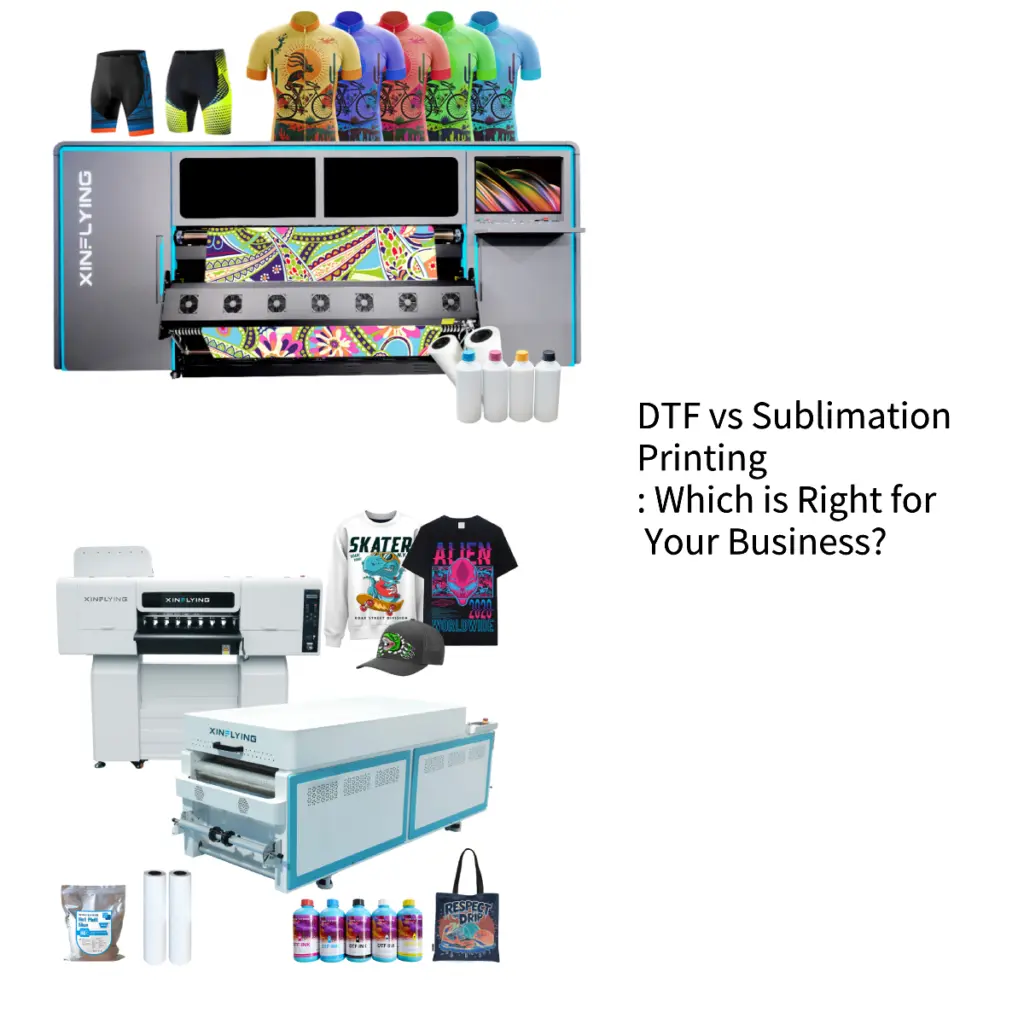
Dos de las tecnologías de más rápido crecimiento en la industria de la impresión personalizada son Direct to Film (DTF) e impresión por sublimación de tinta. Ambos pueden producir vibrantes, diseños a todo color. Ambos son mucho más flexibles que la serigrafía tradicional.. Y ambos son lo suficientemente accesibles tanto para pequeñas tiendas como para grandes instalaciones de producción..
Pero no son intercambiables y elegir el incorrecto para su negocio puede significar invertir en equipos que no se ajusten a sus pedidos., tus clientes, o tus márgenes.
Esta guía desglosa la impresión por sublimación y DTF en todas las dimensiones importantes para una decisión empresarial.: sustratos, calidad de impresión, configuración, costo, durabilidad, y casos de uso ideales. Al final, Sabrá exactamente qué tecnología (o combinación de ambas) pertenece a su tienda..
Qué es Impresión DTF?
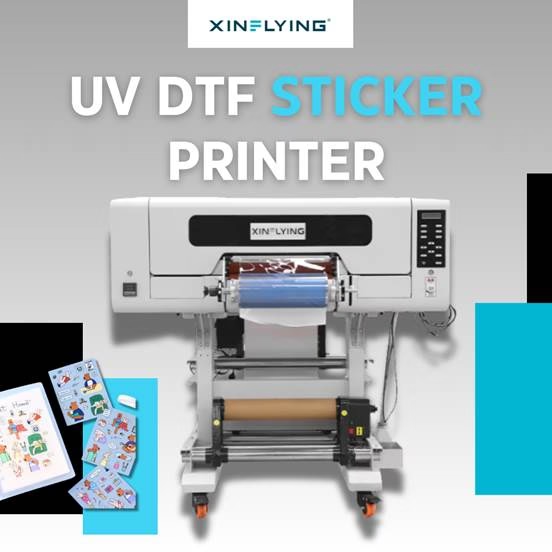
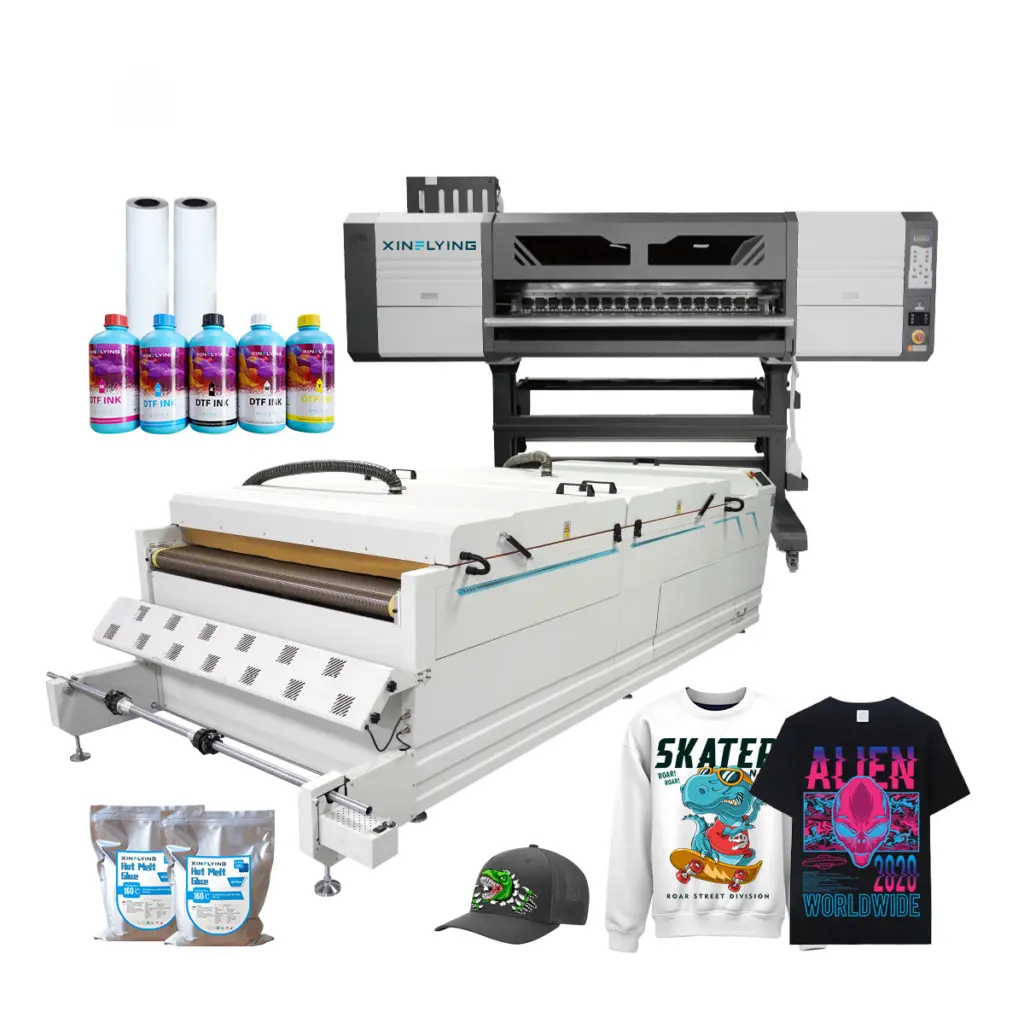
Directo a la película (DTF) La impresión es un proceso en el que se imprime un diseño en una película PET especial utilizando tinta pigmentada. (CMYK + Blanco), recubierto con adhesivo termofusible en polvo, curado, y luego transferido a la tela usando una prensa térmica.
La característica clave de DTF es que el diseño se crea primero en la película., luego se aplica a la prenda, lo que significa que puede adherirse a casi cualquier tipo de tela independientemente del contenido de fibra o el color..
Cómo funciona el proceso:
- El diseño se imprime en una película PET DTF. (capas de color primero, luego tinta blanca debajo)
- El adhesivo termofusible en polvo se aplica mientras la tinta aún está húmeda.
- La película se cura en un horno o prensa térmica para derretir el polvo.
- La transferencia se presiona sobre la prenda a 160 °C durante 6 a 10 segundos.
- La película está pelada (Caliente o fría según el tipo de película.)
Qué es Impresión por sublimación?
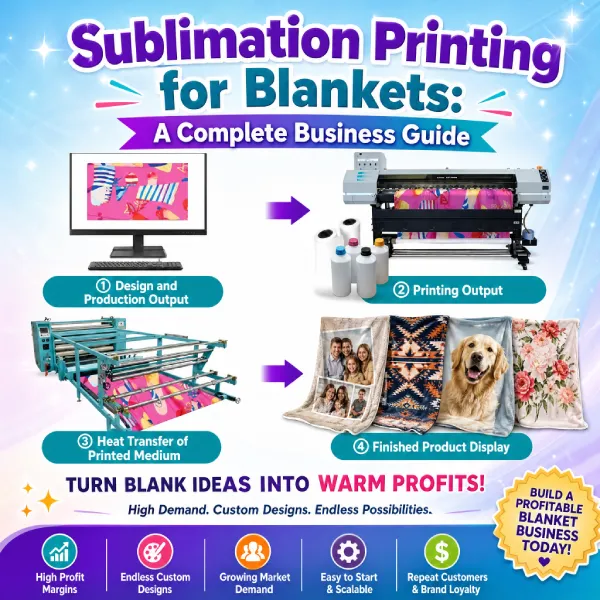
La impresión por sublimación de tinta funciona según un principio químico completamente diferente. La tinta de sublimación se imprime en papel de transferencia especial., luego presionado sobre el sustrato a alta temperatura (220ºC). a esa temperatura, la tinta se convierte de sólido a gas y se une permanentemente a las fibras poliméricas del material..
Porque la tinta se convierte en parte de la tela en lugar de quedar encima de ella., La sublimación produce una suavidad única., Sensación transpirable sin textura en la superficie..
Cómo funciona el proceso:
- El diseño se imprime en papel de transferencia por sublimación.
- El papel se coloca boca abajo sobre el sustrato.
- La prensa de calor aplica 220°C durante 20 segundos
- Se retira el papel para revelar la transferencia terminada.
Comparación cabeza a cabeza
1. Tela & Compatibilidad del sustrato
Este es el mayor diferenciador entre las dos tecnologías..
DTF:
- Funciona en algodón, poliéster, nylon, mezclilla, cuero, lienzo, lana, y mezclas
- Funciona tanto en telas claras como oscuras. (La capa de tinta blanca proporciona opacidad.)
- Funciona en materiales elásticos y elásticos.
- No se requiere pretratamiento de la tela
- También funciona en artículos que no son de tela, como bolsos., zapatos, y parches
Sublimación:
- Funciona mejor en poliéster (95%+ Contenido de poliéster para mejores resultados.)
- Funciona sobre sustratos duros recubiertos de poliéster.: tazas, cajas del teléfono, paneles metálicos, Azulejos de cerámica
- NO funciona en algodón (la tinta no tiene nada que unir)
- NO funciona en telas oscuras (La tinta de sublimación es transparente: los colores se desvanecen sobre fondos oscuros.)
- No se utiliza tinta blanca.; la tela en sí debe ser blanca o muy clara
Veredicto: DTF gana en versatilidad de tejidos. La sublimación gana en sustratos duros.
2. Calidad de impresión & Salida en color
DTF:
- Produce rico, colores vibrantes con excelente detalle
- La tinta blanca crea una base sólida que hace que los colores resalten en prendas oscuras.
- Ligera textura/sensación en la mano en la superficie de impresión.
- Los detalles finos y los degradados se reproducen bien entre 600 y 1200 ppp
Sublimación:
- Produce excepcional, Salida con calidad fotográfica en poliéster blanco.
- Los colores son parte de la tela, completamente lisos., sin textura superficial
- Suave, sensación de transpirabilidad: no se puede sentir el diseño en absoluto
- Los degradados y las imágenes fotográficas lucen impresionantes
- Los colores aparecen ligeramente apagados en fondos que no son blancos.
Veredicto: La sublimación supera al DTF en calidad de impresión pura para poliéster blanco. DTF es la única opción para prendas oscuras y algodón..
3. Durabilidad & Solidez al lavado
DTF:
- Las transferencias DTF bien ejecutadas resisten entre 40 y 50+ ciclos de lavado
- Los parámetros adecuados de curado y prensado son esenciales para la durabilidad.
- Puede agrietarse o pelarse con el tiempo si el polvo adhesivo o el prensado no son óptimos
- Ligera decoloración posible después de muchos lavados., especialmente con tinta de baja calidad
Sublimación:
- Dado que la tinta está incrustada en la fibra., es esencialmente permanente
- no se agrietará, cáscara, o se desvanecen con el lavado normal
- Los colores pueden cambiar ligeramente si se lavan a temperaturas muy altas.
- La durabilidad a largo plazo supera el DTF en la mayoría de las condiciones.
Veredicto: La sublimación es más duradera., especialmente para ropa deportiva y artículos que se lavan con frecuencia.
4. Configuración & Equipo
Configuración DTF:
- impresora DTF (Alimentación en rollo comercial o de escritorio A3)
- software de procesamiento de archivos (Palo mayor, Foto impresa, o similar)
- Polvo adhesivo termofusible
- Película de PET DTF
- Agitador de polvo y horno de curado. (Integrado en modelos comerciales.)
- prensa de calor
Configuración de sublimación:
- impresora de sublimación (Epson convertido o de formato ancho especialmente diseñado)
- tinta de sublimación
- Papel transfer para sublimación
- prensa de calor (prensa plana para prendas, prensa para tazas, etc.)
- Espacios en blanco de poliéster (la sublimación requiere sustratos específicos)
Curva de aprendizaje: Ambas tecnologías requieren un período de calibración y aprendizaje.. DTF tiene una curva inicial más pronunciada debido al mantenimiento de tinta blanca y la aplicación de polvo. La sublimación es más tolerante en el día a día, pero requiere un abastecimiento estricto de telas y sustratos..
Veredicto: La sublimación tiene un flujo de trabajo diario más sencillo. DTF requiere un mantenimiento más activo.
5. Orden Mínima & Flexibilidad
DTF:
- Rentable de 1 pedazo
- Sin requisitos mínimos de pedido
- Cada diseño puede ser diferente sin coste adicional
- Ideal para pedidos bajo demanda y de lotes pequeños
Sublimación:
- También rentable de 1 pedazo
- Cada diseño puede ser diferente
- La impresión de telas suele realizarse en rollos completos. (estampado completo), que funciona mejor en cantidades más altas
- Sin mínimos para prendas cortadas o sustratos duros
Veredicto: Tie: ambas tecnologías admiten producción de una sola pieza y sin mínimo.
6. Impresión completa
Esta es una categoría donde la sublimación claramente conduce.
Sublimación es la tecnología de referencia para prendas con estampado completo: camisetas deportivas, polainas, traje de baño personalizado, y piezas de moda donde el diseño se extiende hasta las costuras. Las impresoras de sublimación de gran formato pueden imprimir rollos de tela de hasta 64 pulgadas de ancho, que luego se cortan y cosen en prendas terminadas.
DTF se utiliza para impresiones de colocación: diseños aplicados a un área específica de una prenda existente (pecho, manga, atrás). La impresión DTF completa es técnicamente posible pero poco común, ya que requiere transferencias muy grandes y altos costos de adhesivo.
Veredicto: La sublimación es la clara ganadora de la impresión all-over. DTF es para impresión por colocación en prendas terminadas..
Resumen lado a lado
| Característica | DTF | Sublimación |
|---|---|---|
| Compatibilidad con el algodón | ✅ Sí | ❌No |
| Impresión de tela oscura | ✅ Sí | ❌No |
| Impresión de poliéster | ✅ Sí | ✅ Sí (mejores resultados) |
| Impresión en sustrato duro | ⚠️ Limitado | ✅ Sí |
| Impresión completa | ❌ No práctico | ✅ Sí |
| Durabilidad de la impresión | ✅ Bueno (40–50 lavados) | ✅ Excelente (permanente) |
| Sensación de superficie | textura ligera | Completamente suave |
| Costo de consumibles | Medio | Bajo |
| Inversión en equipos | Medio-Alto | Bajo-Medio |
| Mantenimiento diario | Más alto | Más bajo |
| mín.. tamaño del pedido | 1 pedazo | 1 pedazo |
¿Qué tecnología es adecuada para su negocio??
Elija DTF si:
- Dirigir una tienda de ropa personalizada en general. Sirviendo una amplia gama de tipos de prendas., colores, y telas
- Recibe pedidos regulares de prendas de colores oscuros. — las camisetas negras y azul marino se encuentran entre las más solicitadas, y la sublimación simplemente no puede manejarlos
- Quiere ofrecer sin mínimo, impresión a pedido sin necesidad de que los clientes compren tipos de espacios en blanco específicos
- Estampado en ropa deportiva, bolsas, sombreros, o accesorios hecho de tejidos mixtos
- Están cambiando de serigrafía y desea retener su base de clientes existente con una tecnología más flexible
Elija Sublimación si:
- Especializados en ropa deportiva de poliéster blanco. — camisetas del equipo, kits de ciclismo, ropa de yoga, trajes de baño
- Vender productos de sustrato duro - tazas personalizadas, cajas del teléfono, lienzos metálicos, Azulejos de cerámica, o paneles de fotos
- Centrarse en la moda con estampado integral donde el diseño cubre toda la prenda
- Priorice la durabilidad de la impresión por encima de todo — las impresiones por sublimación son esencialmente permanentes
- Quiere el menor coste de consumibles posible a escala
Ejecute ambos si:
Muchas empresas de impresión de éxito utilizan ambas tecnologías en paralelo. DTF se encarga de la tela oscura, algodón, y pedidos de fibras mixtas. La sublimación se encarga de la impresión total de poliéster y los pedidos de sustratos duros.. Juntos, cubren casi todos los casos de uso de impresión personalizada sin superposiciones y con un desperdicio mínimo.
¿Qué pasa con DTG?
Directo a la prenda (DTG) La impresión es una tercera tecnología que aparece a menudo en esta comparación.. Brevemente:
- Impresiones DTG directamente sobre prendas de algodón con excelente suavidad y transpirabilidad.
- Requiere un tratamiento previo de la tela y funciona mejor en materiales con alto contenido de algodón.
- El costo de la tinta por impresión es mayor que el DTF y la sublimación.
- Ideal para tiradas cortas, Estampados de algodón de alta calidad donde la sensación importa tanto como el color
DTG ocupa un nicho entre DTF y sublimación para aplicaciones de algodón premium. Para la mayoría de las tiendas que empiezan, DTF ofrece mayor flexibilidad a menor costo.
Preguntas frecuentes
q: ¿Se pueden aplicar transferencias DTF a espacios en blanco de sublimación?? A: Sí, Las transferencias DTF se pueden aplicar a sustratos duros recubiertos de poliéster., pero con resultados mixtos. La sublimación sigue siendo el método preferido para sustratos duros diseñados para recubrimiento por sublimación..
q: ¿La tinta de sublimación es lavable?? A: Sí, porque la tinta de sublimación se une químicamente a la fibra de poliéster., no se lavará en condiciones normales. Es significativamente más resistente al lavado que el DTF..
q: ¿Necesito una impresora especial para sublimación?? A: Sí. La sublimación requiere una impresora de sublimación especialmente diseñada o una impresora de inyección de tinta Epson convertida con tinta de sublimación.. No se pueden utilizar impresoras de tintas pigmentadas o colorantes estándar..
q: ¿Puedo convertir mi impresora DTF para hacer sublimación?? A: No. DTF y sublimación utilizan químicas de tinta fundamentalmente diferentes y requieren hardware diferente. No son intercambiables.
q: ¿Qué tecnología tiene mayor margen de beneficio por impresión?? A: Depende de tu modelo de precios.. La sublimación tiene menores costos de consumibles., lo que mejora los márgenes a escala. DTF permite precios superiores en pedidos pequeños y prendas oscuras donde no existe tecnología alternativa, que puede producir márgenes sólidos incluso con costos de consumibles más altos.
Conclusión
DTF y la impresión por sublimación son tecnologías complementarias, no competidores. La elección correcta depende casi por completo de lo que piden sus clientes..
Si atiende a un amplio mercado de prendas personalizadas: camisetas de algodón, prendas oscuras, tejidos mixtos, pedidos de lotes pequeños - DTF es tu base. Si tu objetivo es ropa deportiva, moda con estampado integral, o sustratos duros - la sublimación es la mejor herramienta.
Para tiendas que quieren atender al mayor número posible de clientes sin compromisos, ejecutar ambas tecnologías es una estrategia bien probada que elimina la necesidad de rechazar cualquier pedido.
Artículos relacionados: