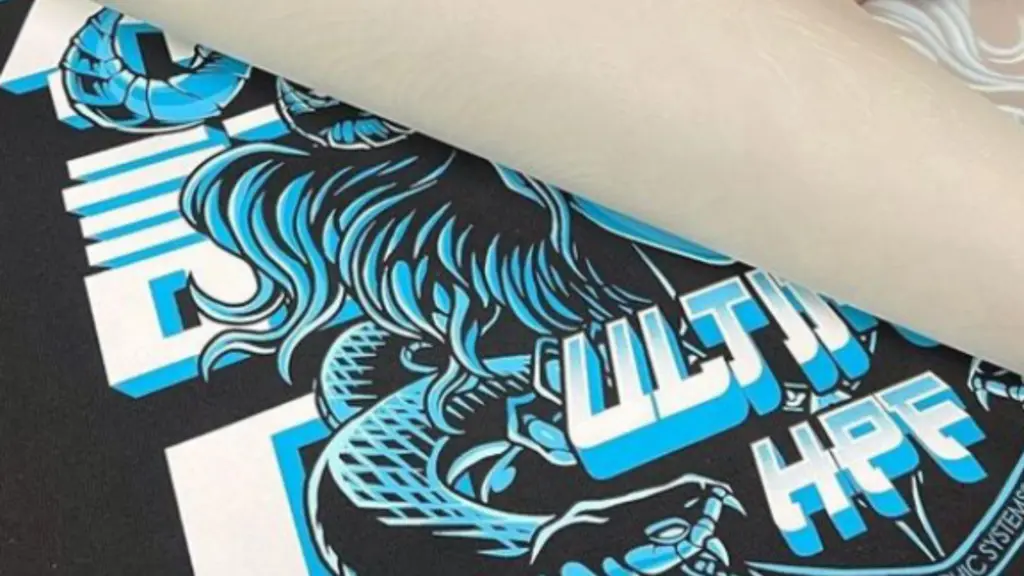
DTF (Direct-to-Film) printing is now a standard production method in the textile industry, printing designs onto film that is then heat-transferred onto fabric. For print shops, garment decoration businesses, and apparel manufacturers, the printer you choose has a direct effect on throughput and margin. This guide walks through the top 5 DTF printers in 2026, covering the specifications and trade-offs that matter for commercial and industrial production.
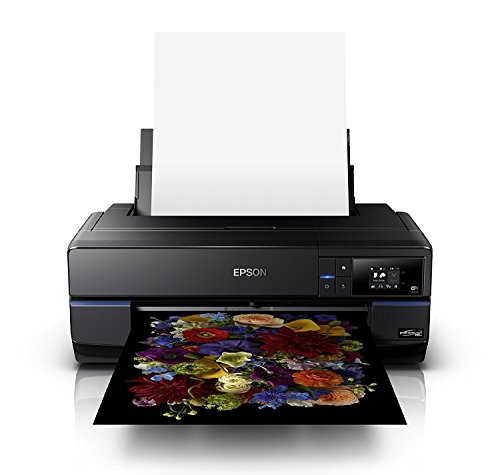
1. Epson SureColor P800
The Epson SureColor P800 is one of the best commercial DTF printers for versatility and high-quality output.
Key Features
- Four Color Modes: This printer supports various color modes for accurate and consistent color reproduction.
- Professional Inkjet Printing: Equipped with advanced inkjet technology for professional-grade prints.
- Wide Color Gamut: Delivers a wide range of colors, making it suitable for detailed and colorful designs.
Pros
- High Print Quality: The SureColor P800 produces high-quality prints suitable for detailed designs.
- Large Print Size: Capable of printing larger formats for sizeable designs on different fabrics.
- User-Friendly Interface: Straightforward to navigate and operate.
Cons
- Expensive Ink: The high-quality ink cartridges can be pricey, adding to operating cost.
- Slower Speed: Compared to some other models, the print speed is slower, which is a drawback for high-volume production.
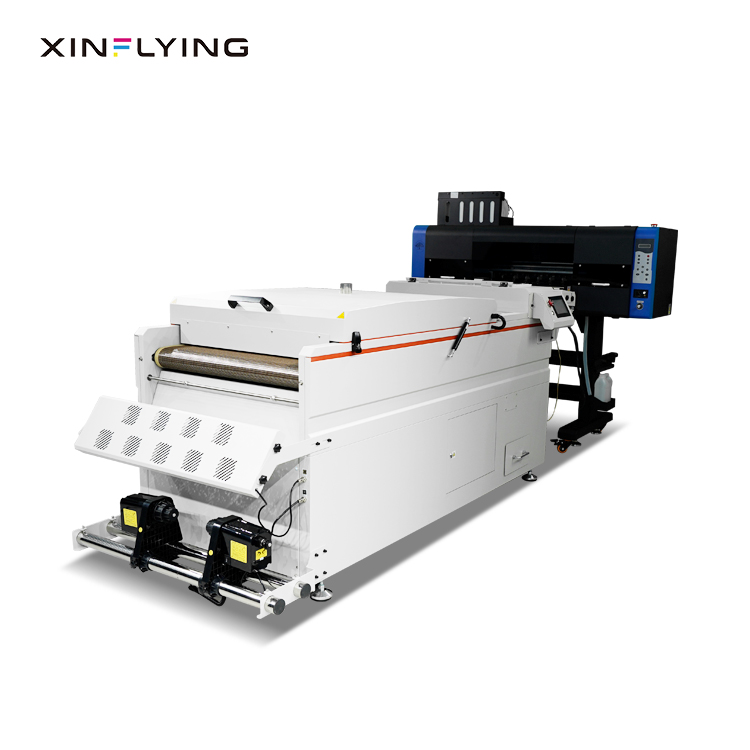
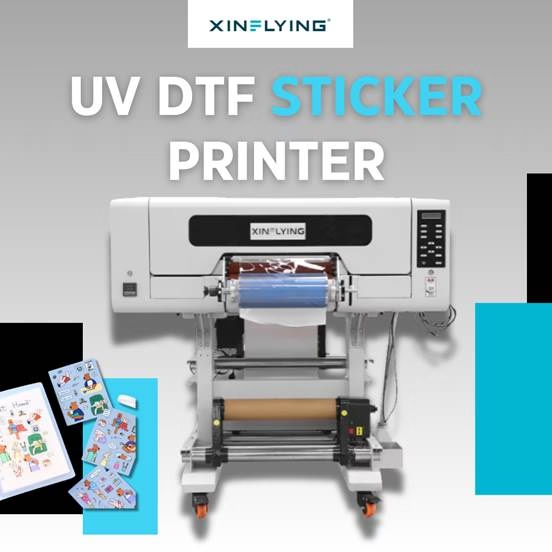
2. Xin Flying 4 Heads DTF Printer (T604+H6501)
The Xin Flying T604+H6501 is a four-head industrial DTF printer built for high-volume production. It is manufactured in XINFLYING’s own 20,000㎡ factory and ships factory-direct, with a 1-year machine warranty and the XF SmartPrint RIP software included as standard.
Key Features
- 4* Epson I3200-A1 Head: Equipped with four print heads for high-throughput performance.
- 24 Inch Printing Width: Allows for wide-format printing suitable for large designs.
- 22 ㎡/h Productivity: High productivity rate for production facilities with large orders.
Pros
- High Efficiency: The multiple print heads and large printing width deliver fast, efficient output.
- Durable and Reliable: Built to handle large volumes with consistent quality.
- Wide Application: Suitable for a variety of fabrics, supporting diverse production lines.
Cons
- Complex Setup: The initial setup can be involved and may require professional installation.
- High Initial Cost: The upfront investment is significant, reflecting the industrial build and four-head configuration.
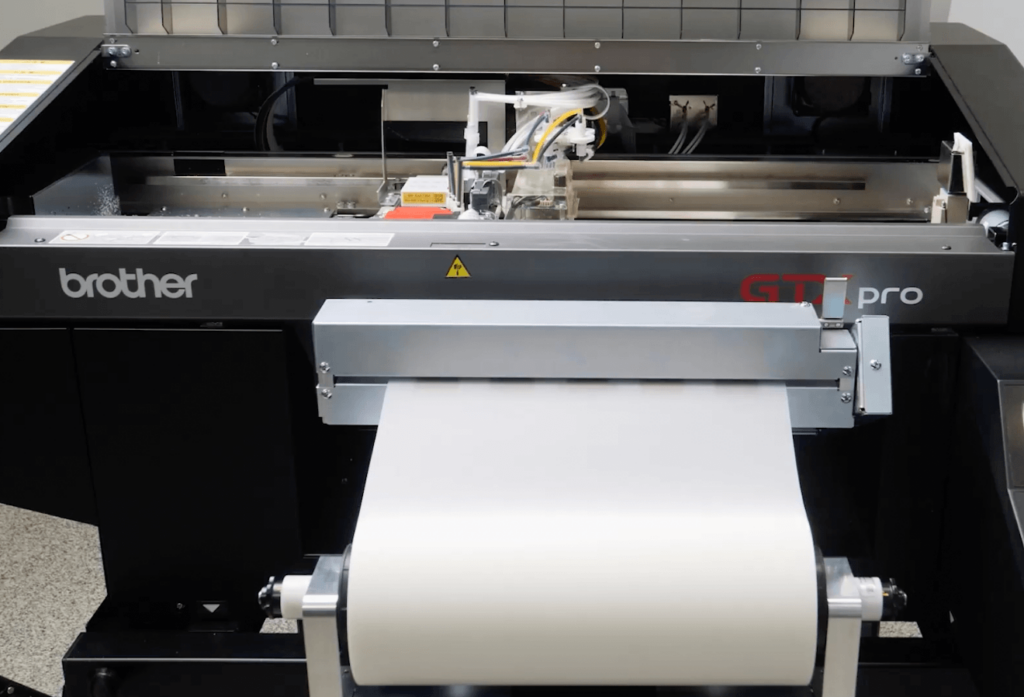
3. Brother GTX Pro Series DTF Printer
Among top DTF printers, Brother’s GTX Pro Series is known for its operator-friendly features and large print head.
Key Features
- Large Print Head: Ensures faster printing speeds and high-quality output.
- User-Friendly Interface: Designed with the operator in mind for ease of use and maintenance.
- Versatile Printing Capabilities: Can handle a wide range of fabrics and designs.
Pros
- Fast Print Speed: The large print head allows for quick production times.
- High-Quality Output: Delivers crisp, detailed prints for intricate designs.
- Easy Maintenance: Designed for easy upkeep, reducing downtime.
Cons
- Bulky Design: The larger size may be an issue for compact workspaces.
- Costly Maintenance: While easy to maintain, the parts and consumables can be expensive.
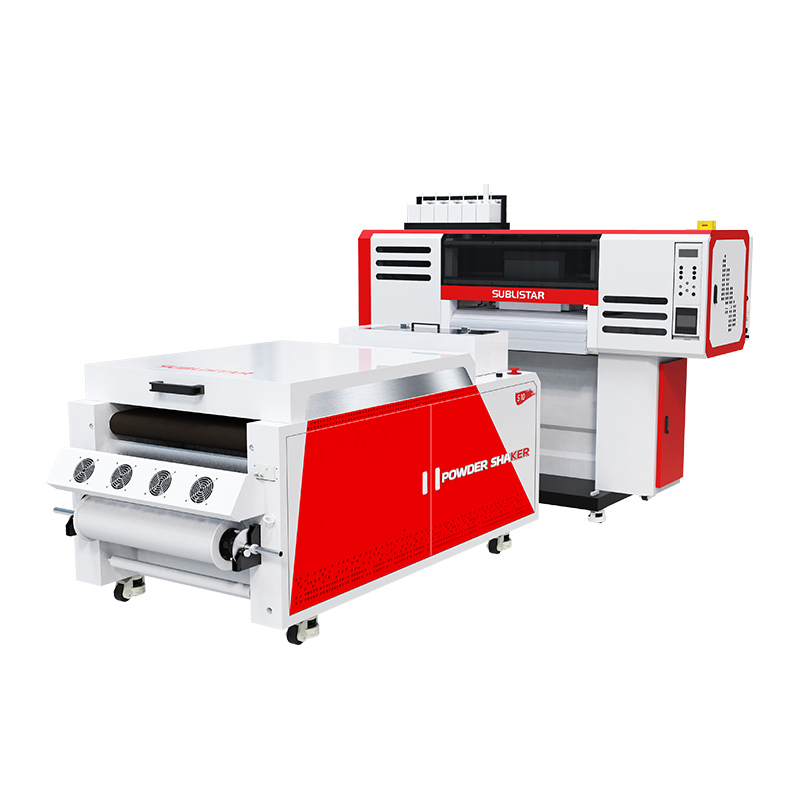
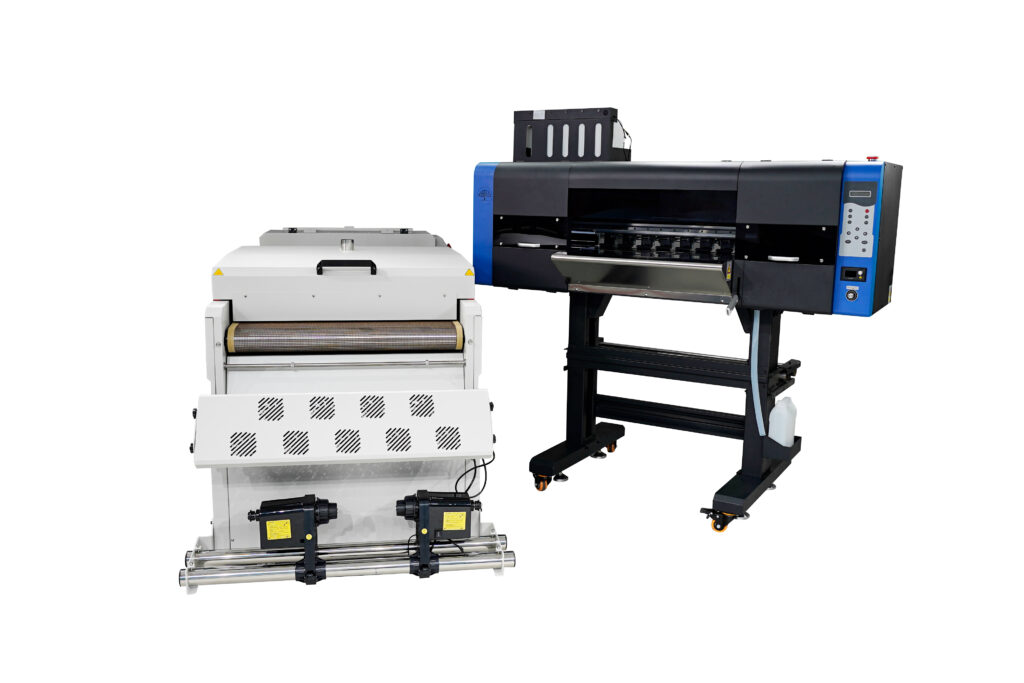
4. Sublistar DTF-600series STAR IV series
The Sublistar DTF-600series STAR IV series offers strong performance with a robust build for high-demand production environments.
Key Features
- 24” DTF Printer and Shaker: Combines a large printer with an integrated shaker for efficient operation.
- High Precision Printing: Provides precise and consistent output.
- Robust Build: Designed to withstand heavy use.
Pros
- Integrated System: The combination of printer and shaker streamlines the production process.
- Durable and Reliable: Built to last, making it a solid investment for busy environments.
- High Precision: Ensures consistent print quality on every run.
Cons
- High Cost: The integrated system and robust build come with a higher price tag.
- Large Footprint: Takes up significant space, which may not suit compact facilities.
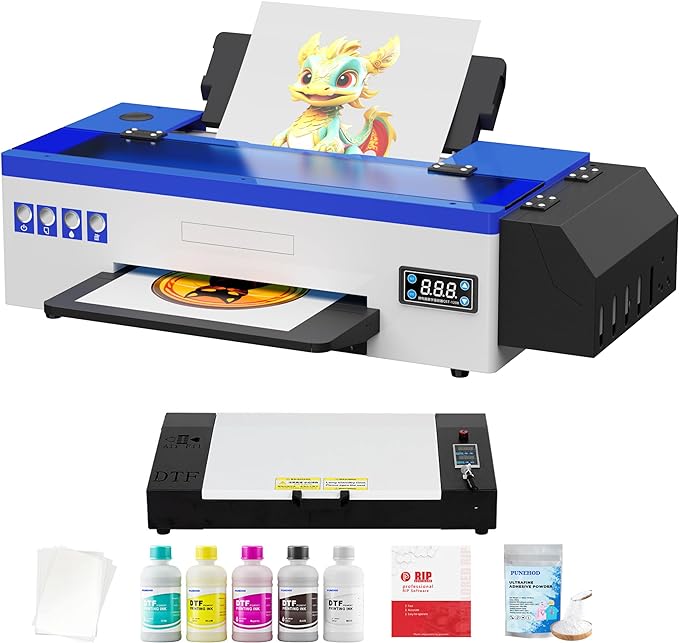
5. PUNEHOD A3 DTF Printer
The PUNEHOD A3 is a compact A3 DTF printer for short-run and sample production, combining an advanced white ink circulation system with a small footprint.
Key Features
- Advanced White Ink Circulation System: Prevents clogging and ensures smooth operation.
- Compact Size: Fits easily into smaller workspaces.
- Versatile Printing: Suitable for various materials, including T-shirts, bags, and more.
Pros
- Affordable: Priced reasonably for a compact A3 system.
- Low Maintenance: The advanced ink system reduces maintenance needs.
- User-Friendly: Simple to operate with minimal training.
Cons
- Limited Print Size: The smaller print size is a limitation for larger projects.
- Slower Production Speed: Not the fastest option, which is a concern for high-volume orders.
Buying Guide for DTF Printers
When choosing the best printer for DTF transfers, several factors should guide your decision. Here is a buying guide to help you find the right direct-to-film printer for your production requirements.
Print Quality
Print quality is the baseline requirement. Look for printers that offer high resolution and accurate color so your designs reproduce correctly. High-resolution printers can hold intricate details and sharp images, which are essential for professional-grade output. Make sure the printer supports a wide color gamut to achieve rich, true-to-life colors.
Speed and Efficiency
Time is money, especially in the printing business. Choose a printer that balances speed with quality to keep your production line moving. High-speed printers can significantly increase throughput, allowing you to fulfill orders quickly. Ensure the printer maintains print quality at faster speeds so output does not suffer as volume rises.
Ease of Use
Complex machinery adds training time and error risk. Opt for printers with intuitive interfaces and accessible maintenance. Look for features like touchscreen controls, straightforward RIP software, and simple setup procedures. Consider maintenance requirements as well: printers with self-cleaning features or easily accessible components reduce downtime and labor cost over the long run.
Cost
Consider both the initial investment and the ongoing costs of ink and maintenance. A more expensive printer can cost less over its lifetime if it runs more efficiently. Factor in consumables such as ink and transfer films, as well as potential repair and maintenance expenses. A reliable, higher-end machine often pays off through better performance and durability.
Versatility
The best DTF printers handle a variety of materials and sizes, giving you more flexibility across orders. Look for printers that support different fabric types and media sizes. Versatile printers let you expand your product range, from T-shirts and hoodies to bags and other items. That flexibility can open new revenue streams and broaden your customer base.
By considering these factors, you can find a DTF printer that meets your current needs and scales with your operation. Choose from a reliable DTF printer manufacturer, and you’ll have a supplier that can support your production long term.
Conclusion
Choosing the best printer to convert to DTF can raise your output quality and efficiency. Whether you are expanding capacity or upgrading equipment, the Epson SureColor P800, Xin Flying T604+H6501, Brother GTX Pro Series, Sublistar DTF-600series STAR IV, and PUNEHOD A3 offer options across different production needs and budgets. Evaluate your requirements, weigh the pros and cons, and you’ll be positioned to make an informed decision.
FAQs
1. What is DTF printing?
DTF (Direct-to-Film) printing is a method where designs are printed onto a special film and then transferred to fabric using heat and pressure.
2. Can DTF printers handle different fabric types?
Yes, most DTF printers are versatile and can print on a variety of fabrics including cotton, polyester, and blends.
3. Are DTF printers expensive to maintain?
Maintenance costs can vary. Some printers have advanced systems to reduce clogging and maintenance needs, but it’s important to factor in the cost of consumables like ink and transfer films.
4. What do you need for DTF printing?
For DTF printing, you need a DTF printer, DTF film, DTF ink, a powder adhesive, and a heat press.
5. How does the print quality of DTF compare to other methods?
DTF printing typically offers high-quality, vibrant prints with good durability, making it a competitive choice compared to traditional screen printing and DTG (Direct-to-Garment) printing.
Also read the following blog and find out the best DTF printers for commercial and industrial production: