When evaluating DTF vs. Sublimation or comparing DTG vs sublimation, the right choice depends entirely on your target fabric and production volume.
Is DTF better than sublimation? If you need to print on any fabric color or material, yes. However, if you are exclusively producing breathable polyester activewear, sublimation remains superior.
DTG is reserved for premium, 100% cotton garments requiring the softest feel. In modern digital print operations, choosing the correct technology dictates your profit margins, maintenance schedules, and scaling potential. This guide breaks down the engineering behind each method so you can invest intelligently.
TL; DR
- Best for Fabric Versatility: DTF (Direct-to-Film) prints on cotton, polyester, blends, and nylon of almost any color.
- Best for Breathability/Durability: Sublimation chemically bonds with light-colored polyester fibers, leaving zero surface texture.
- Best for Detailed “Soft” Cotton Prints: DTG (Direct-to-Garment) ink absorbs directly into 100% cotton fibers for a premium retail feel.
How Do DTF, Sublimation & DTG Work?
Before getting into the comparison, let’s get to know the printing mechanism, respectively.
Click to Learn: [2026 Update] What is Digital Printing? Applications, Example, Pros & Cons
How Does DTF Printing Work?
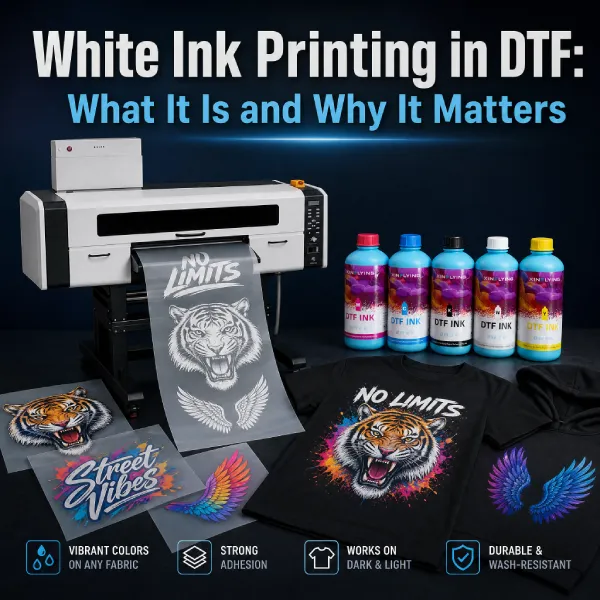
DTF printing involves extruding wet ink onto a PET film, applying a thermoplastic powder, and heat-pressing the transfer onto a garment. This indirect process allows designs to bond with almost any fabric matrix regardless of its chemical composition.
The workflow requires three distinct phases:
- Printing
- Powdering
- Curing
The physical “hand-feel” (the texture of the print on the shirt) is heavily dictated by the adhesive. High-grade TPU (Thermoplastic Polyurethane) powder ensures the final print remains flexible. This avoids the stiff, heavy plastic feel associated with older heat transfer vinyl methods.
How Does Sublimation Work?
Sublimation utilizes heat to transition solid dye directly into a gas, bypassing the liquid state, to bond with synthetic polymer fibers. Since white ink underbase is off, sublimation only works effectively on white or light-colored, 100% polyester garments.
This chemical transition process creates the most durable and breathable prints available. Since the dye physically permeates the polymer molecules rather than sitting on top, the print will never crack, peel, or fade.
However, its strict material limitation means a sublimation printing t-shirt cannot be made of natural cotton or dark-colored fabrics.
How Does DTG Work?
DTG operates like a highly specialized inkjet printer, spraying water-based textile inks directly into the fibers of a garment. While sublimation requires polyester and DTF uses an adhesive layer, DTG is engineered specifically for maximum ink absorption into natural cotton.
This is the industry standard for high-end boutique apparel where maximum breathability and complex photographic gradients are required. However, printing on dark garments requires a liquid pretreatment process to prevent the white ink from soaking entirely into the fabric. This necessary step adds significant time, labor, and chemical handling to the daily production workflow.
DTF vs. Sublimation vs. DTG: How to Choose
Selecting the right technology requires cross-referencing your primary fabric type with your expected maintenance capacity and budget. Here are the factors:
| Specification | DTF (Direct-to-Film) | Sublimation | DTG (Direct-to-Garment) |
|---|---|---|---|
| Fabric Type | Universal (Cotton, Poly, Nylon, Leather) | 100% Polyester or Poly-Coated | 100% Cotton or High-Cotton Blends |
| Color Versatility | Universal (Includes White Ink) | Light Colors Only (No White Ink) | Universal (Requires Pretreatment for Darks) |
| Production Speed | High (Batch/Roll-to-Roll capable) | High (Fast transfer times) | Low (Sequential, 1-3 mins per shirt) |
| Maintenance Level | Moderate (Powder handling, ink circulation) | Low (Very few clogging issues) | High (Daily printhead maintenance) |
| Cost-per-Print | Low (Film and powder are inexpensive) | Very Low (Ink and paper only) | High (Expensive inks and pretreatments) |
We also suggest that, beyond the initial hardware investment, you must calculate hidden operational costs.
- DTG carries high maintenance overhead due to delicate printheads and expensive chemical pretreatments.
- Sublimation has a low cost-per-print but severely restricts your blank garment sourcing.
- DTF requires secondary investments in ventilation and automated powder shakers, though it yields the highest profit margin across the widest variety of substrates.
Which Digital Print Strategy Fits Your Business Model?
Still have no clue on which one to choose? Here is a more quick and practical suggestion, choose from your business size:
The Startup / Etsy Shop
Sublimation offers the lowest financial barrier to entry for new operators. However, as customer demand for cotton hoodies and dark shirts inevitably grows, DTF proves to be the most profitable long-term pivot. A single desktop DTF printer allows a startup to fulfill diverse material requests without rejecting orders.
The Industrial Print House
In high-volume environments, continuous roll-to-roll production is mandatory. Xin Flying’s 60cm industrial DTF printers severely outpace commercial DTG machines in sheer throughput.
DTF allows operators to batch hundreds of transfers per hour continuously, whereas DTG creates a sequential, unscalable bottleneck at the pretreatment phase.

The Promotional Merchandise Brand
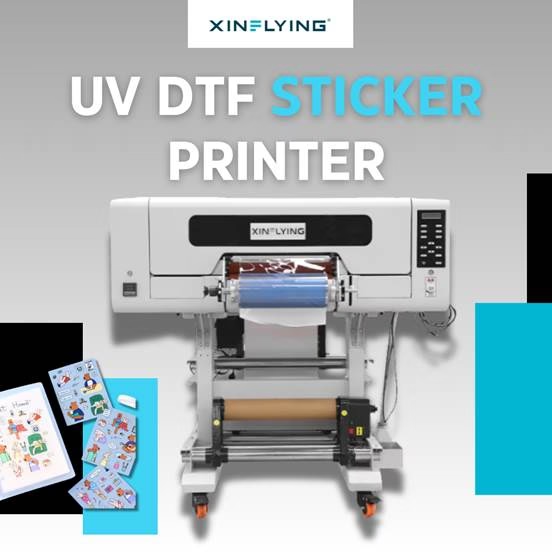
Apparel is often only half of a promotional client’s order. Combining fabric sublimation with UV DTF (a Xin Flying specialty that applies durable decals directly to hard, irregular surfaces like tumblers and metal) creates a total branding solution. This allows a shop to offer full promotional packages without buying specialized, slow cylindrical printers.

Xin Flying Digital Printing Solutions Is Your First Pick!
Reliable digital printing relies on advanced fluid dynamics and precise color management. Xin Flying hardware mitigates common industry failures through automated white ink circulation and high-fidelity RIP software integration.
- White ink contains heavy titanium dioxide pigments that settle rapidly, causing severe printhead clogging if left stagnant. Xin Flying DTF machines utilize a proprietary Automatic White Ink Stirring & Circulation system. This constant fluid movement prevents sedimentation, drastically reducing daily maintenance downtime and preventing catastrophic head strikes.
- Color accuracy is equally critical, especially when fulfilling orders for corporate clients with strict brand guidelines. Our hardware integrates with top-tier RIP (Raster Image Processor) software like Hosonsoft or MainTop to ensure precise CMYK matching. Furthermore, all Xin Flying systems are calibrated for OEKO-TEX certified water-based inks, ensuring environmental sustainability and safe skin contact without sacrificing color vibrancy.
Contact Xin Flying for Tailored Digital Print Production Strategy
Ready to optimize your hardware investment? Tell us your primary fabric types and expected monthly volume. Our engineering team will be here 24/7 to cater to your requirements.