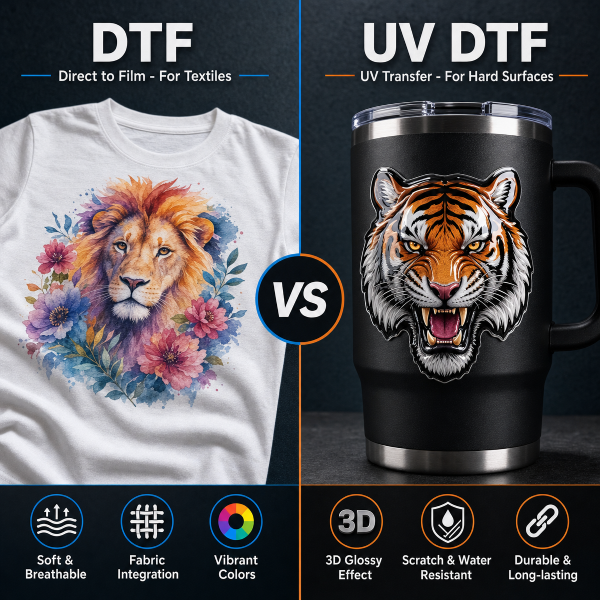
If you’ve been shopping for a printing solution, you’ve almost certainly run into both DTF and UV DTF — and if they sound like the same thing with a slightly different name, you’re not alone. They share some DNA, but in practice they’re built for completely different applications.
Choosing the wrong one doesn’t just affect print quality. It affects your entire product lineup, your equipment investment, and the markets you can realistically serve. This comparison breaks down everything you need to know to make the right call.
The Short Answer
- DTF (Direct to Film) = designed for fabric and garments
- UV DTF (Ultraviolet Direct to Film) = designed for hard surfaces and rigid products
If your business centers on T-shirts, hoodies, and textiles — DTF is your tool. If you’re decorating phone cases, drinkware, acrylic, or hard goods — UV DTF is the better choice. Many established shops run both.
How Each Technology Works
Standard DTF Printing
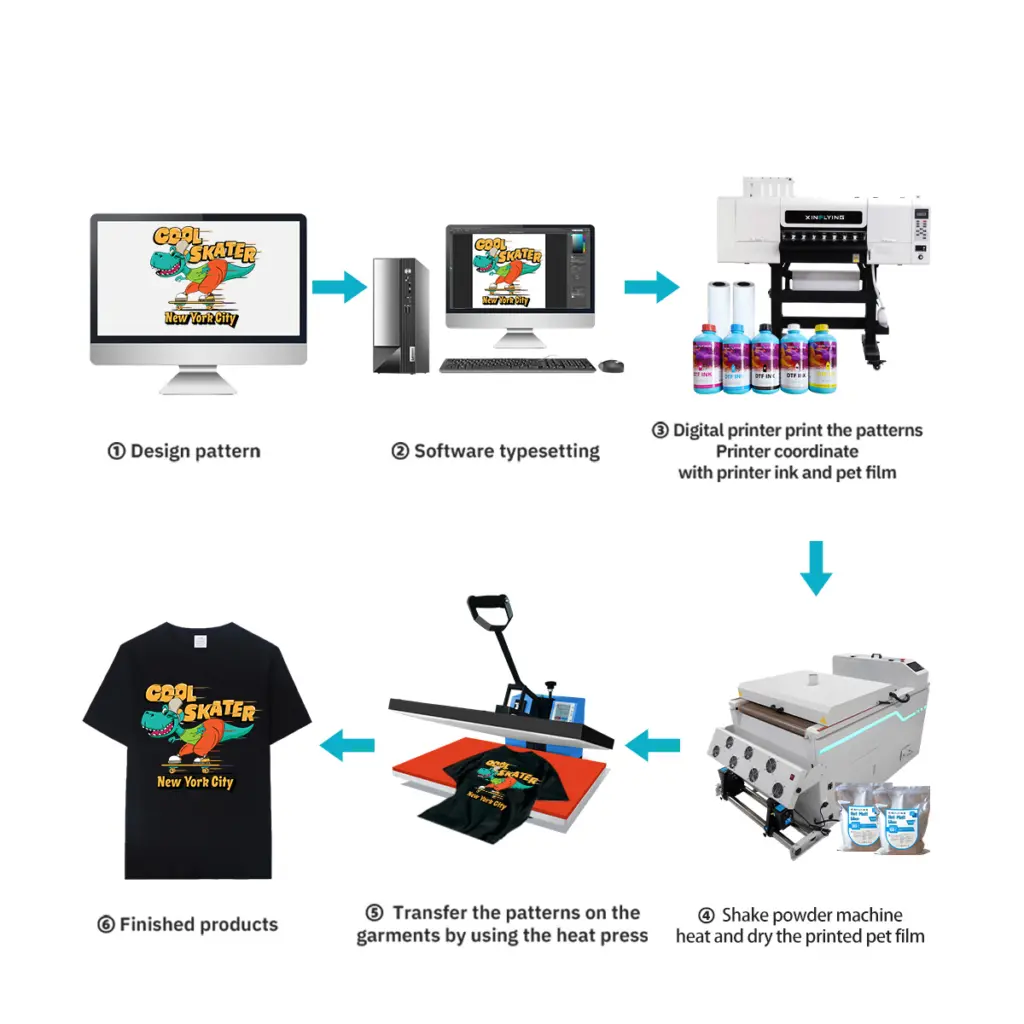
Standard DTF prints a design onto a PET (polyester) hot-peel film using water-based pigment inks. A layer of hot-melt adhesive powder is applied while the ink is still wet, then the film is cured in an oven to bond the powder to the ink. The finished transfer is applied to fabric using a heat press at controlled temperature and pressure.
The heat press activates the adhesive powder, bonding the design permanently to the fabric fibers. Once cooled, the film peels away, leaving a soft, flexible print.
UV DTF Printing
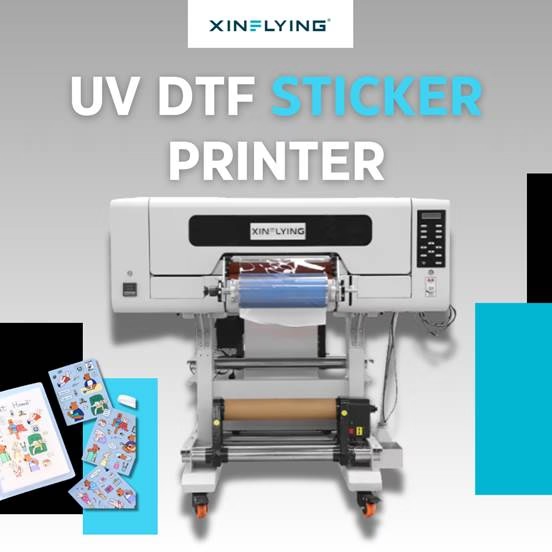
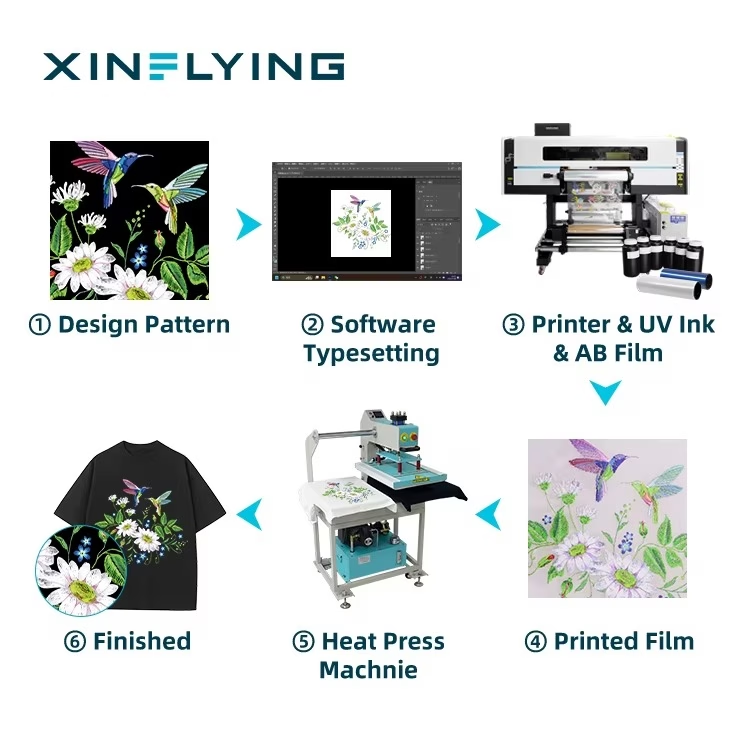
UV DTF prints onto a UV-reactive A film using UV-curable inks — CMYK, white, and varnish. Instead of adhesive powder, UV LED lamps built into the printer cure the ink instantly as it’s deposited. The cured A film is laminated to a transparent B film using a cold laminator, creating a ready-to-apply transfer.
Application requires only hand pressure — no heat press, no powder, no oven curing. The transfer bonds to smooth hard surfaces through a combination of UV-cured adhesion and surface contact.
Side-by-Side Comparison
| Feature | Standard DTF | UV DTF |
|---|---|---|
| Best Surface | Fabrics & textiles | Hard goods & rigid surfaces |
| Ink Type | Water-based pigment | UV-curable (CMYK + White + Varnish) |
| Curing Method | Oven + adhesive powder | UV LED lamps (built into printer) |
| Heat Press Required | ✅ Yes | ❌ No |
| Adhesive Powder | ✅ Yes | ❌ No |
| White Ink | ✅ Yes | ✅ Yes |
| 3D Texture Effect | ❌ No | ✅ Yes (with varnish layer) |
| Works on Curved Surfaces | Limited | ✅ Yes |
| Wash Durability (fabric) | Excellent | Not applicable |
| Scratch Durability (hard goods) | Not applicable | Excellent |
| Min. Order Quantity | 1 piece | 1 piece |
| Production Speed | Moderate | Moderate |
| Startup Cost | Lower | Moderate–Higher |
Print Quality Compared
Color Vibrancy
Both methods produce full-color, photographic-quality prints. On their respective target materials, both perform exceptionally well. UV DTF prints tend to have a slightly higher color pop on hard surfaces due to the white ink base and UV-cured gloss finish. DTF prints on fabric have a softer hand feel that integrates naturally with the textile.
White Ink Performance
White ink is critical in both methods — it provides the opaque base layer that makes colors visible on dark or non-white surfaces. UV DTF generally has an advantage here: UV-cured white ink sets harder and more evenly than powder-adhesive white in DTF, reducing the risk of semi-transparent patches in high-coverage white areas.
Fine Detail
Both technologies handle fine lines and small text well. UV DTF has a slight edge for very fine detail work on hard goods due to the rigid, non-absorbent nature of the transfer film. DTF on fabric is subject to minor spreading as ink contacts textile fibers, though this is rarely visible to the naked eye on most designs.
Material Compatibility
Standard DTF Works Best On:
- 100% cotton and cotton blends
- Polyester and performance fabrics
- Denim
- Canvas bags and totes
- Nylon (with limitations)
UV DTF Works Best On:
- Phone cases (all plastic and silicone types)
- Stainless steel and metal tumblers and drinkware
- Ceramic mugs and tiles
- Acrylic and plexiglass
- Glass surfaces
- Leather and faux leather goods
- Wooden signs and plaques
- Painted metal and coated aluminum
Important: UV DTF does not perform well on fabric. The rigid UV-cured ink layer cracks and peels under the repeated flexing and washing that garments experience. If you try to use UV DTF on a T-shirt, the transfer will fail quickly.
Equipment and Setup
Standard DTF Setup
| Equipment | Purpose |
|---|---|
| DTF Printer | Prints design onto PET film |
| Powder Shaker | Evenly distributes hot-melt adhesive powder |
| Curing Oven | Bonds powder to ink |
| Heat Press | Transfers design to fabric |
| RIP Software | Manages print profiles |
UV DTF Setup
| Equipment | Purpose |
|---|---|
| UV DTF Printer | Prints and UV-cures design onto A film |
| Cold Laminator | Bonds A film and B film together |
| RIP Software | Manages UV ink channels and white layer |
UV DTF has a higher initial cost but a simpler workflow — fewer machines, no powder mess, no heat press management.
Workflow Complexity
DTF Workflow (5 steps)
- Prepare design in RIP software
- Print onto PET film
- Apply adhesive powder (manual or automatic shaker)
- Cure powder in oven (160–170°C, 2–3 minutes)
- Heat press onto garment (160°C, 6–10seconds)
Pain points: Powder application consistency, oven temperature management, heat press settings vary by fabric type.
UV DTF Workflow (4 steps)
- Prepare design in RIP software
- Print onto A film (UV curing happens automatically in-machine)
- Cold laminate A film with B film
- Hand-press transfer onto product and peel
Pain points: Surface preparation (must be clean and smooth), B film alignment in laminator.
UV DTF wins on workflow simplicity — especially for operators who want a clean, fast production process without managing oven temperatures or powder application.
Which Is More Profitable?
Both methods are profitable — the answer depends on your target market.
DTF margins are strong for garment decorators, especially custom T-shirt shops. The low entry cost means faster ROI, and demand for custom apparel is massive.
UV DTF margins tend to be higher per-item because hard goods like custom tumblers and phone cases command premium retail prices ($20–$50+), while the cost-per-print is only slightly higher than DTF. A UV DTF shop focusing on premium drinkware or gift products can achieve 60–80% gross margins on individual items.
Can You Run Both in the Same Shop?
Yes — and many growing print shops do exactly this.
A common setup:
- DTF printer for garment orders (T-shirts, hoodies, tote bags)
- UV DTF printer (like the XF-600S) for hard goods (tumblers, phone cases, acrylic products)
This combination lets you serve almost any custom printing request without turning away orders. The two workflows are independent enough that they don’t interfere with each other, and the equipment investment is staged — you can start with one and add the other as your customer base grows.
Summary: Which Should You Choose?
| Your Situation | Recommended Choice |
|---|---|
| Primarily decorating garments and fabric | Standard DTF |
| Primarily decorating hard goods and rigid products | UV DTF |
| Want to offer 3D embossed/embroidery effects | UV DTF |
| Lowest possible startup cost | Standard DTF |
| Cleanest, simplest production workflow | UV DTF |
| Serving both fabric and hard goods markets | Both |
There’s no universally “better” option — only the better option for what you’re printing. If you’re still unsure, start by mapping your current or target customer orders: what are they actually buying? Let that answer guide the equipment decision.
Frequently Asked Questions
Q: Can I use a UV DTF printer to print on T-shirts?
A: Not recommended. UV-cured ink is rigid and will crack and peel on fabric with normal wear and washing. For fabric printing, standard DTF is the correct method.
Q: Is UV DTF more expensive than DTF?
A: UV DTF printers generally cost more upfront, and per-print costs are slightly higher. However, the products it’s used on (drinkware, phone cases) command higher retail prices, so profit margins remain strong.
Q: Do both methods require RIP software?
A: Yes. Both DTF and UV DTF require RIP software to manage ink channels, color profiles, and white layer settings. Common options include Maintop and Photoprint.
Q: Which method has better wash durability?
A: For fabric applications, standard DTF has excellent wash durability (rated 40–50+ washes under normal conditions). UV DTF is not designed for fabric washing and should not be compared on this metric — it’s designed for hard goods durability, where it performs very well.
Q: Can UV DTF transfers be stored before use?
A: Yes. Printed and laminated UV DTF transfers can be stored flat, away from heat and direct light, for several weeks to months before application without significant degradation.